UK factories upgrade apprenticeships to blend tech and traditional craft
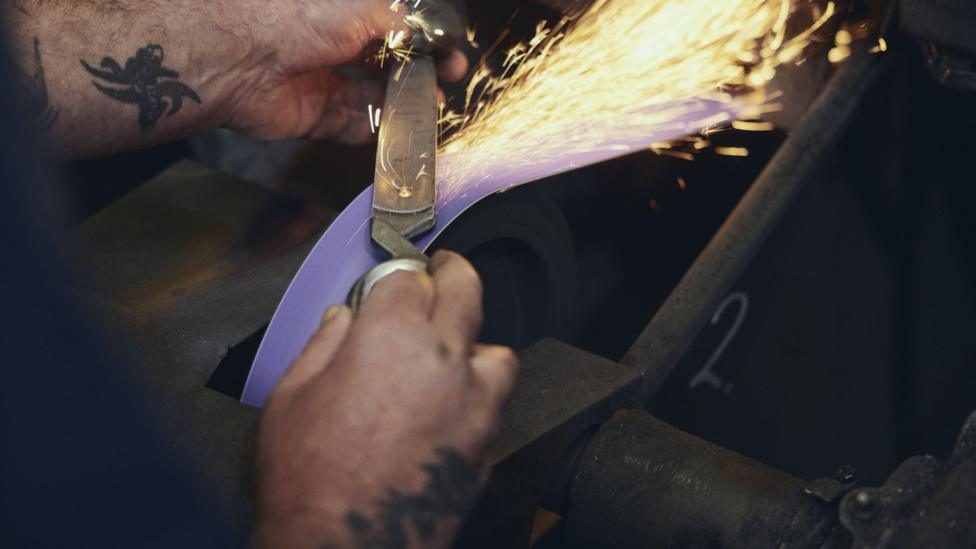
A shift towards higher-level vocational training in Britain's industrial heartlands is merging digital design with manual craftsmanship, offering a potential blueprint for preserving niche manufacturing.
Vocational training in Britain’s industrial sectors is undergoing a structural shift up the education value chain. Government data shows the number of people starting level two intermediate apprenticeships fell by nearly a quarter over the past year, replaced by a surge in enrollments for higher-level qualifications ranging from level four to seven.
This transition reflects a fundamental change in how trades are taught, carrying significant implications for the specialised manufacturing economy. As production becomes more complex, companies that fail to integrate digital skills with physical craftsmanship risk losing their competitive edge in high-value markets.
At automotive restoration company Tolman in Warwickshire, 29-year-old Ollie Priestley is completing a three-year heritage vehicle technician apprenticeship. Introduced in 2018 by the Heritage Skills Academy in Bicester, the level three qualification teaches traditional welding alongside computer-aided design (CAD) and 3D printing.
Tolman founder Chris Tolman warned that digital tools in mainstream car dealerships are reducing mechanics to "just fitters" where "the computer identifies the issue and they swap the part." He argued that specialist businesses require technicians who can creatively solve problems without relying solely on diagnostic software.
A similar dynamic is playing out in Sheffield, a city historically famous for its blade manufacturing. At Ernest Wright, which has operated since 1902, 3D metal printing has been adopted to accelerate product development while keeping manual production intact.
Working with the University of Sheffield, the company uses additive manufacturing to create precise prototypes of vintage designs before producing them through traditional methods. "Now we can make just six pairs of scissors through metal printing [as tests]. Then if we want to change things, we don't have to do it on 6,000 pairs," says co-owner Paul Jacobs.
Across town at William Whiteley, which dates back to 1760, new ownership is taking a cautious approach to technology. Managing director Mark White is prioritising the recruitment of human trainees over automation.
"At the moment I'm looking to recruit trainee scissor manufacturers, as opposed to looking to put people out of work by investing in more technology," White says. "What we're not about is loading something on a machine and pressing a button."
This tension between embracing technology and preserving manual dexterity is a central challenge for industrial training. Julie Topham, business development manager at surgical instrument maker Platts & Nisbett, noted that while CNC machinery and laser tagging now form part of the process, final fitting remains done by hand.
"There will be an abundance of people who want to press buttons. It's getting someone who likes to work with their hands, other than computers," Topham says.
The economic risk, according to manufacturing analytics CEO Chris Iveson, is that training can become too narrow. However, he believes the current evolution ultimately produces a superior worker. "The modern apprentice is increasingly learning two things at once: the practical skill of making, and the digital skill of using technology to understand what is happening in production," Iveson explains.