Spain bears brunt of 2030 World Cup infrastructure in three-country host
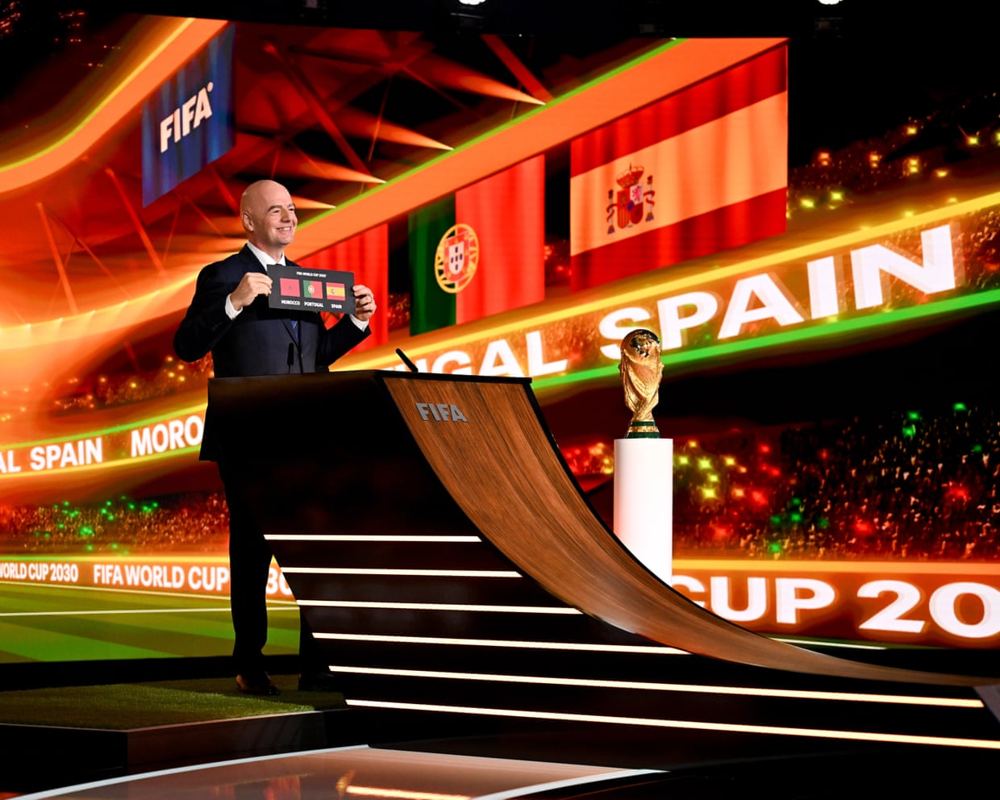
The 2030 World Cup will be hosted across Spain, Portugal and Morocco, marking a major infrastructure and commercial undertaking for Southern Europe amid talks of expanding the tournament to 64 teams.
The 2030 men’s World Cup will be jointly hosted by Spain, Portugal and Morocco, marking the first time the tournament will be held across multiple continents. Opening on 13 June 2030, the event will span 17 host cities. That is one more city than the 2026 edition, which features 48 teams for the first time in the competition’s 96-year history.
Spain is set to carry the bulk of the infrastructural and economic burden. Eleven of the 20 proposed stadiums are located in Spain, including major venues in Barcelona, Madrid and San Sebastián. Portugal will rely on Porto and Lisbon, having previously hosted the 2004 Euros. Morocco will utilise Marrakech and Tangier as it prepares to host the 2025 Africa Cup of Nations.
The logistical footprint will extend even further across the Atlantic. To mark the tournament's 100-year anniversary, FIFA has scheduled a special match in Uruguay's Estadio Centenario, the site of the 1930 final, alongside single matches in Argentina and Paraguay. FIFA president Gianni Infantino stated this would celebrate the centenary "in the most appropriate way". A unique centenary ceremony will also take place in Montevideo the week before the main tournament begins.
The commercial model for the European and North African hosts remains unresolved, with the current plan featuring 48 teams. However, Mr Infantino has raised the prospect of expanding the field to 64 nations, stating "that’s definitely an issue that will be examined and discussed in the relevant committees after this World Cup." Conmebol president Alejandro Domínguez has already formally proposed this larger format, arguing that "[it] will be unique because 100 years are celebrated only once."
For European markets and investors, an expansion to 64 teams carries significant implications. A larger tournament would mean additional matches, driving higher revenues from broadcasting rights, corporate sponsorships, and match-day tourism across the Iberian peninsula. Conversely, it would also strain transport, security, and accommodation networks, requiring further private and public investment ahead of 2030.
The complex hosting arrangement stemmed from FIFA’s continental rotation rules. Spain and Portugal, unsuccessful in recent bids, added Morocco in 2023 to create a cross-confederation proposal. FIFA’s council unanimously selected this bid over a rival South American candidacy, though it placated Conmebol by awarding it three centenary matches. That concession had a broader strategic effect: it rendered South America ineligible to bid for the 2034 World Cup, paving the way for Saudi Arabia to secure that tournament.