X launches rewritten Android app to speed up everything app push
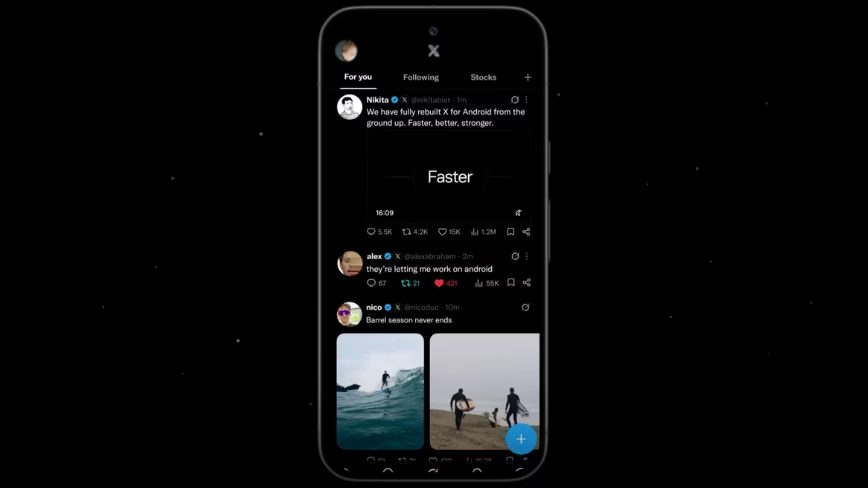
X has released a complete rewrite of its Android application, a critical but buggy step forward in Elon Musk’s strategy to turn the platform into a payments and AI-driven "everything app.
X has replaced its long-neglected Android application with a version built entirely from scratch, ending nearly a year of engineering work. The update is distributed as a standard patch through the Google Play Store, eliminating the need for users to download a separate application. X promises the rewrite will deliver faster loading times, smoother scrolling, and more dependable notifications.
The overhaul represents far more than a cosmetic fix for a product that had developed a poor reputation. At one point last year, the legacy Android app struggled to perform its most basic function: loading posts when users clicked on links. Nikita Bier, X’s product head, called the rewrite one of the largest engineering projects in the platform’s history.
The underlying business motive is development velocity. Bier noted that the new codebase lets X "build and ship features far faster." This speed is the prerequisite for Elon Musk’s "everything app" strategy, which demands the rapid integration of private messaging, digital payments, video hosting, and the Grok AI assistant into a single platform.
For European businesses and investors, a functional Android app is a commercial imperative. Android dominates the mobile operating system market across the continent's major economies. A social network that cannot reliably render a text post on Android devices cannot credibly position itself as a future hub for European digital payments or enterprise communication.
Yet the launch highlights the risks of prioritizing speed over stability. The initial rollout is missing key functionalities, including live audio spaces, and performance on older smartphones remains problematic. Users have flooded the platform’s announcement with complaints about slow image loading, stalled videos, and overlapping notification icons.
Hardware compatibility is also lacking. Tablet users are still restricted to a single column of content rather than the three-column layout available on the web. Owners of foldable devices like the Galaxy Fold have lost the screen padding that previously made the app usable on larger displays, and a dark mode is missing entirely.
Furthermore, some early bugs carry security implications. Multiple users reported being caught in a two-factor authentication login loop, an unsettling glitch occurring just days after a widespread phishing wave successfully cloned X’s login alerts.
X has pledged to add a video editor, video reactions, cashtags, and custom timelines in future updates, though no release dates have been set. In the competitive landscape of 2026, a fast and reliable app is considered baseline rather than revolutionary. Still, for Android users long accustomed to an inferior experience—and following the June arrival of the encrypted XChat messenger—the rewrite shows X is finally investing in the infrastructure its expansion plans require.