Secret Baku talks linked to Gazprom chief and former German officials
The chairman of Russian gas giant Gazprom joined a secret back-channel meeting in Baku with former German officials, signalling ongoing informal efforts to end a war that continues to disrupt European energy markets.
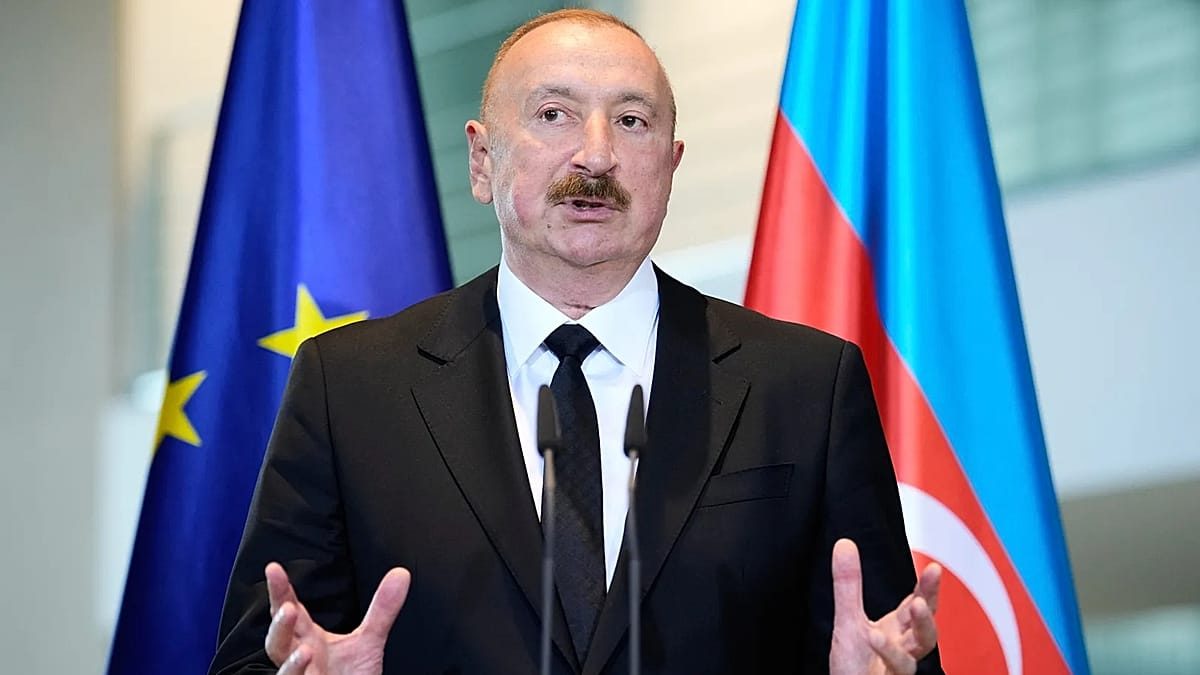
Azerbaijani President Ilham Aliyev confirmed in Berlin on Tuesday that former Russian and German officials held a previously unreported meeting in Baku in mid-July to discuss the war in Ukraine. The gathering brought together figures from the highest levels of Russian energy and German politics, though Azerbaijan was not informed beforehand.
The Russian delegation included Viktor Zubkov, the current chairman of the board at Gazprom. The presence of the state-controlled gas giant's leader highlights the deep intersection between the conflict and European energy security, a sector still grappling with the fallout of severed pipeline supplies.
Zubkov, a former Russian prime minister and long-standing associate of Vladimir Putin, was accompanied by Valery Fadeyev, head of the Presidential Council for Civil Society and Human Rights. Both men are considered part of Putin's trusted inner circle.
The German side featured Ronald Pofalla, who served as Angela Merkel's chief of staff and later headed the infrastructure division of Deutsche Bahn, alongside Matthias Platzeck, a former Social Democrat minister-president who long advocated for Russo-German cooperation. Flight records show the Germans arrived from Berlin on July 12 and left two days later, while the Russians arrived from Moscow on the same day.
“The flights statistics provide grounds to suggest that such a secret meeting was held in Baku,” Aliyev said, adding that “our territory was simply utilised without our knowledge." Aliyev noted he ordered an investigation by his country's State Border Service following media reports, which subsequently confirmed the meetings.
For European businesses and investors, such back-channel engagements underscore the quiet efforts to find an off-ramp to a conflict that has distorted trade, inflated energy costs, and forced costly supply chain realignments across the continent. The involvement of figures tied to major corporate entities like Gazprom and Deutsche Bahn suggests commercial and energy networks remain potential conduits for diplomacy.
Standing alongside Aliyev, German Chancellor Friedrich Merz distanced his government from the initiative. "For months, we have been trying to persuade President Putin to initiate negotiations,” Merz said. “He continues to refuse to do so.”
Aliyev stated that if the meeting helps end the war, Baku welcomes it, reiterating that “the war must be stopped immediately." Merz concluded by thanking Aliyev for aligning with Berlin's stance on the conflict's causes and potential conclusion.