The man who owns 120 Citroëns
Visiting his collection is like traveling through time and a must for all Citroën fans The company-owned Citroën Conservatoire in Paris has serious competition. Over the course of 40 years, French enthusiast Henri Fradet has patiently and diligently put…
The company-owned Citroën Conservatoire in Paris has serious competition.
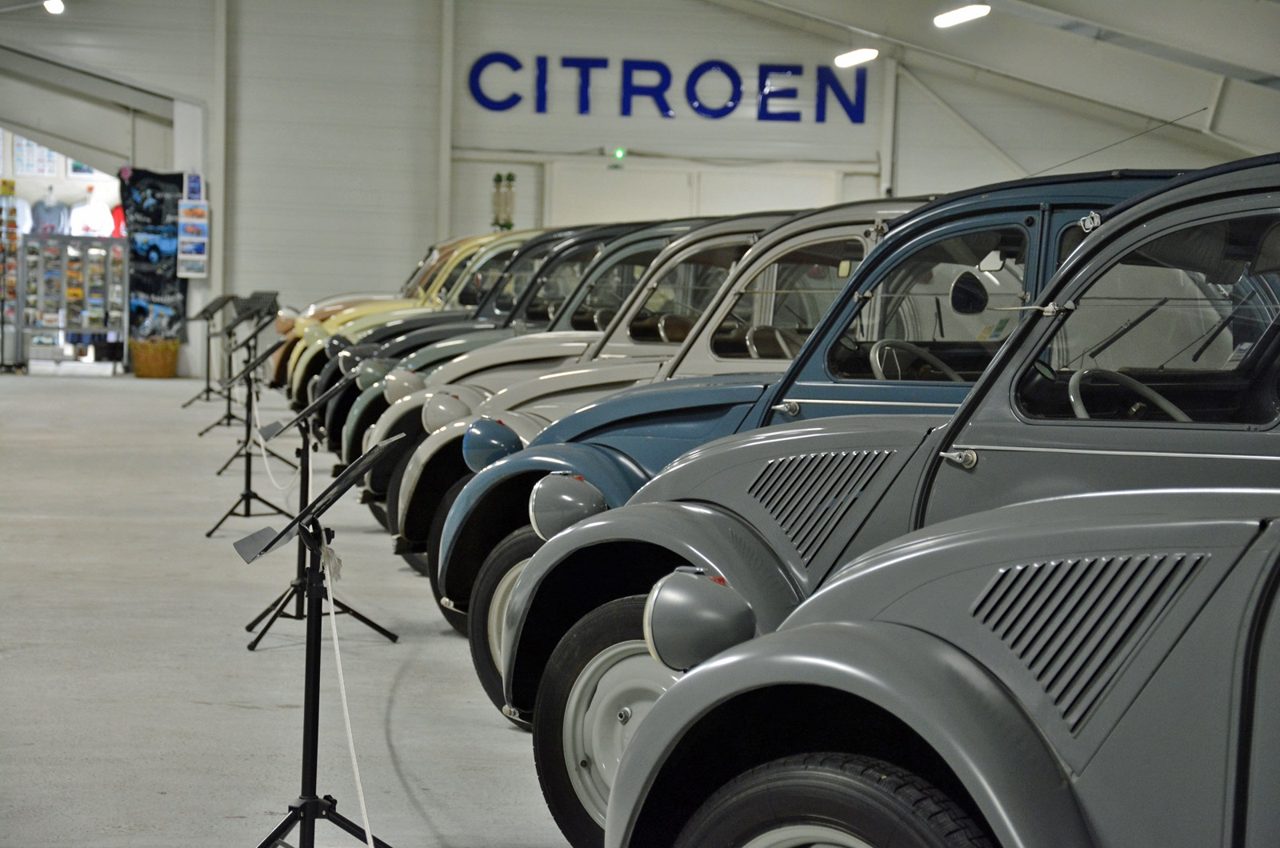
Over the course of 40 years, French enthusiast Henri Fradet has patiently and diligently put together a spectacular collection of over 120 post-war Citroën models . They’re housed in a museum named CitroMuseum located in Castellane, a small town in southern France.
Fradet prefers low-mileage, unrestored cars and he has traveled all over France to track down the best examples left. Follow along as we trek out to the scenic French Alps and travel through time:
The museum is split into three distinct sections . The first highlights the Traction Avant and variants of the DS/ID . The second is dedicated to the 2CV and its numerous derivatives. Finally, the third, and most recent, wing houses cars made between the 1970s and the 1990s .
Fradet wasn’t content with simply parking his cars in a warehouse and calling it a day. Every section contains a treasure trove of Citroën memorabilia like original documents from the company’s research and development department, model cars and vintage dealer signs.
Citroën released the Traction Avant in 1934 , so it doesn’t fully qualify for post-war status, but the model’s unusually long production run is its saving grace. The last examples were built in 1957 .
Powered by a 2.9-liter straight-six engine rated at 77hp , this 1952 example has covered approximately 40,000 km (25,000 miles) since new. It was purchased from the original owner in 1973 by a collector who cherished it and always stored it indoors. It joined the CitroMuseum in 2016.
The CitroMuseum houses several examples of the DS/ID but this black 1955 model is unquestionably the most historically significant one. Wearing chassis number 32 , it’s the 14th DS ever sold and the oldest series-produced example remaining. The first 13 cars were most likely destroyed well before they became sought-after by collectors.
Citroën didn’t begin mass-producing the DS until February 1956 so the 175 cars registered in 1955 were made entirely by hand. Number 32 was delivered to a Citroën dealership in Valence, France, and used as a demonstrator. It should have been returned to Citroën’s headquarters but the owner of the dealership instead sold it to one of his most loyal customers. It subsequently went through the hands of several owners, covering about 69,000 km (43,000 miles), and spent 13 years parked in a museum in Holland before joining the CitroMuseum in 2004.
The ID 19 was a cheaper, more basic alternative to the DS 19. Finished in an unusual shade of blue called Bleu de Provence, this 1963 example has covered 27,000 km (18,000 miles) since new. Fradet bought it from the second owner and drove it to Norway, where he was living when he purchased it, after removing the hydraulic system’s high-pressure pump on the side of a Belgian road to loosen a stuck valve.
Many coachbuilders transformed the DS into a convertible; it was an irresistible foundation on which to build. One of 1365 units made, this 1966 example was manufactured by French coachbuilder Henri Chapron using blueprints provided by Citroën. It was a factory-authorized conversion that shared its front sheet metal and all of its mechanical components with the standard four-door model.
Citroën focuses on design, comfort and infotainment for its new supermini
Sold new in Paris, this example traveled to Cannes in 1970 and ultimately covered approximately 147,000 km (91,000 miles). It was partially restored about 30 years ago, meaning it’s one of the very few cars in the CitroMuseum that’s not 100% original.
The D Super replaced the ID as the smaller, cheaper alternative to the full-fat DS in 1969 . This example was purchased new by a radio operator who fitted it with a transmitter and added a 110-volt power outlet to the dashboard. He sold it with 50,000 km (31,000 miles) on the clock when he became too old to drive.
Today, spotting a 2CV in like-new condition at a vintage car show is easier than finding a baguette in central Paris. It wasn’t always that way; for decades, Citroën’s ugly duckling was worth very little and considered completely undesirable by motorists who called it excruciatingly slow and overly basic.
The 2CV and its numerous off-shoots were mass-produced and mass-destroyed so the cars in this part of the CitroMuseum are lucky to have survived long enough for a collector to tell their story.
The original owner of this 1954 2CV A bought it solely to take an elderly family member on Sunday drives. It was parked in 1958 after the person it was purchased for died; the owner later explained she had no interest in driving and preferred biking to work. An eagle-eyed enthusiast spotted it in a garage on the outskirts of Paris in 1991 and spent four years convincing the owner to sell it. The call finally came in 1995.
In like-new condition, this time-warp 2CV has covered 7300 km (about 4500 miles) in 65 years. It’s equipped with its original 375cc , 9.5hp flat-twin engine and its door panels are still covered by the protective brown paper fitted before the car left the factory.
The AZU variant of the 2CV trucklet received a bigger, 425cc flat-twin engine that made 12hp . The 1961, 15,000-km (9600-mile) example in the CitroMuseum was upgraded with an optional pair of rear side windows by an aftermarket company named GlacAuto . The conversion was approved by Citroën and GlacAuto-modified cars were sold through the company’s dealer network.
Fradet purchased this 1959 2CV AZLP in 1979 with an odometer reading of approximately 5000 km (3100 miles). It was his first vintage car and it's the one that got him hooked. He stopped driving it when it had about 13,000 km (8000 miles) on the clock. Its like-new condition inspired him to create a museum dedicated to original, low-mileage cars.
The 2CV6 CT was manufactured in Spain and sold in the local market. The initials CT stand for comfort . It’s very similar to the 2CV Club sold in France. With 84 km (52 miles) on the clock, the example in the CitroMuseum stands out as one of the very last 2CVs made in Spain.
It was purchased new by a dealership in Andalusia who planned on keeping it in like-new condition without driving it or even registering it. It was sold twice before joining Fradet’s collection.
In 1990 , when Citroën announced plans to finally stop making the 2CV, two brothers each purchased a brand-new example with the intent of keeping it as original as possible. Both were driven for about six months to take advantage of Citroën's free maintenance plan then stored indoors for over 20 years .
The first one (pictured) has covered 726 km (451 miles); the second one has been driven for only 21 km (13 miles) but the original owner wants to keep it.
The 6 is the most collectible member of the Ami family thanks largely to its unique Z-shaped roof line. This example was purchased new by someone who wanted a comfortable car in which to carry her mother; the car then spent 30 years in a garage following her death.
She finally sold it with 2800 km (1700 miles) on the odometer and Fradet purchased it from a fellow enthusiast in 2010 with an odometer reading of 8525 km (5300 miles).
Though it’s more practical and usable than the Ami 6 it replaced, the Ami 8 has a less distinctive silhouette so it’s not as sought-after; it’s another great example of a car that was mass-produced and mass-destroyed . With 1412 km (877 miles) on the odometer, this one was purchased new by a retired postal worker who used it for only a few months. He quickly decided he was too old to drive and parked it for 30 years .
The M35 was a rolling display of Citroën’s engineering prowess. Starting with a frame borrowed from the Ami 8 , it received a single-rotor Wankel engine that made 59hp and a model-specific version of the hydropneumatic suspension also found in the DS. It took the form of a coupe with an almost fastback-like roof line that shared only a few basic styling cues with the Ami 8.
Citroën planned on making 500 M35s and putting them in the hands of its most loyal customers to get feedback about what it was like to operate in real-world conditions. It aimed to apply the knowledge gained to the development of a regular-production model. The M35 was far too expensive, it cost as much as an entry-level D Super, so production ended after just 267 cars were made between 1969 and 1971.
This 31,000-km (19,000-mile) example was sold new in southwestern France before making its way to the Alps. The dealership that purchased it from the original owner later filed for bankruptcy, closed and gave the M35 to someone it owed money to. The new owner sold it without ever driving it. It’s in running condition and it’s one of two M35s in Fradet’s collection.
The Super was the most powerful and most expensive version of the Ami and today it's also the rarest. Citroën released it in 1973 to fill the gap between the 2CV-based cars, like the Ami 8, and the bigger GS. The recipe was simple: the firm took an Ami body and installed a 1.0-liter flat-four borrowed from the GS in the engine bay. It could reach 86mph .
One of several in Fradet’s collection, this blue example was purchased by a man who wanted to upgrade from a 2CV. He never got used to driving the car; he was notably confused by the shift pattern, which places first gear left and up, where reverse is on a 2CV. He put only 2000 km (1200 miles) on it between the day he bought it and when he purchased a used 2CV in 1980.
Citroën launched the Dyane in 1967 in a bid to offer buyers a more modern alternative to the 2CV. In an odd twist of automotive history, it was outlived by the car it should have replaced by seven years . Made during the last year of production, the CitroMuseum's Dyane was purchased by a farmer who used it as his Sunday car. He must have not gone very far because he racked up just 5684 km (3500 miles)
Finding an original, unrestored Mehari that hasn't been repaired, rebuilt or repainted is easier said than done. Many were driven into the ground when values were low and later restored with aftermarket parts. Literally every component is available new from a variety of vendors, which is both a blessing and a curse. This 1972 example was purchased by a small town in central France and used sparingly by firefighters. It has been driven for 4300 km (2600 miles).
Fradet’s HY van stands out as one of the very last examples made. It was manufactured in December 1981 and first registered in early 1982. It was purchased by a winemaker who used it on his property but went to significant lengths to keep it in like-new condition. It was stored indoors after covering 12,000 km (7400 miles).
The museum’s most recent wing houses an impressive array of various GS and GSA models plus newer cars that are either starting to reach classic status or aren’t fully there yet. Cars like the AX and the Xantia are lingering at the bottom of their depreciation curve, and today they're usually in the hands of their uncaring eighth owner, so standing face-to-face with like-new examples is a rare treat. Visitors won't see anything too new, though.
The ZX and the Xsara are among the nameplates missing from the collection. Fradet explained he's not as interested in newer models that are reasonably easy to find with low miles.
Citroën teamed up with Maserati, which it purchased in 1968 , to create a high-performance range-topping model named SM . The coupe lived up to its flagship status with a comfortable ride made possible by a hydropneumatic suspension, a luxurious interior and a powerful V6 engineered by Maserati. At its launch in 1970 , the SM stood proud as one of the most advanced cars sold new in Europe.
The SM was briefly successful in the US, but fell foul of federal ride-height regulations which its suspension couldn't get around, and it was withdrawn from sale. Fradet purchased this 1971 example, one of several he owns, from a chauffeur in Monaco. He drove it for 38,000 km (23,000 miles).
Years in the making, the GS arrived in 1970 to fill the chasm that separated the 2CV and its derivatives from the much bigger D Super. The couple who purchased this 1972 Club model divorced shortly after taking delivery. They returned it to the dealership they bought it from and split the money.