Ukraine ousts army chief Syrskyi, retains drone chief Fedorov
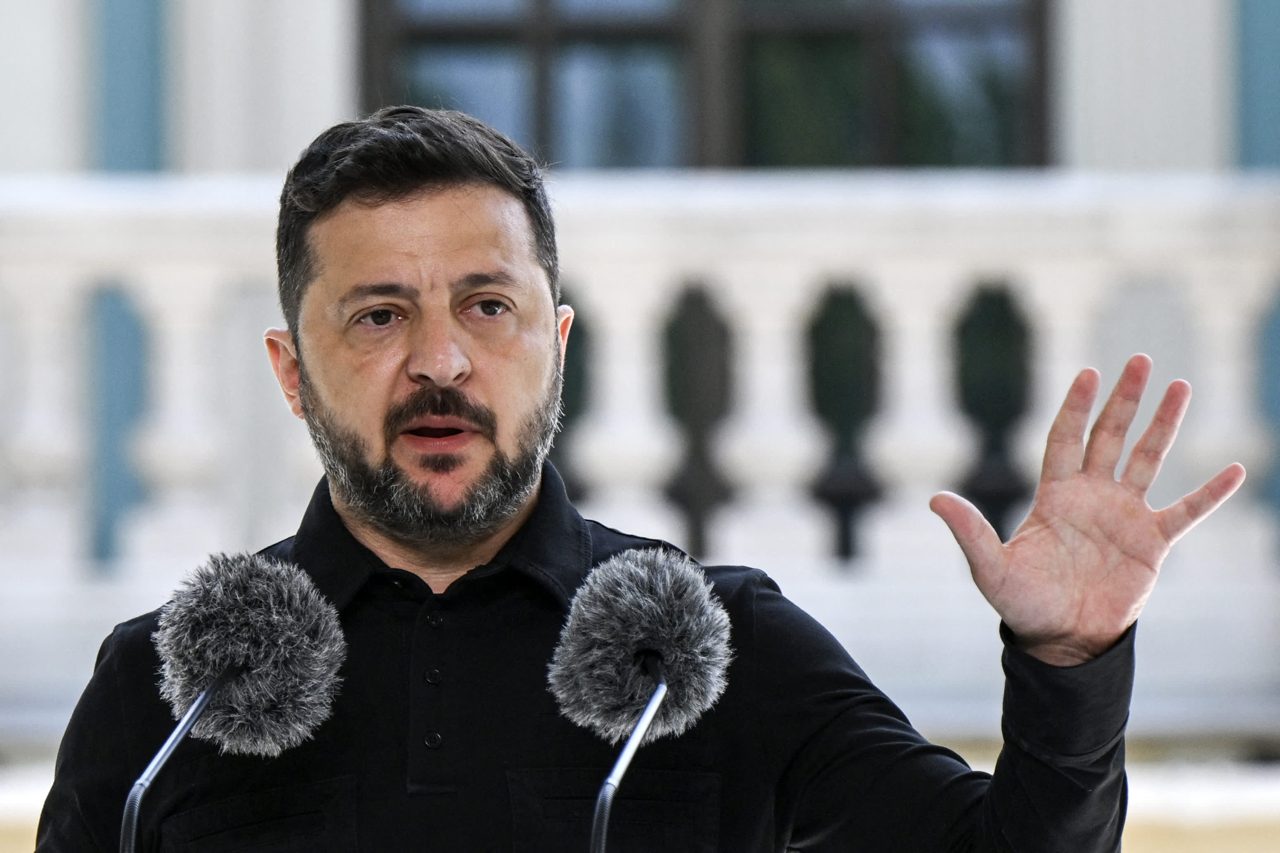
Ukrainian President Volodymyr Zelenskyy has replaced army chief Oleksandr Syrskyi with Mykhailo Drapatyi and moved to keep drone warfare advocate Mykhailo Fedorov in government, ending days of protests that threatened to disrupt Ukraine's critical strikes on Russian energy infrastructure.
Ukrainian President Volodymyr Zelenskyy dismissed top military commander Oleksandr Syrskyi on Tuesday and appointed Mykhailo Drapatyi as the new commander-in-chief of the armed forces. The leadership change follows five consecutive days of nationwide unrest, marking the most severe political crisis in Kyiv since Russia's full-scale invasion in 2022.
The protests erupted last week after Zelenskyy unexpectedly fired Defense Minister Mykhailo Fedorov. Seen as a key architect of Ukraine's drone warfare, Fedorov's dismissal sparked public demonstrations demanding his return and Syrskyi's removal. In response, Zelenskyy announced he had met with Fedorov and offered him a new role to unite the country's technological capabilities.
For European markets and energy security, the resolution of this internal standoff carries significant weight. Over the past four years, Ukraine has heavily scaled up its drone production and capabilities. This industrial ramp-up has enabled sustained attacks on Russian energy infrastructure, specifically targeting high-profile oil refineries in major cities.
Kyiv’s strategy aims to raise the direct economic cost of the conflict for Moscow while weakening Russian forces positioned in southern Ukraine. Defense experts and strategists have described this drone campaign as pivotal in stalling Russia's military momentum. For European nations heavily invested in Ukraine's defense, maintaining the stability of this drone program is essential to keeping pressure on Russian supply chains.
However, the economic warfare strategy carries inherent risks. Strategists warn that Ukraine's deep-strike successes against Russian energy assets have drastically raised the risk of escalation. Keeping Fedorov, a popular figure closely associated with the drone program, in a government role focused on technological development signals that Kyiv intends to sustain these economic strikes.
Zelenskyy moved to reassure the public that military operations would continue smoothly despite the dramatic leadership overhaul. "The operations of Ukraine's Defense Forces are ongoing and must continue without disruption. Ukraine's long-range sanctions plan and our mid-strike program will be carried out with absolute precision," Zelenskyy said.
Fedorov framed the leadership change positively on X, calling it "a breath of fresh air and a new source of hope." He added that it was "the voice of change that could no longer be ignored." The incoming commander-in-chief, Drapatyi, also struck a note of continuity. "I will work responsibly, focused, and with respect for the people who defend our state today," he wrote on Facebook.
The swift resolution of the crisis prevents a prolonged vacuum in military leadership. It ensures that domestic political turbulence does not derail the operations targeting Russian energy infrastructure that form a core part of Ukraine's economic defense strategy.