Hitler's birthplace becomes police station as far-right leads polls
Austria has spent 20 million euros converting Hitler's birthplace into a police station to deter neo-Nazi pilgrimages, even as a far-right party founded by former Nazis polls at 37 percent nationally.
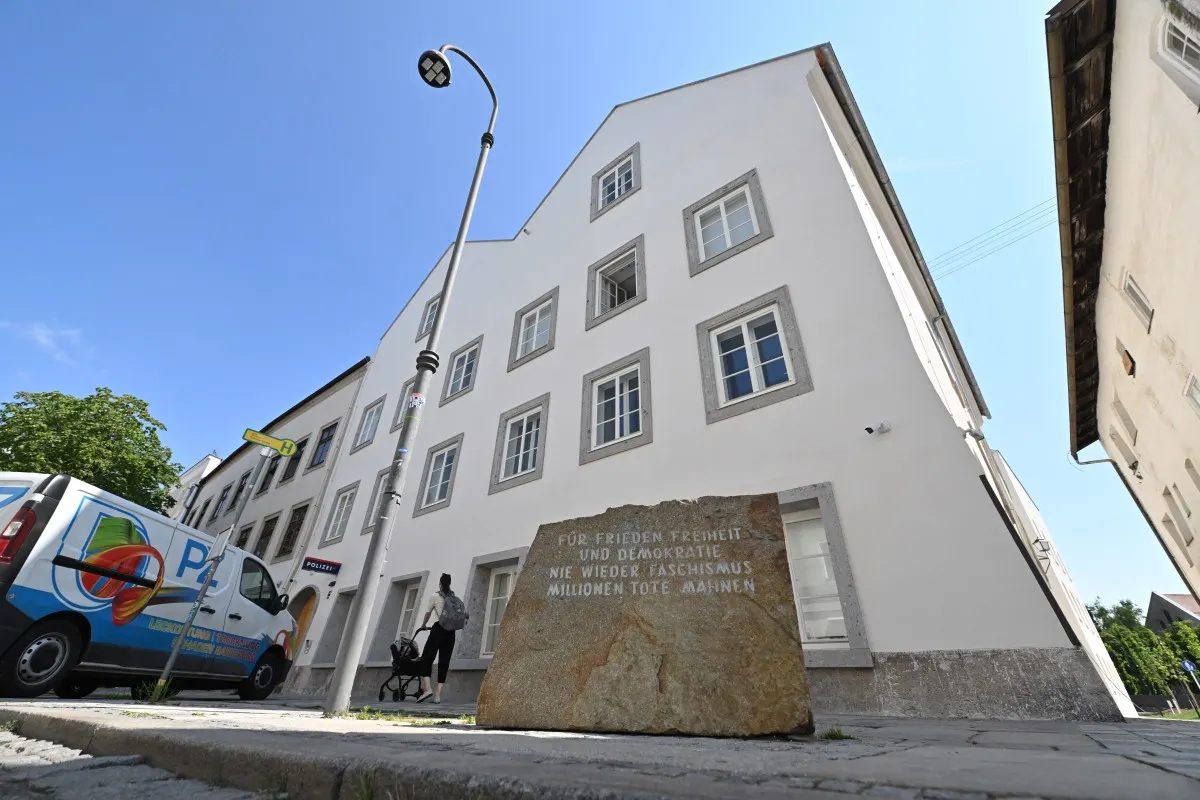
The yellow 17th-century building in Braunau-am-Inn where Adolf Hitler was born has reopened as a police station. After a 20-million-euro refurbishment that finished three years behind schedule, the Austrian architecture firm Marte has whitewashed the roughcast walls, leaving the site all but unrecognisable.
The Austrian government wants the permanent police presence to "neutralise" the location and "clearly show" that commemorating Nazism is unacceptable. A memorial stone on the pavement still reads: "For Peace, Freedom and Democracy. Never Again Fascism. Millions of Dead Warn."
The state spent years fighting to acquire the 800-square-metre property. After the owner, Gerlinde Pommer, vetoed changes and contested expropriation, the Supreme Court approved the 810,000-euro purchase three years after the initial law to seize the building was passed in 2016. Historians had rejected demolition, urging Austria to confront its role in the murder of six million Jews, alongside Roma, LGBTQ people and communists.
Yet the opening of the station highlights a stark contradiction in Austrian public life. The country faces regular criticism for avoiding full responsibility for the Holocaust, during which 65,000 Austrian Jews were killed and 130,000 forced into exile after Germany annexed Austria in 1938.
Today, the far-right FPOe, which was founded by former Nazis, is the country's most popular political force. According to polling aggregator Europe Elects, the party commands the backing of around 37 percent of Austrians.
Critics argue the expensive renovation fails to address this underlying political reality. "But that's absurd: humanity will not forget where the worst mass murderer in history was born," said Robert Eiter, spokesman for the Mauthausen Committee Austria, an association of escapees from the concentration camp. "And this renovation will not prevent a single neo-Nazi from making the pilgrimage to Braunau."
Before the state leased it in 1972, the building had been in the same family's hands since 1912. It was previously used as a centre for disabled people, another group targeted by the Third Reich. Transforming it into a police station was chosen over making it a historical monument to avoid drawing further attention from extremists.