Austria converts Hitler’s birthplace into police station
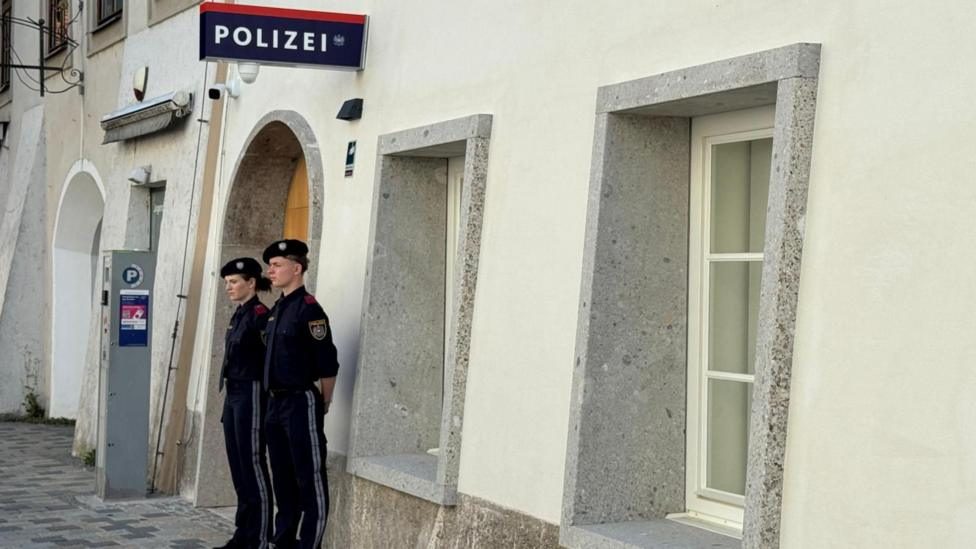
Austria has opened a police station at Adolf Hitler's birthplace after spending millions of euros to expropriate and remodel the building, resolving a lengthy political dilemma over how to prevent it from becoming a neo-Nazi shrine.
Austria has officially opened a police station inside the 17th-century former inn in Braunau am Inn where Adolf Hitler was born in 1889. The building's facade has been substantially altered, and security cameras now monitor the entrance to deter neo-Nazi pilgrims.
The site has been a persistent problem for the Austrian government, which for decades paid generous rent to the former owner, Gerlinde Pommer, to keep it out of the hands of right-wing extremists. A local charity, Lebenshilfe, used the building as a workshop for people with special needs until 2011, when Pommer blocked renovations and refused to sell.
After the property sat empty for years, the Austrian parliament passed a law in 2016 to seize it. The government paid Pommer €812,000 in compensation, a sum she challenged in court before ultimately losing.
The expropriation sparked a fierce public debate about the building's future. Then-Interior Minister Wolfgang Sobotka proposed tearing it down entirely, a suggestion that drew heavy criticism from those who argued that erasing the structure would amount to denying Austria's Nazi history.
In 2019, the government settled on the police station concept following an EU-wide architectural competition. Millions of euros were spent refurbishing the yellow building to ensure it looks markedly different from its previous appearance.
Not everyone supports the final outcome. Local historian Florian Kotanko noted that some residents had hoped the site would become a centre dedicated to confronting the Nazi past. He pointed out that the Lebenshilfe charity had actually been offered the chance to return but declined.
"But even this charity organisation did not want to come back because they thought they would be used as a fig leaf for a political discussion, and so the government had to decide in another way," Kotanko said.
There is no historical plaque on the remodeled building. The only visible marker of its history is a memorial stone from the Mauthausen concentration camp, placed on the street outside in 1989. It reads: "Never again Fascism; In memory of millions of dead," and deliberately omits Hitler's name.
Kotanko believes the site's historical weight cannot be entirely erased by its new function. "You have to deal with it, and so we all try to deal with it in an open and correct way," he said. "It's not a matter of being proud, but it's a matter of dealing with the fact."