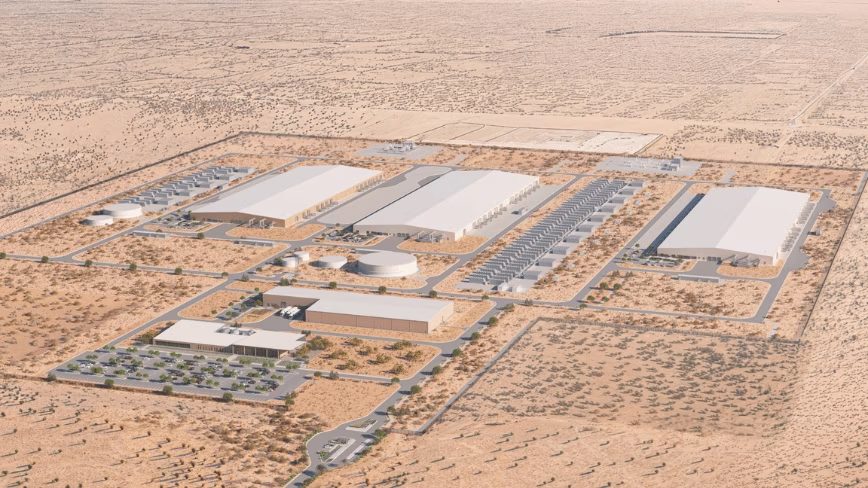
$28bn off-grid AI data centre planned for Australian outback
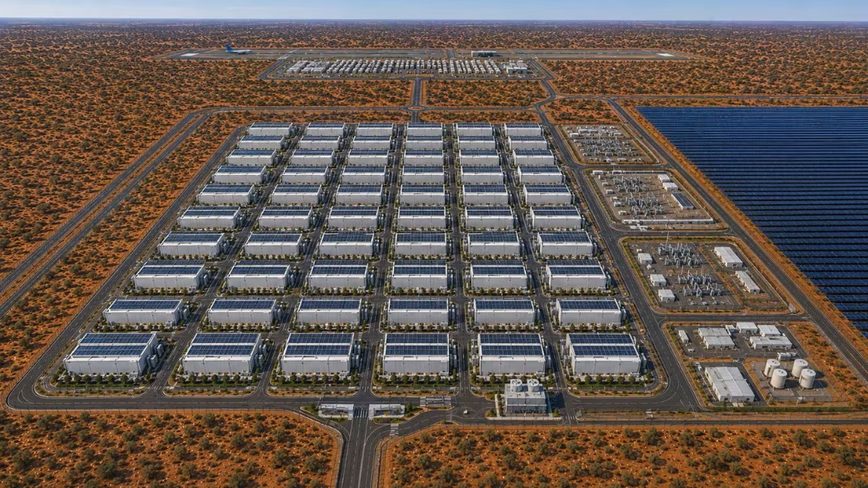
A Singaporean developer plans a massive gas-and-solar powered AI campus in the Australian outback, illustrating the extreme lengths global tech firms will go to secure power outside strained national grids.
Energy North has lodged a proposal with Australia’s federal environment department to build a $28 billion off-grid AI data centre on a remote cattle station. Project Ares would see an initial investment of roughly AU$11.9 billion to construct a 1-gigawatt computing campus at Murranji Station, 683 kilometres south of Darwin.
The campus is designed to bypass Australia’s congested electricity network entirely. Energy North plans to power the site with 1,038 megawatts of gas-fired generation, 3 gigawatts of solar capacity, and 16 gigawatt-hours of battery storage, spread across a 19,150-hectare site.
The proposal leans heavily on the nearby Beetaloo basin, a vast gas reserve long promoted by Canberra as an economic driver. The company, led by former Decmil chief executive Scott Criddle, frames the gas as a transitional fuel that is hydrogen-ready and will eventually give way to renewables as the campus scales beyond 5 gigawatts.
This off-grid approach highlights a growing global bottleneck for AI infrastructure. Grid operators around Sydney have warned that data-centre capacity is near exhaustion, a constraint familiar to European investors tracking power shortages in established hubs like Amsterdam, Dublin and Frankfurt.
To secure enough power, developers are moving inland to build their own dedicated energy supply. Microsoft has already committed A$25 billion to Australian computing infrastructure, and roughly a dozen similar proposals are now lodged across the Northern Territory.
The tension between AI’s immense energy demands and climate goals remains unresolved. While Nvidia-backed data centres in Australia have made similar promises to transition to clean energy, Project Ares would begin life burning gas at close to a gigawatt.
The project holds Commonwealth Major Project Status, which streamlines federal coordination but does not guarantee approval. The Northern Territory Environment Protection Authority is assessing the referral, and a final investment decision is targeted for 12 to 18 months after a decision under the Environment Protection and Biodiversity Conservation Act.