Budapest launches BYD subsidy probe as ex-minister joins firm
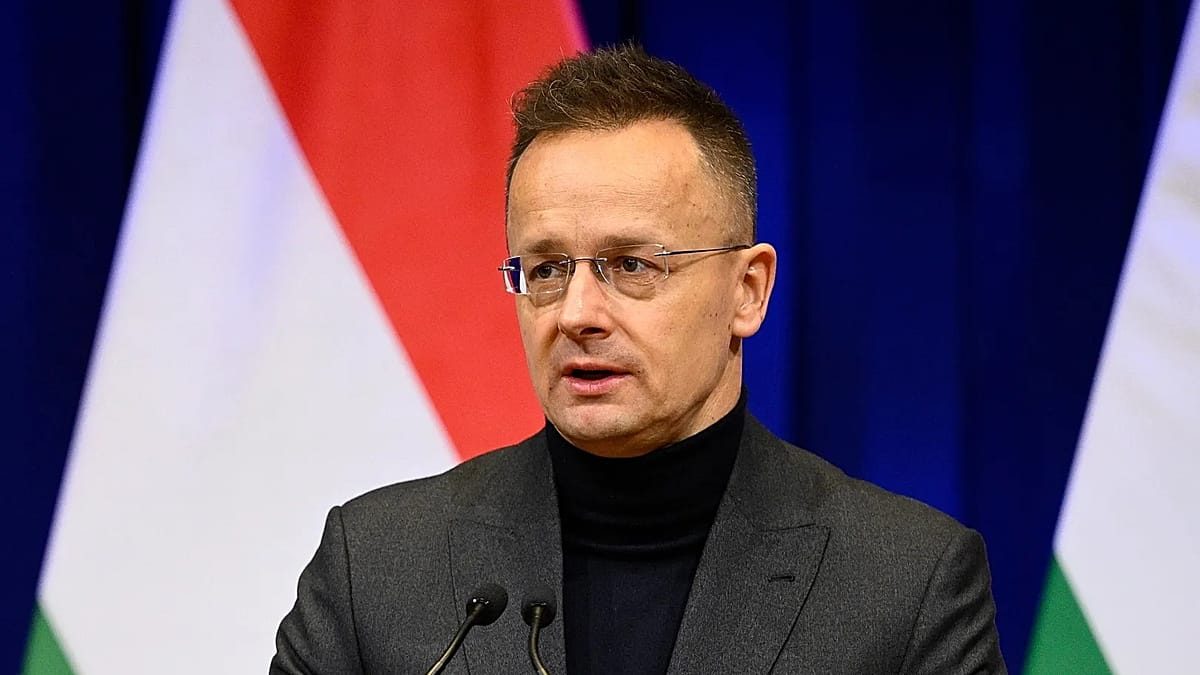
Hungary's new government is investigating state subsidies granted to BYD after the minister who negotiated them took a senior job at the Chinese carmaker, exposing a regulatory gap as Chinese electric vehicle makers expand into Europe.
Hungary has launched an investigation into state subsidies granted to Chinese electric vehicle manufacturer BYD, prompted by the former foreign minister who negotiated the terms taking a senior job at the company. Péter Szijjártó resigned his parliamentary seat this month to become BYD's executive responsible for external relations and new business lines. His appointment triggered immediate conflict of interest concerns because he spent 12 years in government securing Chinese investments.
Prime Minister Péter Magyar, whose party ousted Viktor Orbán in a landslide election in April, said the probe will scrutinise Szijjártó's legacy. "We will examine all the decisions, negotiations and state commitments made by Péter Szijjártó that were related to the BYD Hungary investment," Magyar stated. The investigation will actually stretch beyond one carmaker to review all subsidies, tax breaks and permits awarded to multinationals under the previous administration.
Magyar pledged to determine "who made these decisions, who prepared them, what professional warnings were ignored, and how much burden they left on Hungarian taxpayers, workers, local communities and the environment." The review arrives as BYD constructs its first European manufacturing base in Szeged. Locating production inside the bloc allows the company to bypass the European Union's import tariffs on Chinese electric vehicles.
The Orbán government previously positioned Hungary as a central hub for European electric vehicle production, offering substantial state aid to several Chinese battery plants alongside the BYD deal. However, environmental and labour rights groups have heavily criticised these expansions over suspected breaches of standards. The subsidy probe now casts uncertainty over the financial terms that attracted this influx of Chinese capital.
Transparency International Hungary warned that Szijjártó's transition highlights a dangerous structural weakness. "We are witnessing a revolving door phenomenon in broad daylight, which we condemn," said legal director Miklós Ligeti. He noted that Hungary lacks any legal "cooling-off period" to prevent ministers from moving directly into private sector roles dealing with the state.
"Given that Szijjártó, a long-serving minister, has extensive knowledge of how Hungary works, this could expose vulnerabilities that boost BYD's ability to influence – or even pressure – the Hungarian government in future business dealings," Ligeti said. Szijjártó, who championed the pro-China Belgrade-Budapest railway project, defended his new role on Facebook. "BYD is one of the greatest success stories in the automotive industry over the past 20 years," he wrote. "Starting today, I will continue to work as the executive responsible for the group's external relations and the development of new business lines."