Boeing’s uncrewed Ghost Bat jet makes Farnborough debut
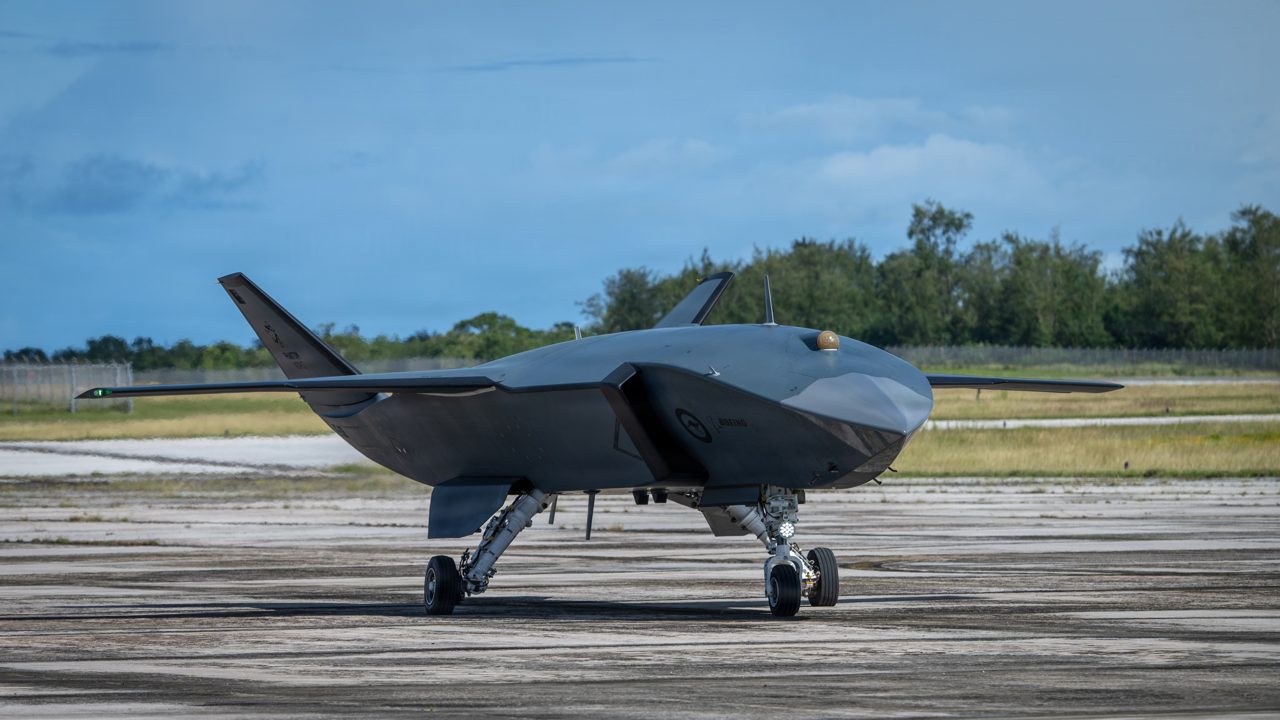
The debut of Boeing's combat-ready uncrewed aircraft at the Farnborough Airshow highlights a broader industry pivot toward autonomous drone wingmen that promises to reshape the European defense market.
The Boeing MQ-28 Ghost Bat, an Australian-built uncrewed combat aircraft, made its public debut at the Farnborough International Airshow this week, signaling a rapid maturation of autonomous military technology.
Developed as a collaborative combat aircraft, the jet is designed to fly alongside crewed fighters without a pilot on board. Boeing demonstrated its combat capabilities in June during Exercise Valiant Shield 2026 near the Marinas Island Range Complex in the Western Pacific. There, the Ghost Bat operated with U.S. Pacific Command forces, flying in formation with F-35A and F-35B jets. This followed a successful live-fire test where the aircraft destroyed a drone using an AIM-120 AMRAAM missile.
The aircraft boasts a range exceeding 2,000 nautical miles and a ceiling above 40,000 feet. With the wingspan of a modern stealth fighter, it is intended to handle surveillance and electronic warfare, extending the reach of human pilots. “Having MQ-28 participate in such a significant military training exercise is a first, and this is just the start of demonstrating how advanced human-machine teaming extends the reach and awareness of crewed platforms and enhances joint force operations,” Steve Parker, Boeing Defense, Space and Security's president and CEO, said. “We’ve proven that it’s combat capable.”
A shifting defense market
The Ghost Bat's appearance in London underscores a broader market shift that European defense firms are actively adapting to. Industry leaders increasingly view autonomous drone wingmen as essential for countering near-peer rivals like China, turning uncrewed systems into a major growth area for military contractors.
At Farnborough, BAE Systems unveiled a specialized helmet designed to help pilots process the massive amounts of data required to manage fleets of uncrewed aircraft under their command.
However, European manufacturers face stiff transatlantic competition. In June, the U.S. Air Force awarded contracts for collaborative combat aircraft to Anduril for its FQ-44A "Fury" and General Atomics for its FQ-42A. Models of both American drones were on display at the airshow, highlighting the high stakes for Europe's own defense sector as military procurement pivots heavily toward uncrewed systems.