Firm certifies Pope’s anti-AI writings as human using AI tools
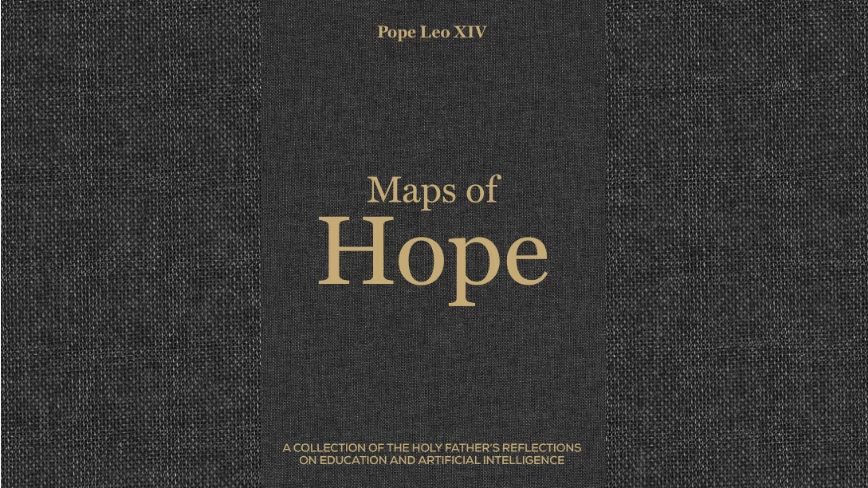
An Australian company has awarded a human authorship trust mark to Pope Leo XIV's new book, highlighting the emerging market for certifying text provenance as AI-generated content floods the internet.
An Australian firm, Proudly Human, has certified Pope Leo XIV’s new book, Maps of Hope, as entirely human-authored. The certification comes months after an AI researcher suggested the Pope’s earlier encyclical bore the hallmarks of machine-generated text.
In May, researcher Linch Zhang pointed to the use of em dashes and rhetorical triads in Magnifica Humanitas to suggest it was drafted using Anthropic’s Claude. The Vatican never confirmed those claims, but the controversy prompted the Australian Catholic University and the Vatican’s Dicastery for Culture and Education to seek independent verification for the new collection, which features a foreword by Cardinal José Tolentino de Mendonça.
Proudly Human, led by former Australian chief scientist Alan Finkel, requires authors to sign a declaration that AI did not write the first draft or any sentences. The company then runs the text through four or five AI detection tools, including Pangram, alongside its own averaging algorithm to issue a trust mark.
The episode underscores an emerging commercial frontier: text provenance. As machine-written content proliferates online, verifying human authorship is becoming a distinct business model. Proudly Human pitches its trust mark as an organic or fair-trade label for writing. For public institutions and commercial publishers, the ability to prove a document is human-made is rapidly becoming a currency of trust.
Finkel argues that without mandatory disclosure laws, readers deserve to know the origin of a text. “I actually think it’s a fundamental right,” he said. “With the Pope’s attention squarely on the question of AI and human authorship, it tells you this isn’t a niche debate anymore. It’s the defining question of our time.”
However, this certification model rests on imperfect technology. AI detectors frequently disagree with one another and misfire, occasionally flagging human writers whose styles were absorbed by AI training data. A human-authorship certificate is ultimately only as reliable as the flawed algorithms underpinning it.