Wildfire destroys 60 homes in Provence’s Cotignac village
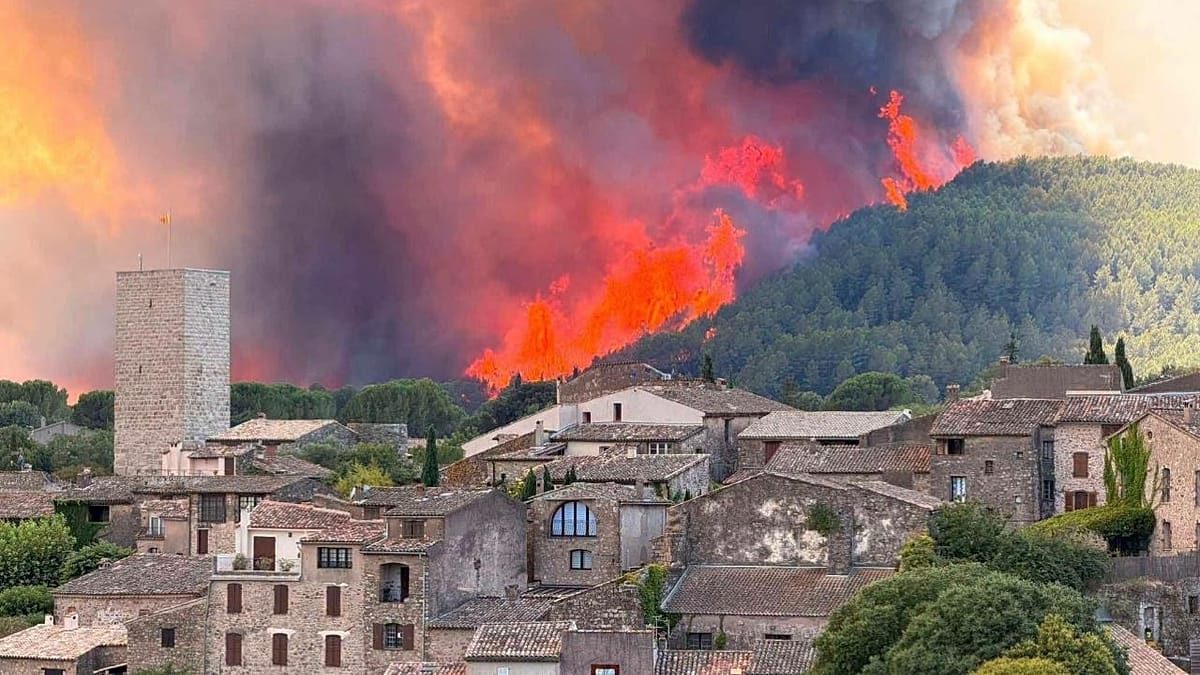
A fast-moving wildfire has devastated the historic tourist village of Cotignac, destroying dozens of homes, cutting power to thousands and testing southern France's emergency infrastructure.
A fast-moving wildfire has destroyed nearly 60 homes in Cotignac, a historic Provencal village, cutting power to thousands and disrupting a regional economy heavily reliant on summer tourism.
The blaze broke out near Pontevès on Tuesday and swept northward across five communes, driven by wind and drought conditions. Around 500 residents were evacuated by Wednesday afternoon. The village, recognized as one of France's most beautiful, typically sees its population surge from 2,500 to nearly 10,000 during the summer months, making the overnight destruction a significant shock to the local economy.
More than 900 firefighters, including reinforcements from Marseille's naval brigade, were deployed to contain the fire. Four people were injured, two firefighters and two civilians. By Wednesday morning, the Var prefecture reported the fire was still active but had lost its earlier aggression.
The damage extended to local agriculture and hospitality. Cattle were evacuated from surrounding hills, while some residents lost horses in affected stables. Lou Calen, an eco-resort operating a Michelin Green-starred restaurant, opened on Wednesday morning to provide breakfast to displaced residents, including nuns evacuated from the hillside sanctuary.
That sanctuary, the 16th-century Sanctuaire Notre-Dame de Grâces, and the adjacent Monastery of Saint-Joseph du Bessillon narrowly avoided destruction as flames reached the stone walls.
The crisis revealed the limits of official communication channels, shifting the burden of emergency response onto informal community networks. "There wasn't a lot of information going around officially," said resident John Michael Peck. "Everyone has a cousin or a friend who's a pompier around here. And so we all had first-hand information trickling down."
"A lot of people ended up opening their doors to strangers," Peck added. "Anyone who was in a location that was affected or ordered to evacuate came to the village and got filtered through the network of friends and relations and taken care of really well."
Municipal infrastructure in neighboring towns absorbed the spillover. Carcès activated its emergency community plan, opening three facilities, including a gymnasium and the Château hall. For some families, the property loss is total. "His parents completely lost their house," said resident Manon Roubard, recounting a colleague's loss. "They are completely lost. It is really complicated for people like them, older people, who can lose everything."