Ukraine names new army chief as protests seek return of former defence minister
President Volodymyr Zelensky has replaced the army chief following mass protests, but lingering demands for the return of a popular reformist minister highlight growing domestic friction over mobilisation and military management in the fifth year of the war.
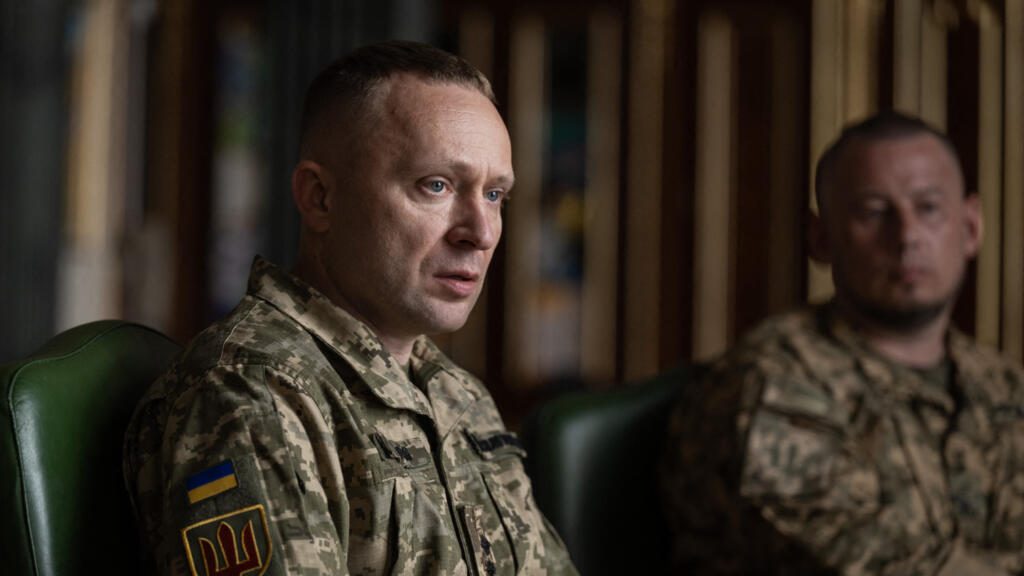
President Volodymyr Zelensky appointed Mykhailo Drapaty as Ukraine’s new army chief on Wednesday. The move follows the dismissal of Oleksandr Syrsky on Tuesday, a direct response to the largest war-related protests since the 2022 Russian invasion.
Thousands of civilians and soldiers took to the streets last week demanding Syrsky’s removal and the reinstatement of former defence minister Mykhailo Fedorov. For European observers, this rare public backlash underscores the mounting domestic strain as the conflict enters its fifth year.
Military personnel view Fedorov’s reformist agenda as critical to troop welfare. A 22-year-old soldier in Izium, using the nickname Khrest, noted that Fedorov actively lobbied for fixed-term contracts. This policy would give mobilised soldiers clarity on their service duration and guarantee periods of rest.
Frustration with Syrsky centered on his perceived disregard for casualty rates. Another soldier in Izium, known as Ananas, accused the former commander of throwing troops into a "meat grinder" early in the war. He also linked Syrsky to a scandal involving violence against new recruits in the Skelia assault unit.
Syrsky, who previously directed the successful 2022 defence of Kyiv and the Kharkiv counter-offensive, has denied mismanagement. He described the reported violations as "shameful" and stated that disciplinary measures were taken against those responsible.
Beyond mobilisation reforms, Fedorov earned praise for accelerating Ukraine’s drone technology. Soldiers argue this digitalisation effort is vital for reducing infantry casualties by substituting human risk with unmanned systems.
However, support for the former minister is not absolute. Svitlana, a 48-year-old nurse in an airborne assault unit, welcomed Drapaty as a respected combat officer but cautioned against idealising Fedorov. She pointed out that military pay has recently decreased, directly impacting soldiers' families.
Svitlana also expressed uncertainty regarding Yevgen Khmara, Fedorov’s successor from the security services. The lack of clarity around the new defence leadership adds to the unease among rank-and-file personnel.
Civilian discontent remains palpable in the capital. A 69-year-old Kyiv resident named Oleg argued that sacking Syrsky is insufficient, suggesting the president attempted to deflect attention from broader governance issues. Meanwhile, 21-year-old political science student Taisiia Obod expressed hope that Fedorov would remain in government to sustain his reform initiatives.
The pressure now falls on Drapaty to stabilise military operations while addressing legitimate grievances over troop rotation. For Kyiv’s international partners, the episode serves as a stark reminder that Ukraine’s war endurance increasingly depends on internal cohesion and sustainable personnel policies.