Polish president to swear in new constitutional court judge
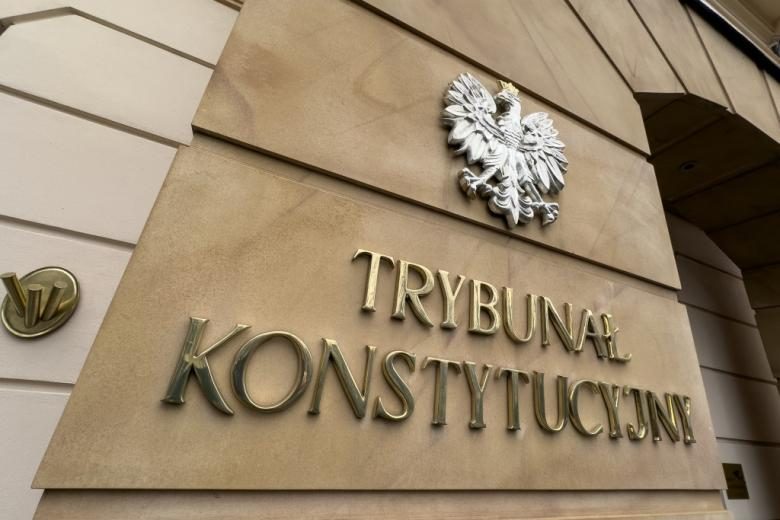
Poland's president will seat one new constitutional judge next week, but the refusal to swear in four others keeps the country's top court locked in a legitimacy crisis that undermines legal certainty for businesses.
President Karol Nawrocki has agreed to swear in Sławomir Patyra to Poland’s Constitutional Tribunal on Tuesday, ending weeks of silence over whether the opposition-aligned president would accept a nominee chosen by the government’s parliamentary majority.
The presidential chief of staff, Zbigniew Bogucki, announced the decision earlier this week. He stated that in Patyra’s case, "we had a fundamentally clean situation here" and that the professor was chosen "in accordance with all procedures". Nawrocki will officially receive Patyra's oath and hand out appointments to four new Supreme Court judges on July 28.
Despite this single concession, four other judges chosen by parliament in April remain in limbo. Nawrocki refused to receive their oaths, arguing there were doubts over the legality of their selection, which in some cases occurred more than a year after vacancies arose. The tribunal’s chief justice, Bogdan Święczkowski, has also refused to accept them, even after the European Court of Human Rights ordered in May that the quartet be allowed to take up their positions.
The tribunal itself, where judges appointed under the former Law and Justice (PiS) government retain a majority, issued a contradictory ruling endorsing Nawrocki’s right to block the appointments.
This tangled legal situation perpetuates a constitutional crisis that creates significant friction for the Polish economy. Because the tribunal still includes judges placed during the 2015 standoff, when a PiS-aligned president refused to swear in validly chosen members, the current government rejects the court's legitimacy entirely. It refuses to recognise the tribunal's rulings.
For businesses and investors, a paralysed top court means prolonged legal uncertainty. Companies operating in Poland cannot rely on constitutional rulings to clarify disputed legislation, as any decision issued by a court the executive branch views as compromised carries questionable weight. Furthermore, the continued institutional deadlock keeps Poland’s rule-of-law disputes with the European Union active, complicating the disbursement of recovery funds tied to judicial independence.
Bogucki defended the president's selective approach, telling Polsat News that "it was not President Nawrocki or the current opposition who destroyed and are destroying the tribunal; it is the government that is doing it." In a sign of the deep divisions within the judiciary, Patyra himself has previously accused Nawrocki and Święczkowski of "blatantly unlawful actions" in deciding which judges can take office.