Ukraine GPS jamming spurs new drone navigation market
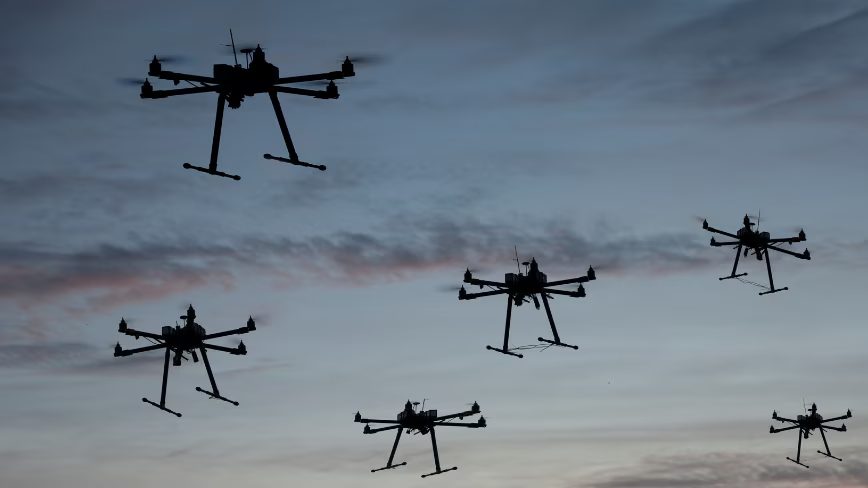
Defence technology firms are racing to sell GPS-free drone navigation systems as electronic warfare in Ukraine renders satellite-guided weapons unreliable and creates a new aerospace market.
Three technology firms used the Farnborough International Airshow this week to pitch navigation systems designed to operate without satellite signals. This hardware push is a direct response to widespread GPS jamming on the battlefields of Ukraine.
Ukrainian and Russian forces now routinely use spoofing and jamming to sever the links between drones and their operators, rendering many guided munitions useless. The vulnerability extends well beyond unmanned aircraft. US-made Excalibur artillery shells lost favour after their GPS guidance proved susceptible to interference, and even physical fibre-optic control wires are now defeated by entangling lines strung across open fields.
Competing approaches include Australian company Q-CTRL's quantum measurements of the Earth’s magnetic and gravitational fields, Israeli firm ASIO's camera-based image processing, and US-based ANELLO Photonics' matchbook-sized fibre-optic laser gyroscope. “The technology is not a replacement for GPS,” said Charlie Burnard, Q-CTRL’s global head of government engagement. “It is a reliable, resilient backup for environments where GPS or even other navigation modalities just don’t operate.”
These emerging products typically blend multiple guidance methods alongside inertial navigation, which tracks movement from a starting point but gradually drifts off course due to compounding errors. The objective is to correct that drift without depending on external signals that adversaries can disrupt. Ukrainian company Sine has already deployed a satellite-free system using time-of-flight methods, and the UK completed the world’s first quantum navigation flights earlier this year.
The commercial imperative for these systems is driven by Ukraine’s deep-strike campaign, which requires drones to fly hundreds of kilometres through contested electromagnetic environments to hit previously out-of-reach targets. Successful strikes on Russian oil refineries have forced Russia to export unprocessed crude at the highest levels since the war began. For manufacturers and investors, the business opportunity lies in selling the narrow margin between a near-miss and a direct hit.