Cambridge built a planet-scale AI model, and skipped Nvidia to do it
The AI industry runs on Nvidia. A team at the University of Cambridge has just shown it does not have to. They have built a planetary-scale foundation model for the Earth, and every chip that trained and ran it came from AMD. The model is called TESSERA, and its idea is borrowed from large language […] This story continues at The Next Web
The AI industry runs on Nvidia. A team at the University of Cambridge has just shown it does not have to. They have built a planetary-scale foundation model for the Earth, and every chip that trained and ran it came from AMD.
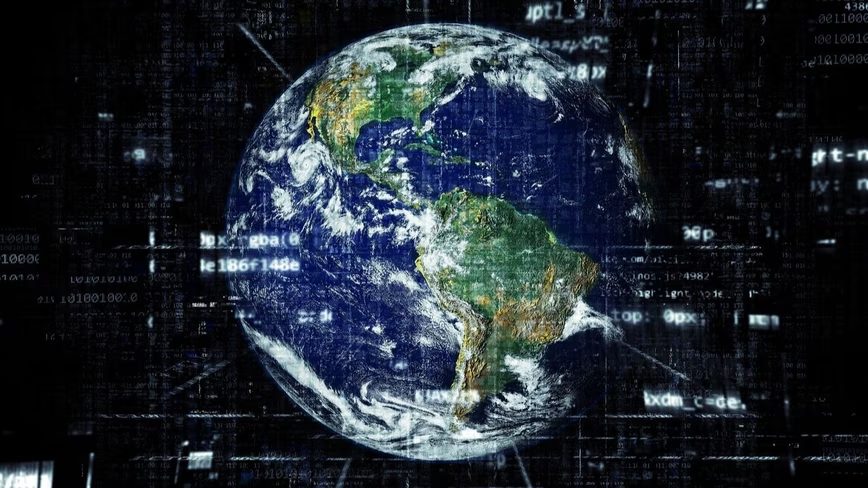
The model is called TESSERA, and its idea is borrowed from large language models. Where an LLM learns from text, TESSERA learns from space. It ingests years of imagery from the European Space Agency’s Sentinel satellites, both radar and optical, the team announced . It then compresses each 10-metre square of the planet’s land into a compact 128-number “fingerprint,” or embedding.
Normally, mapping crops, forests, or floods from satellite data means building a bespoke model and hand-labelling thousands of examples for each task.
With TESSERA’s fingerprints already computed, researchers can build those tools with far less data, often on an ordinary CPU. The team says it needs about 30 times less labelled data than starting from raw imagery.
The result is a kind of base layer for the planet, published free for anyone to use. The more unusual part is what it ran on.
Cambridge’s Energy and Environment group trained TESSERA on 16 AMD Instinct MI300X GPUs, using roughly 6,200 GPU-hours and AMD’s open ROCm software. Training a model is the easy bit. Running it across every 10-metre pixel on Earth, about 1.5 trillion a year, is the hard one.
For that, the team turned to Vultr , an independent cloud firm that sponsored the compute, and six of its bare-metal servers. Each packs eight AMD Instinct MI325X GPUs. Together they churn out roughly three terabytes of compressed data a day. The researchers liken that to covering the landmass of Italy, daily.
A single year of global coverage takes months of continuous processing.
The point is openness. Cambridge is releasing the embeddings free under a Creative Commons licence, alongside the full training recipe. Any government, researcher, or startup can build on them.
Professor Anil Madhavapeddy, who leads the work, says the goal is to “democratise access to planetary-scale environmental monitoring.”
The uses are concrete. Farmers can track crop health and forecast yields at 10-metre resolution, a boon for smallholders in developing regions.
Conservationists can watch habitats shift, from tropical forests to the UK hedgerows that shelter hedgehogs. Energy planners can map solar and wind sites to guide the transition . All of it runs off the same shared fingerprints.
TESSERA is a small story with a large subtext. A public university built a frontier-scale AI model, made it free, and did it on the hardware everyone says you cannot use. The field is convinced that serious AI means Nvidia GPUs and private labs.
A planet’s worth of embeddings, trained on AMD and given away, is a quiet rebuttal.