AMD launches AI chips to challenge Nvidia's data centre dominance
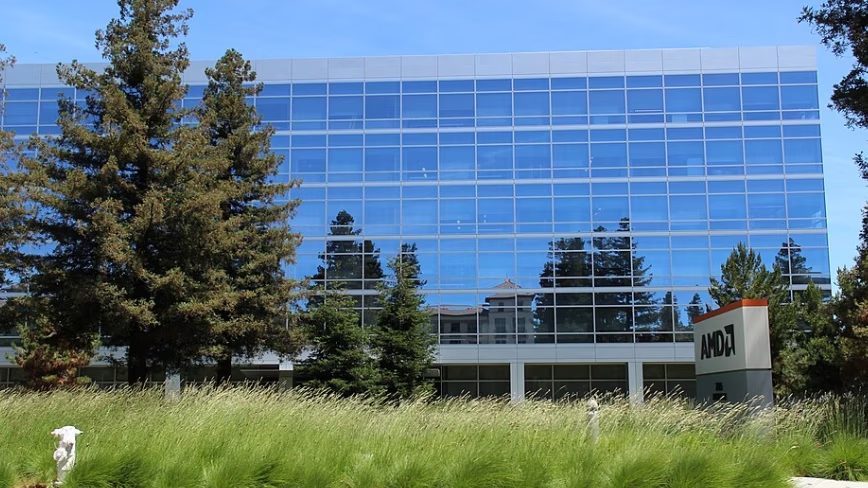
AMD has unveiled a new generation of AI hardware and secured major cloud partnerships, but investors remain doubtful it can overturn Nvidia's market dominance.
AMD introduced the MI455X AI accelerator, the Helios server rack, and Venice Epyc server processors built on TSMC’s two-nanometre process at an event in San Francisco on Thursday. The company claims these products will outperform Nvidia’s rival hardware across AI training and inference workloads.
The release represents a direct strike at Nvidia’s control over the foundational infrastructure powering the global AI industry. For European businesses building AI applications, the outcome of this hardware battle will dictate which computing platforms they adopt. AMD projects the total addressable market for these technologies will reach $2 trillion by 2030, with AI accelerators alone surpassing $1 trillion.
Wall Street did not share AMD's optimism, pushing the company's shares down roughly four percent during the presentation. This decline followed a year-to-date stock surge of roughly 145 percent, indicating that investors had already priced in ambitious growth expectations. The stock's dip highlights a persistent reality in the semiconductor sector: claiming a performance edge is far easier than prying corporate buyers away from an established ecosystem.
Nvidia currently holds a formidable lead, with its Vera Rubin platform already in full production and shipping to major clients like OpenAI, CoreWeave, and Microsoft. AMD chief executive Lisa Su faces the challenge of converting product announcements into actual market share against a deeply entrenched competitor.
To demonstrate momentum, AMD secured high-profile endorsements and deep financial ties. The company announced a $5 billion investment in Anthropic and plans to deploy two gigawatts of MI450 series GPUs in Helios racks to power Claude, with the first gigawatt scheduled for the first half of 2027. This infrastructure build-out signals massive future demand for data centre capacity, regardless of which chipmaker ultimately wins the technical race.
OpenAI's Sachin Katti stated the company expects to deploy Helios "at massive scale" as it expands its infrastructure. Additionally, AMD partnered with Cerebras to pair Helios racks with Cerebras's ultra-fast inference servers for customers requiring the lowest possible latency.
Under this arrangement, AMD hardware will process queries while Cerebras chips generate the rapid responses. Cerebras CEO Andrew Feldman said the combined product "will ship from Cerebras-owned data centres starting in the fourth quarter and will beat a similar offering Nvidia is assembling from its recent Groq acquisition."
The rivalry is also expanding beyond accelerators into server processors. AMD's Venice Epyc chip is built to counter Nvidia's Vera CPU, creating a broad contest over complete rack-scale data centre solutions rather than individual components.