Syrian textile industry targets European export markets post-sanctions
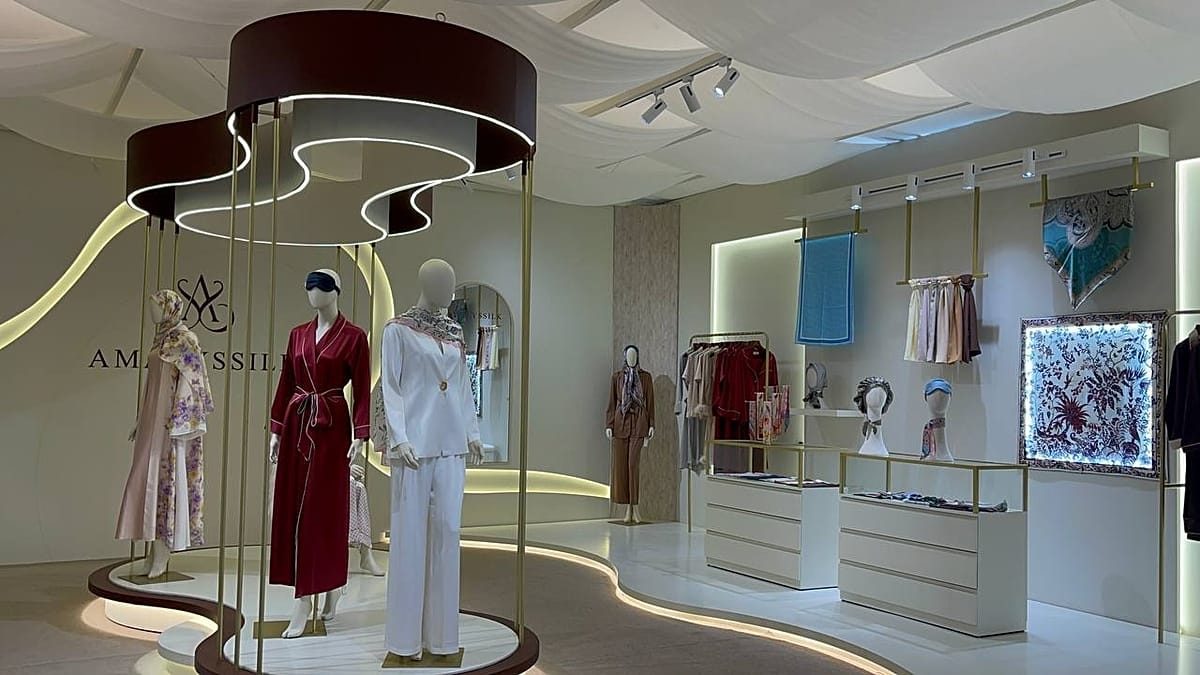
Syria is attempting to rebuild its war-damaged textile industry, offering European buyers a closer and cheaper manufacturing alternative to China and Turkey following the lifting of Western sanctions.
Aleppo hosted the Nas Tex 2026 exhibition last week, the city's first major trade fair in years. Over 300 companies from 20 countries gathered to test the waters for an industrial revival. For European retailers and investors, Syria's return represents a potential new low-cost manufacturing hub.
The lifting of Western sanctions earlier this year removed the primary barrier to capital investment. This shifts the regional supply chain calculus at a time when European buyers are actively looking to diversify away from Asian factories. Syrian industrialists are pitching their country as a direct competitor to established manufacturing nations.
"In Syria, by contrast, labour is skilled, costs less and has high productivity, which allows it to compete with Turkey and China," said Wissam Muhaysin of equipment company Sardaro Muhaysin. The wage differentials underpinning this pitch are stark. Muhaysin noted the minimum wage in Turkey is about $1,000 a month excluding social insurance and holidays. Chinese workers earn roughly 5,000 renminbi, the equivalent of $800 to $900.
Proximity is the other half of the sales argument. "When we export to the Gulf or Europe we are much closer than China," added Makram Shattahi, vice-president of the Syrian-Chinese Business Council. "That shortens time and shipping costs and gives Syrian products a better chance to compete."
Before the 2011 civil war, Syrian mills even supplied the textile for Queen Elizabeth II's wedding gown. The conflict destroyed factories and prompted an exodus of expertise. "Before 2010, Egypt's textile industry was almost non-existent," Muhaysin said. "Today Egypt is one of the rising players, thanks to Syrian youth and Syrian expertise that moved there, and the same happened in Turkey."
Rebuilding that capacity requires overcoming severe logistical hurdles. Government data show that while textile establishments surpassed 24,000 in 2024, only 56.8% are currently operating. Factory owner Hussam Othman noted that poor local yarn quality forces a reliance on imports from India.
High fuel and mazut prices also squeeze margins. "The Syrian market alone is not enough," Othman said. "What we really need is more exports."
Reviving cotton production is central to scaling up those exports. Economy Minister Nidal al-Shaar stated output could reach 300,000 to 400,000 tonnes annually if idle plants are brought back online. At the start of the 2000s, production was roughly 1 million tonnes a year.
Foreign capital is beginning to position itself for the recovery. Shattahi said a twinning agreement was signed with Suzhou Land Group to develop the Sheikh Najjar industrial city and a worker training centre. "Sanctions used to make investors afraid of pumping money into an industry that requires large amounts of capital, because capital is cowardly," Muhaysin said. "Today, with sanctions lifted, fully integrated production lines, from spinning and yarn through to the final product, are expected to return."