Genesis AI pursues $500m at $3bn valuation for robot software
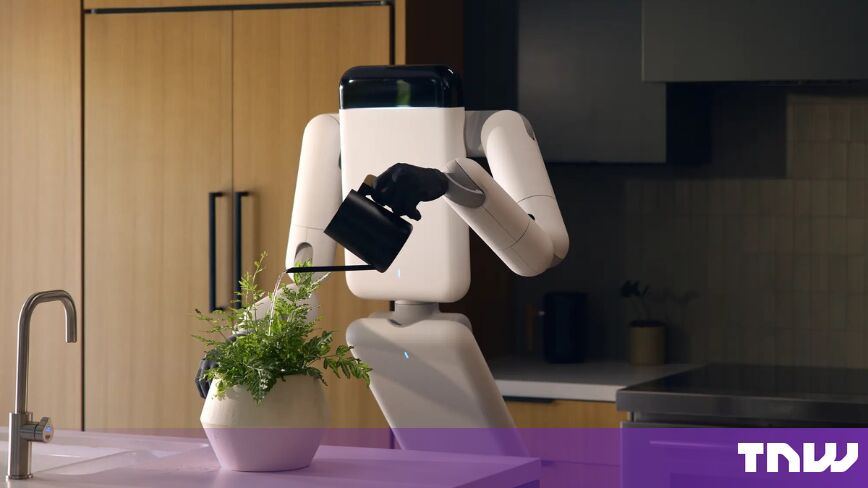
The French-American startup Genesis AI is seeking $500 million to build universal software for robots, a deal that would cement Europe's foothold in the emerging physical AI arms race.
Genesis AI is in discussions to raise approximately $500 million at a pre-money valuation of roughly $3 billion. The round would mark a dramatic markup for a company that only emerged from stealth last July. Premji Invest is reportedly in talks to lead the funding, with HSG and Northzone weighing further investment.
Rather than building metal, Genesis is selling software. Its foundation model, GENE-26.5, is designed to function as a shared brain across different machines. The company trains this system using synthetic data generated by an internal physics engine capable of running scenarios hundreds of thousands of times faster than real time.
To close what it calls the "embodiment gap" between digital models and physical movement, Genesis takes a full-stack approach. It builds both the software and the dexterous, human-like hands the software operates, alongside a $300 sensor glove worn by workers to capture training data. Last month, the company unveiled Eno, a wheeled robot intended as an alternative to the current wave of humanoid machines.
The startup maintains a distinctly transatlantic footprint. Co-founded by Carnegie Mellon PhD Zhou Xian and Théophile Gervet, a former research scientist at Mistral AI, Genesis employs about 60 people split evenly between Europe and the United States. It operates from Paris, the San Francisco Bay Area, and a recently opened London office.
A successful close would represent a swift ascent from its $105 million seed round last summer, which was co-led by Eclipse Ventures and Khosla Ventures. Early backers also included former Google chief executive Eric Schmidt, French billionaire Xavier Niel, and the French state-backed Bpifrance.
Genesis has positioned itself against rivals like Skild AI and Physical Intelligence partly by pledging to open-source parts of its simulation stack. The potential round underscores a broader shift in venture capital away from chatbots and toward physical AI. Investors are placing massive bets on general-purpose robotics, evidenced by NEURA Robotics securing up to $1.4 billion, London-based Humanoid raising $152 million, and Standard Bots reaching a $1 billion valuation.
None of the reported investors have publicly confirmed the deal, and the exact structure of the round remains undisclosed. As with all private fundraising, the discussions could still shift or fall apart before a term sheet is signed.