Kremlin revives false claim Johnson took £1m bribe to block Ukraine peace
Russian officials are distorting a British newspaper's reporting on a political donation to falsely claim Boris Johnson derailed 2022 peace talks, continuing a Kremlin campaign to shift blame for the war onto the West.
Kremlin envoy Kirill Dimitriev has renewed a misleading claim that former British Prime Minister Boris Johnson sabotaged early Russia-Ukraine peace talks in exchange for a £1 million donation. In a post on X on 21 July, Dimitriev alleged Johnson scuttled a draft agreement ready to be signed in March 2022. He linked this to a British businessman he described as a military drone manufacturer.
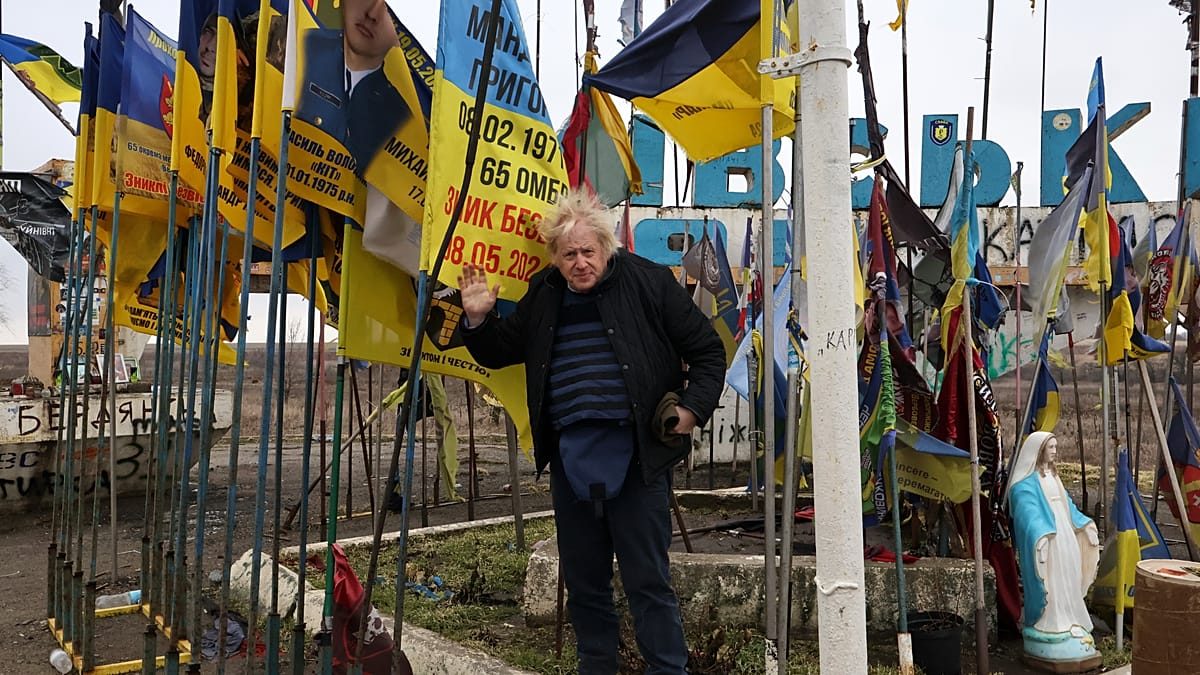
The factual timeline contradicts this narrative. The £1 million donation came from Christopher Harborne, an investor who holds shares in a company that supplies military equipment to Ukraine. Harborne gave the money in November 2022, two months after Johnson left office and well after the Istanbul talks had collapsed. Harborne later accompanied Johnson on a visit to Kyiv in September 2023 to meet Ukrainian officials.
The Russian claims appear to distort a recent investigation by The Guardian. On 10 October 2025, the newspaper published a report examining transparency issues surrounding Harborne's donation and his subsequent trip to Ukraine with Johnson. The article did not mention the failed 2022 peace talks, nor did it use the word "bribe".
Russian state media nonetheless seized on the reporting to fabricate a corruption angle. On 12 October, TASS published an article suggesting Johnson encouraged the prolongation of the conflict for money. The following day, Channel One ran a piece falsely asserting that The Guardian claimed Johnson received money to disrupt the Moscow-Kyiv negotiations.
Both Kyiv and London have rejected the premise, with Ukrainian President Volodymyr Zelenskyy telling The Guardian in February 2025 that he never approved the Istanbul ultimatums. "It doesn't fit with logic; what was he [Johnson] supposed to be talking us out of?" Zelenskyy said. Johnson has previously characterised the accusations as "Russian propaganda".
For European audiences, this episode illustrates the ongoing disinformation tactics used to shape perceptions of the war. By weaponising a genuine UK political transparency scandal, Moscow is attempting to reinforce its core narrative that the West is responsible for prolonging the conflict.