Estonian tech NGO trains 5,000 girls to close sector gender gap
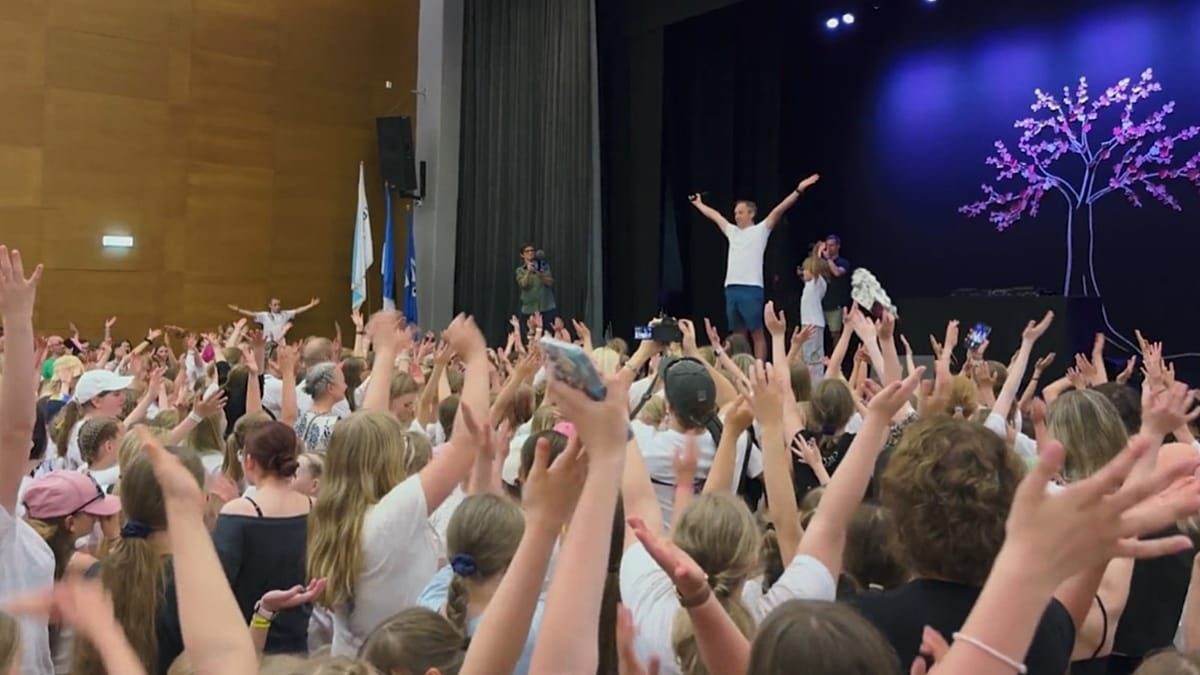
An Estonian NGO founded by the country's former chief information officer has taught tech skills to 5,000 girls, a grassroots effort to secure the workforce needed for Europe's digital economy.
Hundreds of girls gathered at Viimsi School outside Tallinn for a three-day summer camp featuring robotics, drones, and artificial intelligence workshops. The event is the flagship programme of the HK Unicorn Squad, an NGO providing free technology education to girls across Estonia.
The organisation was founded in 2018 by Taavi Kotka, the entrepreneur who served as Estonia's first Chief Information Officer and now advises the government on its national AI strategy. For Kotka, attracting more women into engineering is not merely a social initiative but an economic necessity.
“Solving country level problems is an interesting challenge for me. Getting more girls into engineering, is a national issue. Engineers don't just solve mechanical problems, we can also fix social problems,” he said. Bridging the gender gap in technology is increasingly viewed across Europe as critical to maintaining industrial competitiveness and filling severe talent shortages.
Around 5,000 girls have completed the Unicorn Squad programme so far. That figure represents roughly one in ten Estonian girls aged between 8 and 14. While the full economic impact will only be measurable in a decade, the initiative addresses a systemic pipeline problem that restricts Europe's tech sector growth.
The project originated when Kotka’s daughter Helena and another girl were removed from their primary school's robotics club after it was reduced. In response, Kotka built a dedicated space for girls. Helena has since completed the programme and now teaches drone-flying and robotics to younger participants.
The curriculum highlights how technology is becoming embedded in all professions, not just traditional IT roles. “Every sector needs more and more technology,” said Helena, who plans to study medicine. “If I were to become a surgeon, more and more operations are being done with the help of robots, or with AI. I'll have an advantage over other medical students who haven't had as much exposure to such things.”
Kotka ultimately wants this educational approach scaled nationwide. “It has to become a government project," he said, articulating a goal for “every Estonian child to learn modern technology.” Speaking at his daughter's high-school graduation, he framed the broader economic ambition: “You must work hard. Estonia is on the periphery, but we are not a backwater. From here, we can take on the world.”