Zuckerberg rejects US ban on Chinese AI as tech rift grows
Meta’s chief executive has urged Washington not to ban Chinese artificial intelligence, wading into a US industry split that will determine which AI systems European businesses are permitted to use.
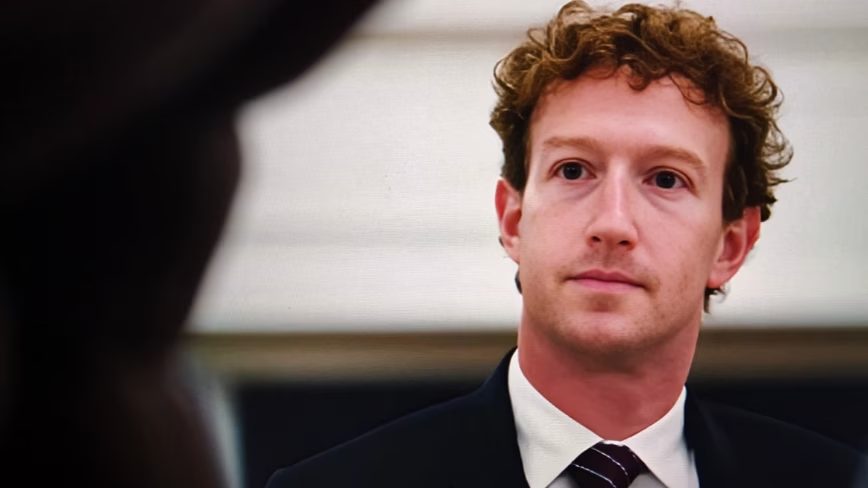
Mark Zuckerberg has urged Washington not to ban advanced Chinese artificial intelligence models, arguing that such restrictions are "not an effective solution." The Meta chief executive’s intervention, made in an interview this week, places him alongside Nvidia’s Jensen Huang and a coalition of startups lobbying Donald Trump’s administration to keep Chinese open-weight models available in the US.
For European companies and developers, the outcome of this Washington debate is critical. If the US imposes strict export controls or domestic bans on Chinese AI, European access to cheaper, competitive models could be severely curtailed. Zuckerberg argued that rather than building a wall, the US should identify and fix its own competitive bottlenecks.
Zuckerberg also used the interview to criticise American rivals, implicitly targeting OpenAI and Anthropic. These companies have pressed the government to restrict powerful "frontier" models on national security grounds, warning of risks like cyber-attacks and bioweapon development. Zuckerberg countered that this approach simply concentrates technological power in too few hands. "The big trend in the industry’s development has always been towards greater openness, putting technological power in the hands of more people, not fewer," he said.
The comments highlight a deepening schism in the global AI sector. Meta, Microsoft, Nvidia, and Elon Musk advocate for open-weight models, while OpenAI and Anthropic favour tighter controls. This divide dictates whether Europe’s tech ecosystem will standardise on locked, centralised systems or open-source alternatives.
However, Zuckerberg’s stance faces internal contradictions. Meta built its AI reputation on releasing its Llama models as open weights, yet its newest flagship model, Muse Spark, arrived as a closed-source product. Critics were quick to highlight this discrepancy.
The Washington debate has been accelerated by Chinese progress. The mid-July release of Moonshot AI’s Kimi K3 demonstrated that cheap Chinese models are rapidly closing the gap on American leaders. On 24 July, twenty-five organisations signed a letter titled "Open Weights and American AI Leadership," arguing that openness is the surer path to US primacy.
Zuckerberg framed his argument around a future of "personalised superintelligence," a direct contrast to the centrally controlled, safety-first models championed by his competitors. Ultimately, US officials must decide whether openness makes American AI stronger or merely easier to copy. For Europe, which is finalising its own regulatory framework, that US decision will determine the landscape of available technology for years to come.