Athens defends 6 million euro Nolan film subsidy amid US backlash
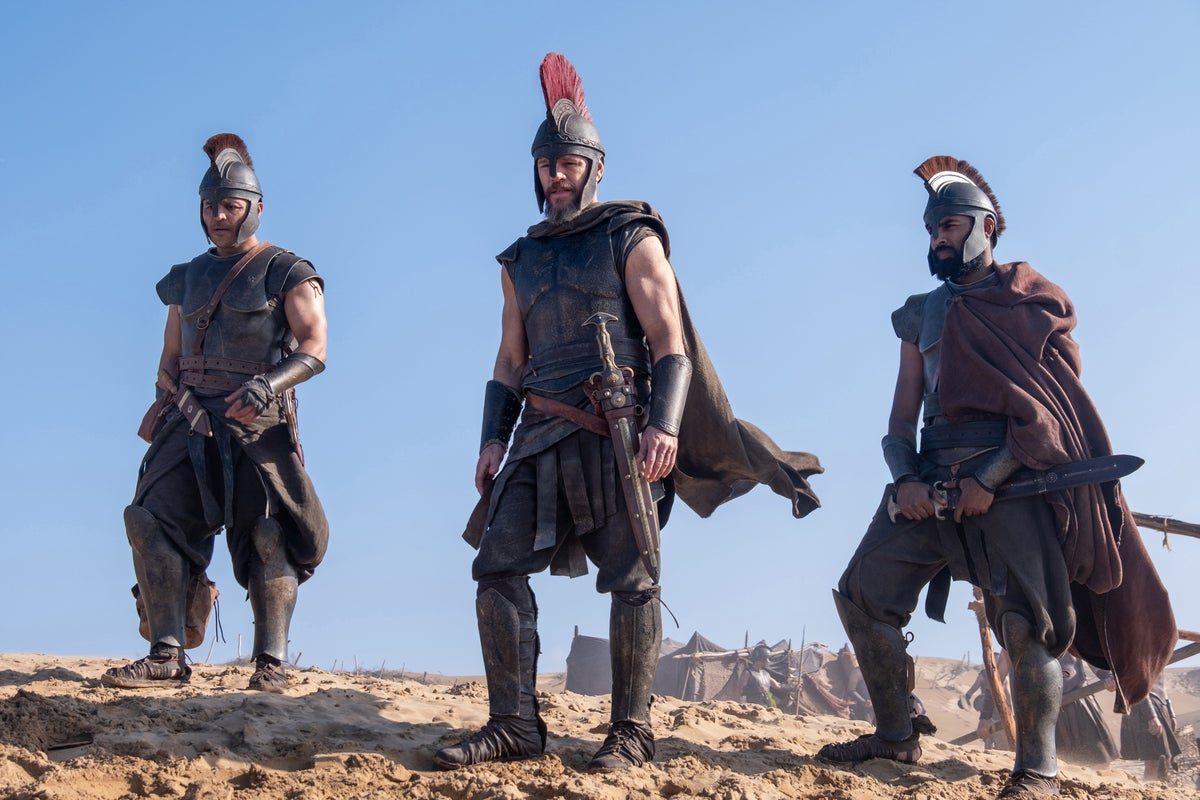
Greece’s culture ministry has rejected calls to withdraw a 6 million euro subsidy for Christopher Nolan’s ‘The Odyssey’, drawing a line between European cultural funding and an American-led identity politics debate.
The Greek government will not reverse roughly 6 million euros ($6.9 million) in production subsidies for Christopher Nolan’s "The Odyssey" despite a mounting campaign by US conservatives and a small Greek nationalist party.
The small nationalist party Niki had demanded the funding be pulled, arguing Greek taxpayers were financing an imposition of "woke-type ideology" on national cultural identity. The party cited Elon Musk, who claimed Nolan had desecrated the epic after Black actor Lupita Nyong’o was cast as Helen of Troy.
Culture Minister Lina Mendoni dismissed the criticism. “It is not the state’s role to dictate to a creator how they should artistically interpret a work or a myth,” she told the Greek popular culture magazine Lifo.
The subsidy is earmarked to support local production, a growing segment of the Greek economy. Nolan’s film, which follows Homer’s outline of King Odysseus’s return home, features Matt Damon in the lead role alongside Anne Hathaway, Robert Pattinson, Tom Holland, Zendaya, Charlize Theron and narration from Travis Scott.
The casting controversy, which consumed US conservative commentators including Matt Walsh, has largely failed to resonate in Greece. The country has a long history of embracing foreign actors in ancient roles, from Anthony Quinn in "Zorba the Greek" to Brad Pitt as Achilles and Gerard Butler as King Leonidas.
In Greece, the public conversation around the adaptation is less about identity politics and more about education and reinvention. Filippos Mantzaris, who teaches the epic to seventh graders, pointed to how the story has survived for nearly 3,000 years.
“What we want children to understand is that every new creation is exactly that — a new creation," Mantzaris said. In seventh grade, “The Odyssey” is taught in all Greek classrooms, where students debate the hero’s morality and intelligence.
Nolan told the AP he wanted to make the film accessible and "not look back to sort of past Hollywood versions of how to take on the ancient world." He told The Telegraph that backlash "comes with the territory," adding that pre-release debates are "always irrelevant, because no one having them knows what the film actually is yet."
Christos Tsagalis, a professor of ancient Greek literature at the Aristotle University of Thessaloniki, framed the global interest as a triumph. “I think it’s wonderful that something that is created at a specific point in time by a given people is shared by so many people across the globe," Tsagalis said. “It’s shared culture.”