Morawiecki forms rival Polish parliamentary bloc as PiS fractures
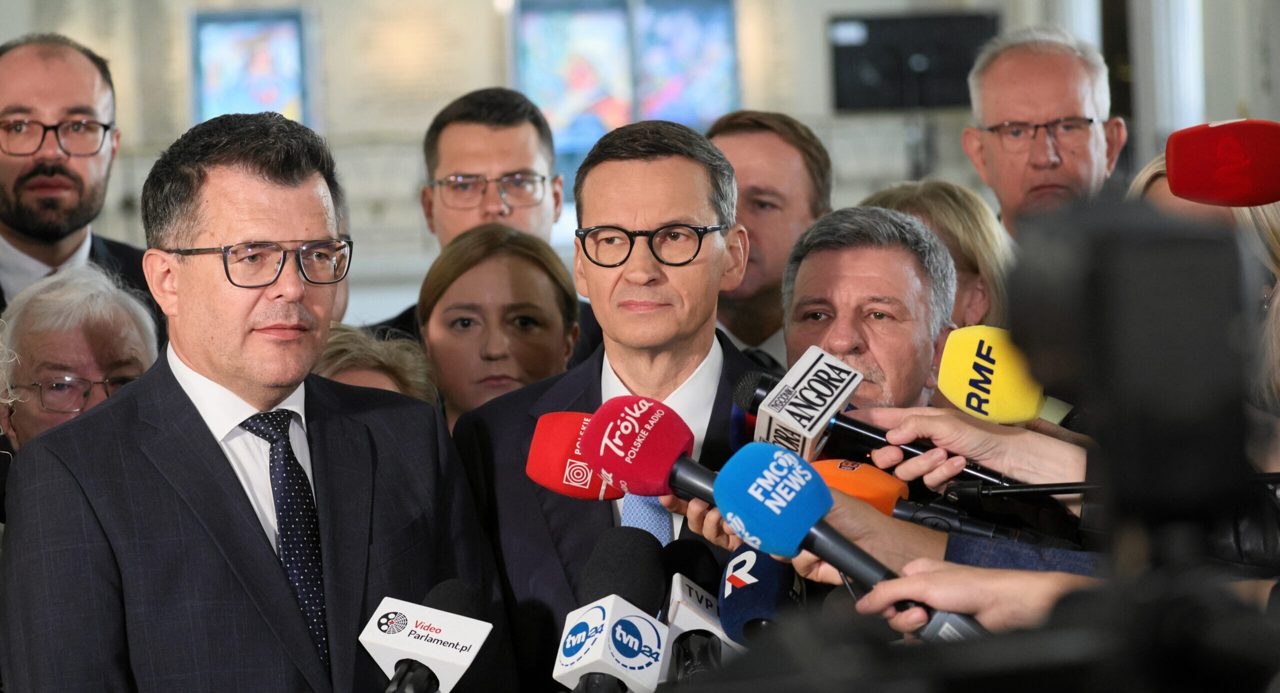
Former Prime Minister Mateusz Morawiecki is establishing a separate parliamentary group with 40 MPs and one senator, fracturing Poland’s main opposition party and weakening its electoral prospects ahead of the 2027 elections.
Former Polish Prime Minister Mateusz Morawiecki is forming a rival parliamentary caucus with 40 MPs and one senator, formalizing a deep fracture within the national-conservative Law and Justice (PiS) party. Once established, this new bloc will become the third-largest group in the Sejm, stripping PiS of its status as the lower house’s biggest opposition faction.
The move follows months of internal tension over the party’s political direction. PiS leadership recently demanded that lawmakers resign from outside political associations, threatening expulsion for non-compliance.
Party chairman Jarosław Kaczyński accused Morawiecki of executing a "planned split" despite reconciliation efforts. Conversely, Morawiecki’s ally Marcin Horała stated the group is not leaving PiS entirely, though he noted the main caucus has stopped treating them as members.
Morawiecki described his faction as ready to serve as a "second lung" for the broader right-wing camp. However, he warned that PiS messaging is increasingly hijacked by "dissidents and schemers" alongside hardline elements like Sovereign Poland, which merged into the party in 2024.
The party’s disciplinary officer, Karol Karski, confirmed he will review the cases of dozens of members who failed to submit the required loyalty declarations. These proceedings could result in temporary suspensions or outright expulsion from the party.
Electoral Vulnerability
This internal rupture arrives at a precarious moment for PiS, which governed Poland from 2015 to 2023. The party’s polling support has slumped to 23-24 percent, its lowest level in 14 years, following its 2023 election defeat.
Simultaneously, far-right challengers such as Confederation and the Confederation of the Polish Crown now poll at a combined level rivaling PiS. In response, Kaczyński recently named hardline conservative Przemysław Czarnek as the party’s prime ministerial candidate for the upcoming elections.
Moderate figures fear this rightward pivot alienates centrist voters without recapturing lost support. Adam Szłapka, a spokesman for the current liberal government, argued that PiS has effectively adopted the far-right agenda of Grzegorz Braun "from A to Z".
For European observers, the fragmentation of Poland’s dominant right-wing force introduces significant uncertainty ahead of the 2027 parliamentary elections. A weakened PiS could reshape the country’s opposition landscape, potentially altering Warsaw’s domestic stability and its negotiating posture within the European Union.