Europe lacks unified criminal data to track deliberate wildfire arsonists
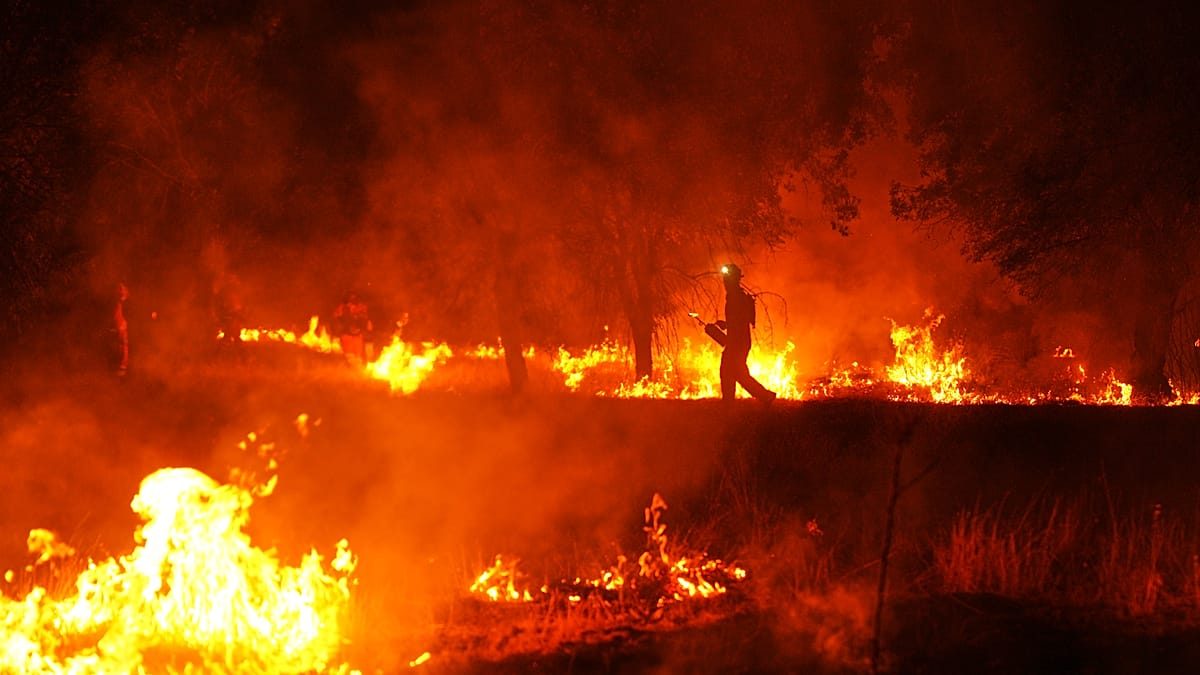
While the European Union has built advanced satellite and firefighting networks to combat record wildfires, a fragmented legal landscape and missing criminal intelligence leave the economic drivers of deliberate arson largely untracked.
The European Union has assembled a sophisticated cross-border firefighting network and satellite monitoring system to combat increasingly destructive wildfire seasons. However, the bloc lacks a unified criminal intelligence framework to investigate who deliberately starts these fires or to understand their underlying economic motives.
This intelligence gap creates significant blind spots for land markets, environmental investors, and cross-border security coordination. Without harmonized data, authorities cannot effectively target the financial incentives driving land speculation or track organized environmental crime across member states.
Data from the European Commission shows the bloc lost over one million hectares to wildfires in 2025, an area comparable to Cyprus and the largest recorded in its monitoring history. While the Copernicus Earth observation programme tracks fire spread and damage, satellites cannot determine if an ignition was deliberate.
Establishing intent requires national police investigations, but criminal law remains a strictly national competence. There is no harmonized European definition of arson, and Eurostat produces no comparable EU-wide dataset on deliberate fire-setting, unlike its tracking of homicide or robbery.
Legal frameworks vary drastically across the continent. Spain and Portugal enforce specific offences for forest fires, whereas Germany categorizes arson based on the broader danger posed to human life. Under French law, setting fire to forests that risks bodily injury or irreversible environmental damage carries a penalty of up to 15 years in prison and a €150,000 fine.
French Prime Minister Sébastien Lecornu wrote on X during the recent crisis: "Not all these fires are accidents." A Joint Research Centre review highlights that arsonists are driven by diverse motives, including pasture renewal, vandalism, retaliation, and disputes over land management.
A primary economic driver is land speculation, where burned areas are rapidly converted for agriculture or construction. To eliminate this financial incentive, Spanish law now imposes a 30-year ban on altering the use of burned forest land, with Portugal enforcing a comparable 10-year restriction.
Despite these economic risks, Europol prioritizes waste trafficking and pollution under its environmental crime framework. Consequently, deliberate wildfire-setting remains an underdeveloped area of cross-border criminal intelligence, leaving a critical vulnerability in the bloc's environmental security.