Caribbean climate damage hits $53bn, raising stakes for global reparations
A new study reveals climate-fuelled disasters have cost the Caribbean $53.2bn over 24 years, a figure that will intensify pressure on wealthy European nations to fund climate reparations and force corporations to rethink infrastructure resilience.
Climate-fuelled disasters have inflicted $53.2bn (£40bn) in economic damage across Caribbean nations between 2000 and 2024, according to a new study by development thinktank ODI Global. This accounts for more than 90% of the $57bn total damage suffered by 39 developing island nations globally over the same period.
The staggering financial toll is set to intensify pressure on wealthy nations, including major European economies, to fund global climate reparations. The Caribbean has been actively pursuing climate justice, recently providing evidence to the International Court of Justice that resulted in a landmark advisory opinion last year.
That ruling could compel high-emitting states to pay compensation if they fail to curb fossil fuel production and prevent harm to the climate system. Report author Emily Wilkinson noted that attribution studies are crucial for determining the exact proportion of disaster intensity and resulting damage caused by rising global temperatures.
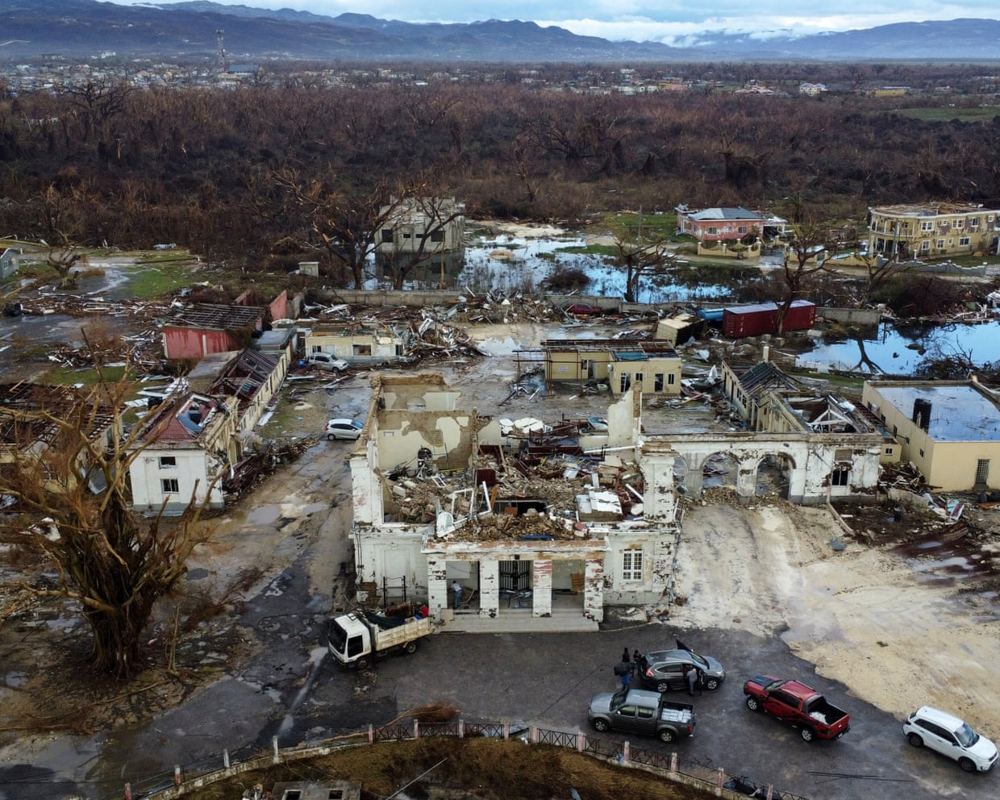
The human and economic costs are accelerating. Hurricane Melissa, which struck Jamaica in October 2025 with 185mph winds, caused $12.2bn in total damage. The report attributes $9.7bn of those losses directly to the climate crisis, a sum representing almost half of the country’s total economy.
This devastation far exceeds the commitments made to the UN’s loss and damage fund. Meanwhile, ODI Global warns that international financing for climate mitigation and adaptation is moving in the wrong direction as some wealthy governments reduce their contributions.
The financial exposure is only expected to grow. Under a 1.5C warming scenario, the thinktank projects that storms alone could generate an additional $49bn in climate-attributable losses across small island developing nations by 2050. That figure rises to $51bn under a 2C scenario.
For businesses operating in the region, the escalating climate shocks are forcing a rapid rethink of infrastructure and energy strategies. Digicel Group, a leading Caribbean telecoms provider, is accelerating a shift to solar power to protect its networks from grid failures during extreme weather.
The company has partnered with US renewable firm Caban Energy to deploy solar-powered telecom sites in Jamaica and Barbados, with plans to expand across 15 of its 25 markets. Chief executive Marcelo Cataldo said the solar systems will generate 15,000MWh annually and avoid 200,000 litres of diesel use.
“We know that in a big hurricane … the infrastructure of the electricity company will affect us and all the other industries,” Cataldo said. “Having solar is an outstanding alternative to return the service faster to our customers.”
National governments are also adapting to the crisis. Jamaica’s prime minister, Andrew Holness, recently pledged to invest in renewable energy, and the government passed legislation in May to speed up post-disaster rebuilding. However, Wilkinson cautioned that transitioning to solar requires overcoming high upfront costs, intermittency, and grid stability issues.