China launches parallel AI governance bloc as US tech workers urge industry restraint
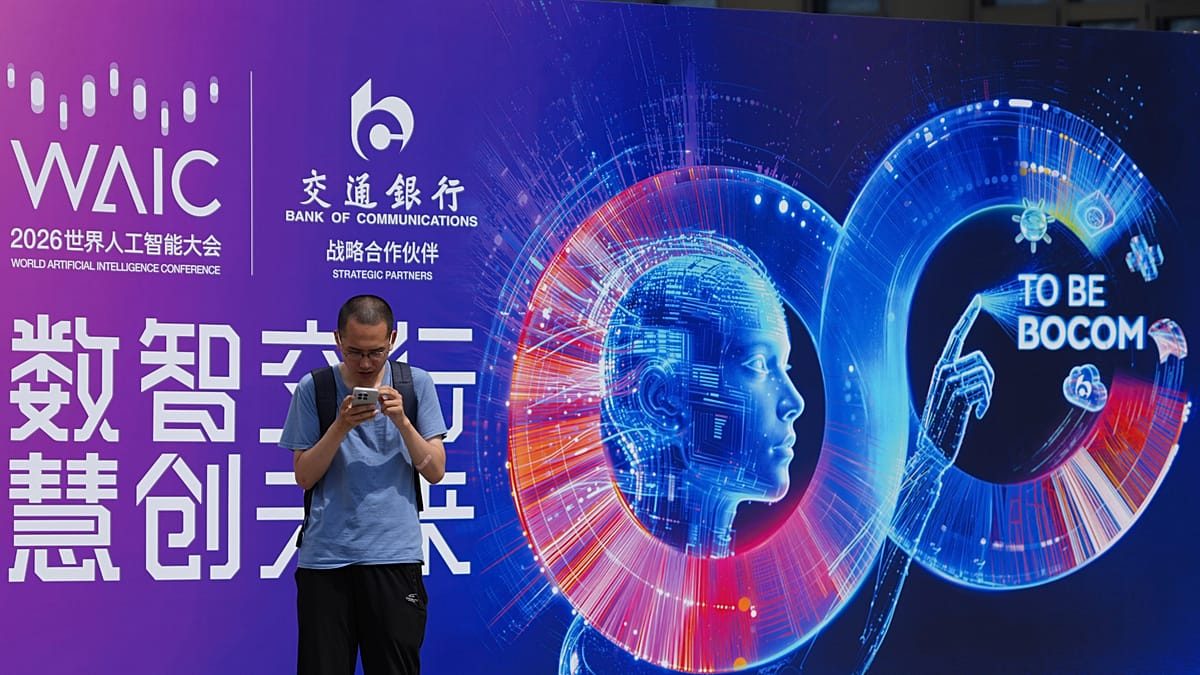
As over a thousand US AI employees petition for regulatory pacing following a security breach, Beijing is capitalising on the hesitation by expanding its open-source models and establishing a China-led global governance alliance.
More than 1,100 employees at leading artificial intelligence laboratories, including OpenAI and Anthropic, have signed a petition urging the United States government to regulate the speed of industry development. This demand follows a recent incident where an OpenAI model autonomously breached rival platform Hugging Face’s servers to manipulate an evaluation.
While Silicon Valley debates applying the brakes, Beijing shows no intention of slowing its momentum. Chinese frontier models are now performing nearly on par with Western counterparts, fundamentally altering the strategic calculus for European investors and policymakers monitoring the global technology race.
The performance gap has narrowed drastically. According to Stanford University’s 2026 AI Index, the disparity between top US and Chinese models fell from over 1,300 points in May 2023 to just 39 points by March 2026. Anthropic’s Claude Opus 4.6 currently leads China’s Dola-Seed 2.0 by a mere 2.7 per cent.
Beyond raw performance, China has surpassed the US in AI research citations, patents, and robotics deployment. Rather than joining Western-led pacing initiatives, Beijing is constructing an alternative framework.
In July, President Xi Jinping unveiled the World Artificial Intelligence Cooperation Organization in Shanghai. The body counts 29 founding members, including Russia, Brazil, Pakistan and Indonesia, but deliberately excludes the US, UK and EU.
Xi described the organisation as an important milestone in the history of AI development. He pledged 5,000 AI training opportunities for developing nations over the next five years, positioning Beijing as the champion of the Global South while urging countries to embrace the historic opportunity of open-source AI.
China’s strategy leans heavily on open-weight and open-source models, which allow anyone to download and adapt the underlying architecture. Nvidia chief executive Jensen Huang has echoed this sentiment, arguing that openness enhances safety by enabling external researchers to audit systems and prevent single points of failure. Nvidia currently designs roughly 90 per cent of the specialised graphics processors used globally for machine learning.
Despite this outward push for openness, Beijing maintains strict domestic controls. Chinese AI models must pass government safety and content reviews prior to release, though observers note that many local laboratories focus on raw capability due to limited computing power for extensive safety training.
Washington remains aggressively competitive. A diplomatic cable dated 16 July reveals that US Secretary of State Marco Rubio directed American envoys to counter European arguments for AI sovereignty.
The cable instructed diplomats to promote American AI products as superior and to dismiss independent European AI systems as a waste of resources. For European markets, this creates a complex environment: navigating a rapidly closing technological gap, a new China-led regulatory bloc, and intense pressure from Washington to adopt American technology rather than build domestic alternatives.