Iran asserts control over Strait of Hormuz and strikes US forces, oil jumps 5%
Tehran’s rejection of international shipping proposals and its ballistic missile attack on US bases in Jordan have triggered a sharp rise in oil prices, threatening European energy security and global supply chains.
Iran has formally rejected an Omani proposal to split the Strait of Hormuz into two equal shipping lanes, asserting full control over the critical waterway. Hours later, the Islamic Revolutionary Guard Corps launched a ballistic missile attack on US forces in Jordan, marking a severe escalation in regional tensions.
The dual developments triggered an immediate 5% jump in oil prices as markets priced in the risk of major supply disruptions. For European economies heavily reliant on stable energy imports, the prospect of constrained maritime chokepoints presents a direct threat to inflation and industrial output.
Deputy Foreign Minister Kazem Gharibabadi stated that Tehran countered the Omani plan with a demand that all vessels transit exclusively through Iranian territorial waters. He emphasized that the strategic strait would "never return to its prewar situation."
Rear Admiral Habibollah Sayyari reinforced this stance, declaring that no maritime movement would occur without Iranian permission. The IRGC has already demonstrated this capability by stopping and boarding three tankers in the strait.
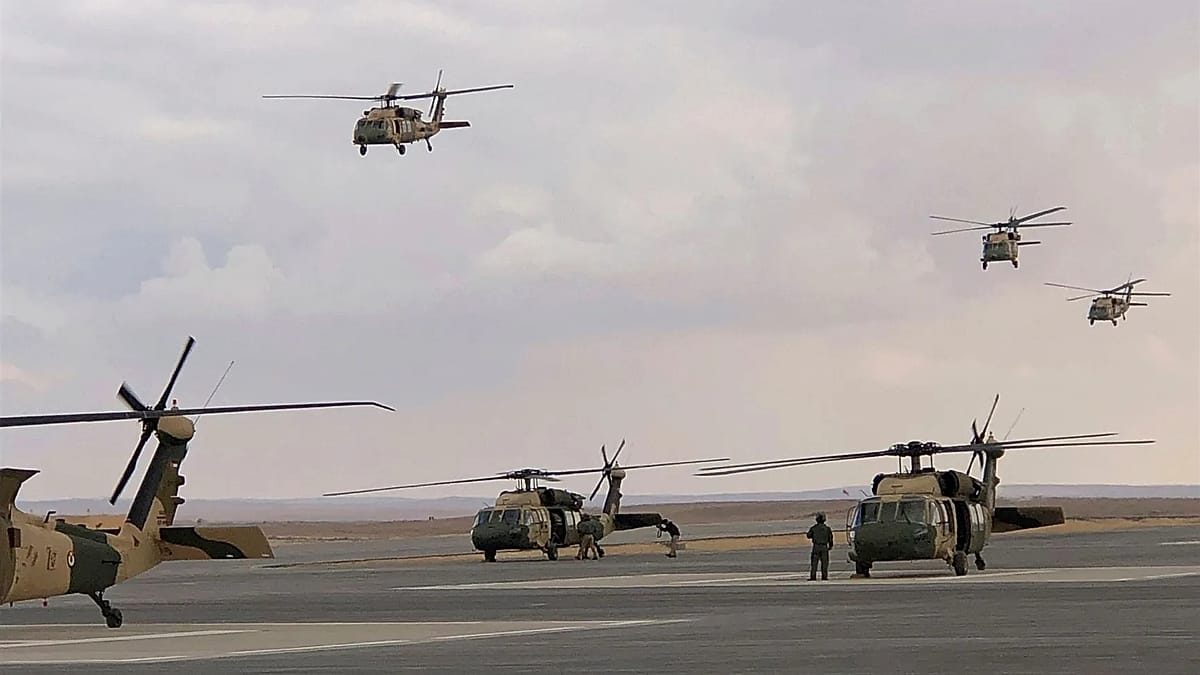
This maritime assertiveness was accompanied by direct military action. CENTCOM reported that IRGC forces launched multiple ballistic missiles from Iran in an attempted surprise attack on US bases in the Middle East at 5:45pm ET.
All incoming missiles were successfully intercepted, with the Jordanian army confirming it shot down five projectiles. The IRGC claimed the strike, dubbed Operation Nasr 2, targeted an airbase and CENTCOM’s headquarters in Jordan.
US President Donald Trump warned of severe consequences, stating that Washington would deliver "a hard lesson" to Iran. "We'll be hitting them hard. They're going to get a beating," he told Fox News.
The conflict has rapidly expanded through regional proxy networks. US and Saudi fighter jets subsequently struck Iran-linked logistics and weapons sites across eastern Iraq, responding to more than 30 IRGC-directed drone attacks over 72 hours.
The Popular Mobilisation Forces reported at least 20 fatalities across seven provinces, condemning the strikes as a dangerous escalation against an official security institution. While President Trump claimed coordination with Baghdad, the Iraqi presidency denounced the action as a blatant violation of sovereignty.
Saudi analyst Hesham Alghannam noted that Tehran is using its proxy network to sustain leverage while diplomacy absorbs international attention. This coordinated pressure extends to the Red Sea, where Yemen’s government accused Tehran-backed Houthis of establishing a fee system for commercial shipping.
As diplomatic visits are postponed and threats of heavy retaliation mount, the convergence of maritime blockades and missile exchanges leaves global trade routes highly vulnerable. European policymakers and investors must now prepare for prolonged volatility in energy markets and freight costs.