DoorDash secures FAA approval for in-house drone delivery programme
The US food delivery giant has obtained regulatory clearance to operate its own custom-built drones, signalling a push to control last-mile economics despite strict limits on autonomous flight.
DoorDash has obtained a Part 135 air carrier certification from the Federal Aviation Administration, allowing it to operate commercial deliveries with its own custom-built drones. Unveiled on 29 July under the name DoorDash Air, the initiative makes the company the eighth US operator to achieve this regulatory milestone.
However, the approval does not grant permission for beyond-visual-line-of-sight flights. Without this clearance, the aircraft are restricted to short, supervised hops, ensuring human couriers will continue to handle the vast majority of orders for the foreseeable future.
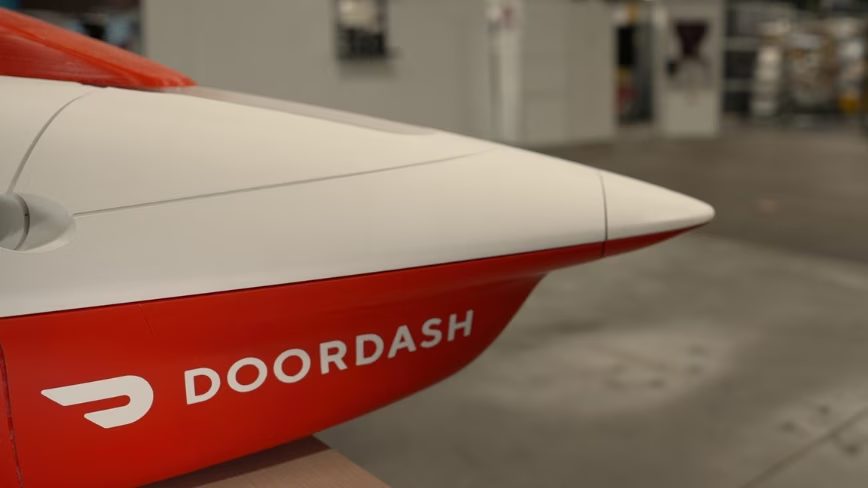
The programme marks a strategic shift from leasing technology to owning it. Developed internally by DoorDash Labs, the custom white and red aircraft allows the company to control design and costs rather than paying third-party partners per flight.
DoorDash has previously relied on external providers, running drone deliveries through Alphabet’s Wing in Dallas-Fort Worth and Australia since the early 2020s, as well as with the Israeli firm Flytrex. The company confirmed these partnerships will continue alongside its proprietary effort.
Executives framed the move as a practical infrastructure play rather than a technological showcase. Co-founder and chief product officer Stanley Tang stated, “We didn’t start with the question, what’s the coolest autonomous tech we could make,” emphasising a focus on functional utility over novelty.
Harrison Shih, head of DoorDash Air, described the effort as building the full stack to serve any merchant. “We want drone delivery to work for any merchant, anywhere. We’re building the full stack,” he said, outlining a system that spans the aircraft, ground equipment, and customer handoff. The company claims deliveries within a five-mile radius average under 25 minutes.
This aerial capability is merely one component of a diversified delivery network. DoorDash already operates sidewalk robots known as Dot and has tested bicycle delivery, aiming to select the most cost-effective transport mode for each individual order rather than replacing human workers outright.
The wider autonomous delivery sector has long struggled to bridge the gap between pilot schemes and scalable everyday service. While competitors like Zipline expand in healthcare and retail, and Manna constructs a US factory to challenge Wing, physical constraints such as battery life, range, and weather remain stubborn barriers.
For European logistics and delivery markets, DoorDash’s vertical integration highlights the growing pressure to master last-mile unit economics. Yet, the persistent lack of beyond-visual-line-of-sight approvals underscores that regulatory and physical realities will keep human couriers at the centre of the delivery economy for years to come.