FIFA disciplines Argentina over Falklands banner and World Cup final misconduct
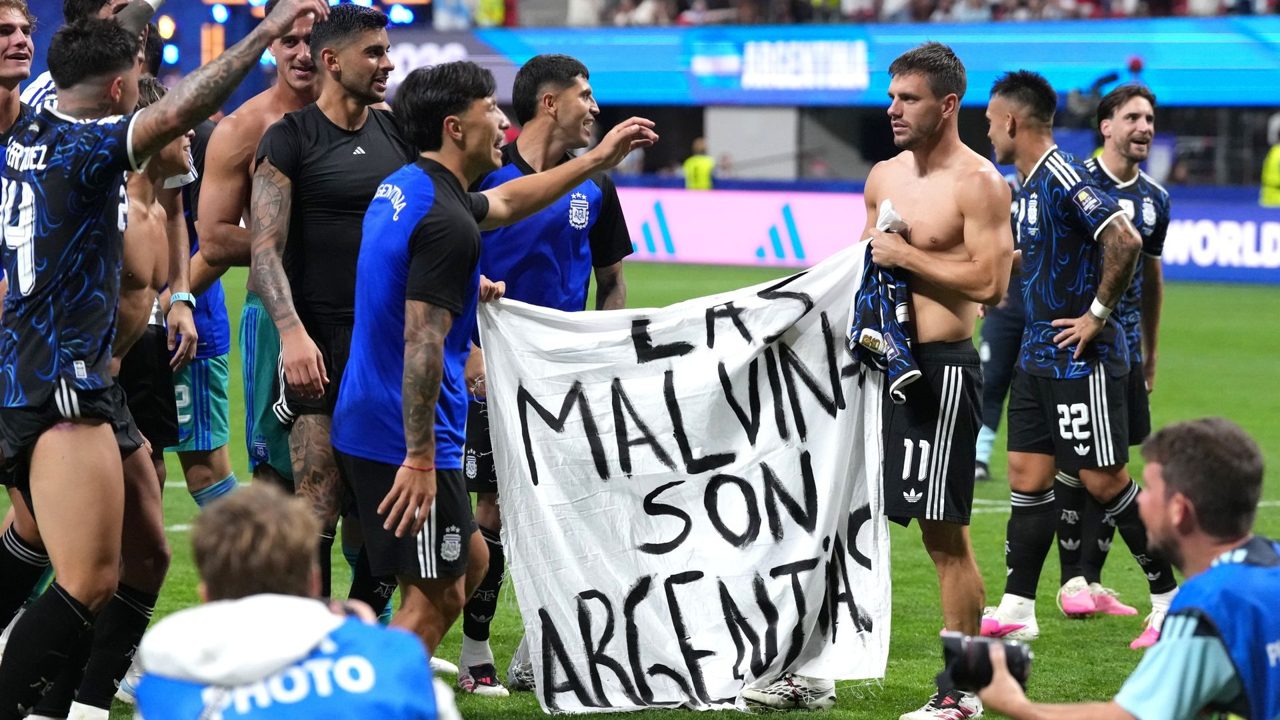
The global football governing body has launched investigations into political messaging and player assaults, testing its enforcement of neutrality rules on the international stage.
FIFA has opened disciplinary proceedings against the Argentine national football team following multiple alleged breaches during the 2026 World Cup. The investigations centre on a political banner displayed after the semi-final victory over England and violent conduct following the final defeat to Spain.
After Argentina's 2-1 semi-final win in Atlanta, players unfurled a banner stating 'The Falklands are Argentine'. Chief correspondent Kaveh Solhekol noted that supporters brought the banner into the stadium, after which players displayed it to fans and left it on the pitch for several minutes before handing it to backroom staff.
This action potentially violates article 13 paragraph 2 c) of the FIFA Disciplinary Code, which prohibits using sporting events for non-sporting demonstrations. Solhekol observed that there was a "very good chance" the banner would have reappeared had Argentina won the tournament.
Final misconduct
Further proceedings stem from the aftermath of Argentina's 1-0 loss to Spain in the World Cup final in New Jersey. Leonardo Paredes faces three charges of assault under article 14 paragraph 1 i) for grabbing and pushing Spanish players.
Disciplinary actions have also been initiated against Nahuel Molina for striking Rodri, as well as Thiago Almada and coach Roberto Ayala. Spanish midfielder Gavi is separately under investigation for alleged unsporting behaviour during the same match.
Beyond individual player conduct, the Argentine federation is being scrutinised for broader institutional failures. These include allegations of racist abuse, late arrivals for matches, security protocol breaches, and fans throwing objects.
The simultaneous investigations highlight the persistent challenge football authorities face in separating geopolitical disputes from the pitch. For European stakeholders and governing bodies, the outcome will signal how strictly FIFA enforces its political neutrality mandates when high-profile nations are involved.
Solhekol suggested the timing of the disciplinary announcement may also serve to divert attention from other controversies surrounding FIFA president Gianni Infantino's reported plans to sell off parts of the World Cup. The focus now shifts to how the governing body balances these competing narratives.