Pentagon targets $300m for drone-launching robot boats
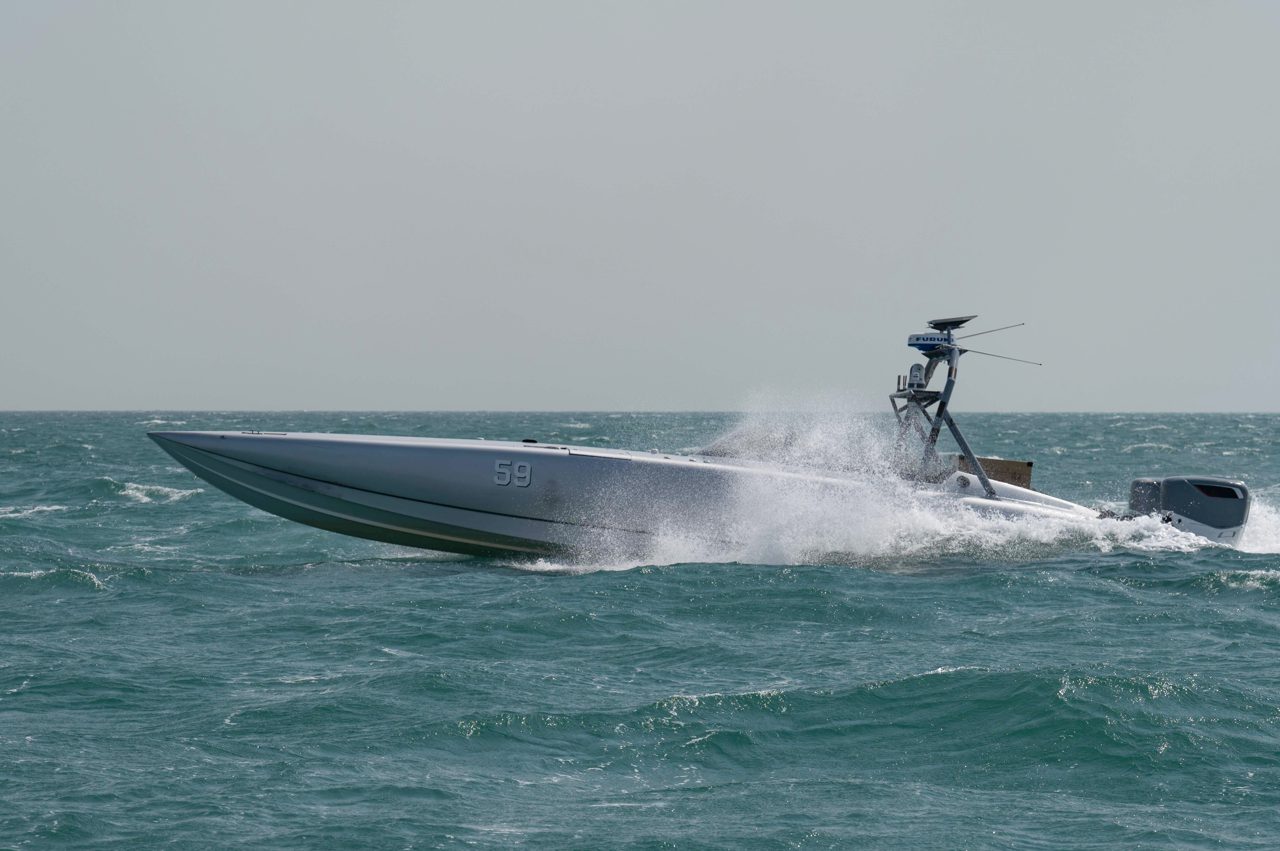
The US military is offering $300 million in prizes and procurement contracts for off-the-shelf robot boats armed with drones, signaling a market shift toward cheap, scalable defense technologies.
The Pentagon has issued an urgent solicitation for unmanned surface vessels capable of launching small attack drones, with a requirement that technology be ready for field deployment within 120 days. The Defense Innovation Unit is leading the effort, targeting threats ranging from hostile unmanned boats in contested waters like the Persian Gulf to "go-fast" smuggling boats and drug-running semi-submersibles.
Under the Suitable Warfighting Adaptive Payloads (SWAP-USV) project, the military wants a robot craft that can carry, launch, and control at least two uncrewed aerial vehicles. These drones must together deliver a kinetic strike payload of at least 2 kilograms. The solicitation demands a mix of recoverable and one-way attack drones capable of intelligence gathering, communications relay, electronic warfare, and precision strikes.
For European maritime manufacturers and drone developers, the solicitation outlines a clear entry point into the American defense market. The DIU explicitly stated it wants to partner with “established maritime manufacturers, autonomy developers, sensor manufacturers, and UAS developers.” Crucially, proposed drones must be “technically mature and have an established production line,” disqualifying early-stage prototypes in favor of commercialized products.
This pivot reflects a broader shift in defense economics that is actively reshaping NATO procurement strategies. “The cost-exchange ratio for detecting and neutralizing asymmetric maritime threats in contested environments is heavily skewed in favor of the adversary,” the DIU solicitation states. The US military acknowledged it can no longer rely “on exquisite, multi-million-dollar naval and aviation assets to intercept these inexpensive targets.”
To accelerate the development of cheaper countermeasures, the DIU has structured the effort as a year-long contest backed by $100 million in prize money. Beyond the prizes, companies that pass testing phases become eligible for procurement contracts supported by a $200 million budget. Responses to the initial call are due by August 10.
The challenge is divided into three phases. Sprint 1, offering $40 million in prizes, targets in-water testing in the fall of 2026 and requires a fully mission-ready system delivered for evaluation within 29 days of down-selection. Sprint 2 follows in early 2027 with another $40 million, focusing on upgraded autonomy and multi-vendor integrations. A final $20 million sprint concludes in summer 2027. The Pentagon also favors designs that can launch remotely from unimproved locations or standard shipping containers, allowing for rapid transport via C-130 aircraft or road trailers.


