Fed holds rates steady as three dissenters push for hike
The US Federal Reserve kept interest rates at 3.50-3.75% despite internal dissent and rising energy prices, signalling to European markets that higher-for-longer borrowing costs remain the baseline.
The US Federal Reserve left its benchmark interest rate unchanged at 3.50-3.75% on Wednesday. It was the fifth consecutive meeting where the central bank held rates steady despite persistently high inflation.
The decision was not unanimous. Three of the 12 voting policymakers—Beth Hammack, Neel Kashkari and Lorie Logan—dissented in favour of a quarter-percentage-point increase to combat persistently high prices.
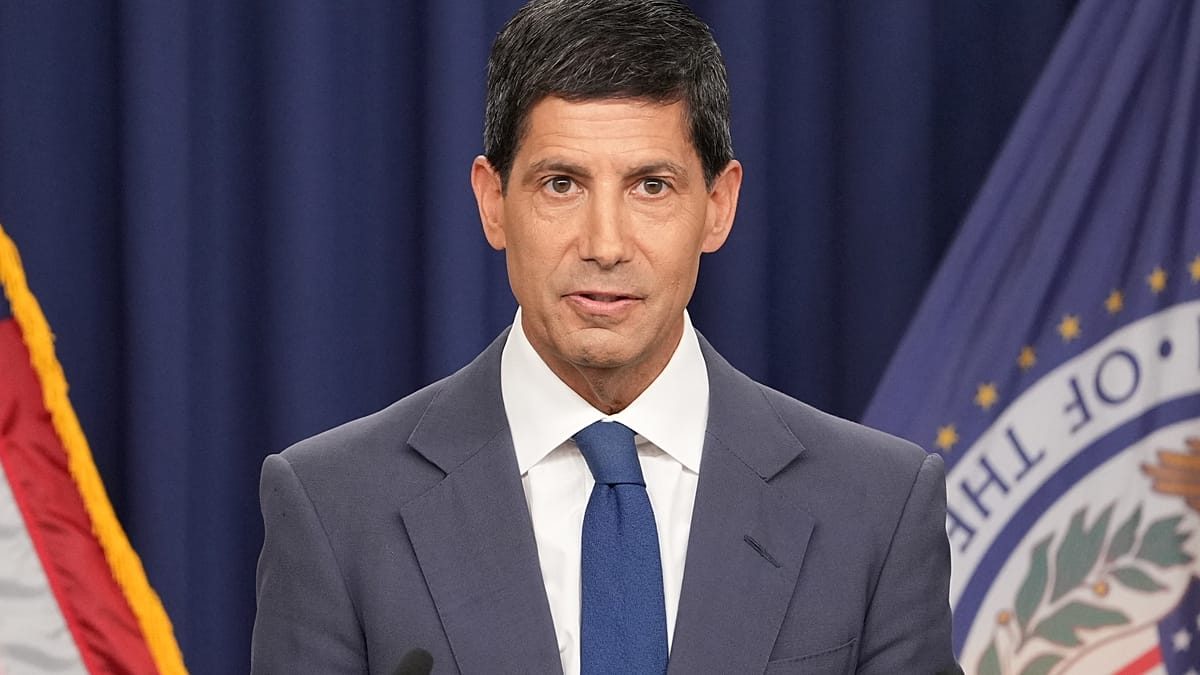
Fed Chair Kevin Warsh acknowledged the deep internal divide. “I asked for a good family fight, and I got one,” he told reporters, while noting the US economy was showing “impressive resilience, even with recent shocks.”
However, the central bank continues to describe inflation as “elevated” relative to its 2% goal, a threshold it has missed for more than five years. Annual consumer-price inflation eased to 3.5% last month, but Warsh cautioned that “the suggestion that we’re going to be able to do it with our magic wands is one I want to disabuse you and everyone else of.” “We are on the job. We will deliver,” he said of the central bank's efforts to restore price stability.
For European businesses and investors, the Fed's calculus carries direct implications because the inflationary pressures complicating its decisions originate partly from the Iran war. Renewed fighting in the Middle East has sent oil prices soaring, driving up energy costs and creating shared economic uncertainty across the Atlantic.
Richard Carter of Quilter Cheviot noted the Fed avoided what he called the “nuclear option” of an immediate hike, choosing instead to keep it “in its back pocket just in case it gets spooked about the path for inflation and has to break the glass.” “June’s better-than-expected inflation readings mean the Fed has the breathing room to take such an approach this time, but as we have seen in the Middle East, things can change quickly, and price pressures can return almost as soon as they have dissipated,” he said.
Financial markets still price a significant probability of a September rate increase. Policymakers will likely wait to examine fresh data due on Thursday, which includes the Commerce Department’s initial estimate of US economic growth from April to June and the personal consumption expenditures price index for June.
Until then, European markets must navigate an environment where the world's largest central bank is explicitly keeping its options open. The rare internal push for higher rates underscores that a transatlantic shift toward easier credit is not yet a certainty.