Florentine convent archives yield 19th-century coca and kola elixir recipe
The discovery of a late-19th-century restorative wine recipe containing coca leaves and kola nuts in a Florence convent archive highlights Europe’s early role in the botanical trade that later shaped the global soft drink industry.
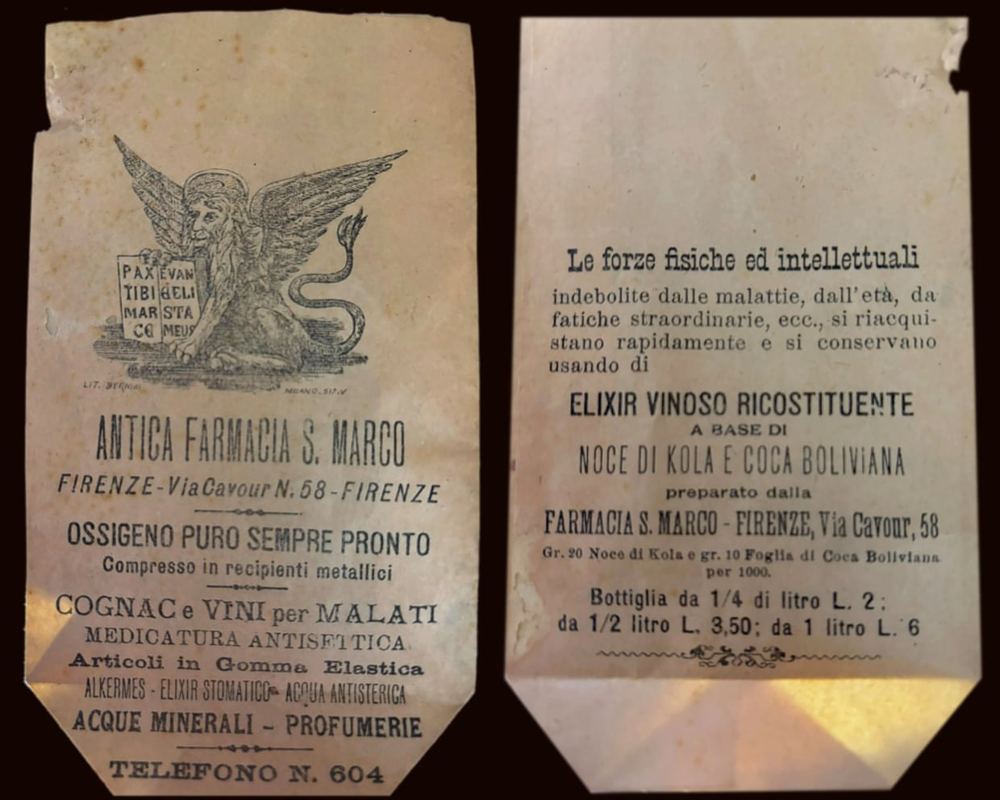
Father Manuel Russo, rector of the San Marco convent in Florence, has discovered an undated late-19th-century promotional flyer in the institution’s pharmacy archives. The document details a recipe for an "elixir vinoso ricostituente," or restorative wine elixir, designed to combat fatigue associated with illness and ageing.
The formulation required 10 grams of Bolivian coca leaves and 30 grams of kola nut blended with wine. This mixture was marketed by the friars as a restorative tonic for the body and mind.
This recipe closely mirrors the formulation developed by American pharmacist John Pemberton in 1886. Pemberton mixed coca leaf extract and kola nuts, but substituted wine with carbonated water due to local alcohol laws, eventually creating Coca-Cola.
While the discovery has prompted local speculation about a Florentine origin for the famous soft drink, Russo dismisses any direct link. "I don’t want to attract a lawsuit from Coca-Cola or something like that," he joked, clarifying that Pemberton invented his own alcohol-free recipe. He emphasized that such coca-based medicines were already commonplace across Italy and France.
Early botanical trade
The find underscores Europe’s early integration into global botanical supply chains. Missionaries imported the Bolivian coca leaves to Italy long before the global ban on the plant in 1961, when the alkaloid’s use in cocaine became a regulatory priority over its medicinal applications.
Archival records indicate the elixir was a commercial success for the convent. Priced between 2 and 6 Italian lira, equivalent to less than a cent in today’s euro currency, it remained a bestseller until the mid-20th-century prohibitions took effect.
The Florentine potion was not the only European precursor to modern soft drinks. Distillers in Valencia, Spain, produced an alcoholic syrup named Kola Coca in 1885, which is also frequently cited as a potential inspiration for later commercial beverages.
The San Marco pharmacy originally opened in 1460 to serve the local poor community, though it relocated within Florence in 1995. The historic premises remain intact, offering a window into historical European pharmaceutical practices.
The original shop still features a crocodile hanging from the ceiling, a 17th-century marker used by chemists to signal access to rare, exotic ingredients. Russo also uncovered archival labels for pure oxygen, cognac, and rectified petroleum spirit, illustrating the diverse inventory of early modern apothecaries.