Trump hesitates on Ukraine missile licensing as Russian strike hits US drone plant
Washington’s hesitation to license advanced missile production for Kyiv, coupled with a Russian strike on a US-owned drone factory, highlights the mounting political and physical risks for Western defence contractors in Ukraine.
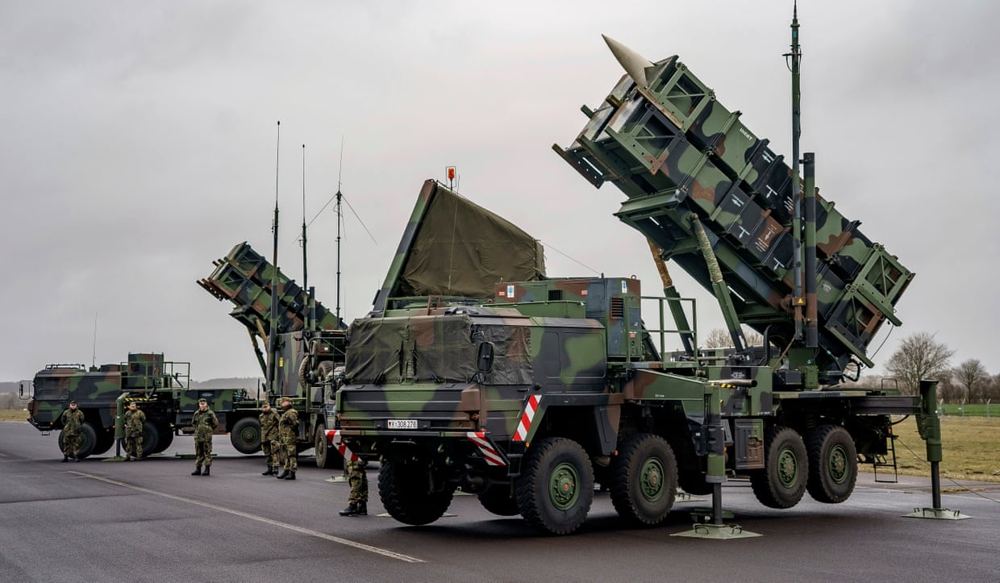
US President Donald Trump has stated he is "not sure" about allowing Ukraine to manufacture Patriot missile interceptors, casting doubt on a key military-industrial proposal discussed during Volodymyr Zelenskyy’s recent visit to the White House. In an interview, Trump described the Patriot as a "very extraordinary weapon" and stated that Washington must "be a little bit careful of who we licence to."
The hesitation creates uncertainty for major US defence contractors that have already begun exploring local production capabilities. Officials from Raytheon Co have visited Ukraine to assess the situation, while Lockheed Martin Corp, which builds the PAC-3 interceptors, is preparing to send its own team of experts.
Despite the public doubt, high-level diplomatic engagement continues, with Trump envoys Jared Kushner and Steve Witkoff scheduled to visit Ukraine in the coming days. Ukraine’s envoy to Washington, Olha Stefanishyna, confirmed the ongoing technical discussions regarding domestic interceptor manufacturing.
The political risks of technology transfer are now matched by severe physical risks for foreign investors, following a Russian ballistic missile strike on a Kyiv drone factory owned by a US corporation. The facility was operated by Terminal Autonomy, a Delaware-registered company that manufactures precision deep-strike drones equipped with guidance systems resistant to Russian jamming signals.
This attack marks the first time Moscow has explicitly targeted a US corporate asset during the conflict, raising immediate concerns about the viability of foreign direct investment in Ukraine’s wartime defence sector. Neither Terminal Autonomy nor the Ukrainian defence ministry responded to requests for comment regarding the destruction of the site.
Border security and information controls
Meanwhile, the physical spillover of the war continues to test European borders and military readiness. Polish Prime Minister Donald Tusk visited the site of a recent explosion fifty miles from the Ukrainian border, where recovered fragments indicated the use of a Russian KH-101 missile.
Although Warsaw does not believe Poland was the intended target, the incident triggered Nato air defences during a massive aerial campaign that killed thirteen people in Ukraine. Gen Alexus Grynkewich, Nato’s supreme allied commander for Europe, affirmed that the alliance will continue taking all necessary measures to defend its territory.
On the domestic front, European governments are also tightening controls on Russian information operations. French Interior Minister Laurent Nunez defended the expulsion of Xenia Fedorova, a former head of the Kremlin-funded RT network, saying she "simply and purely relays Russian propaganda" and that her presence was an attack on the fundamental interests of the nation.
Nunez acknowledged that similar pro-Kremlin narratives would likely continue to be amplified by certain domestic political figures in France. Fedorova’s lawyer has confirmed that his client intends to file an appeal against the deportation order.