Southern Europe confronts intensifying wildfire risk as fire weather surges
A new study reveals that fire-promoting weather in southern Europe has intensified by up to 50 percent, threatening regional economies and infrastructure despite improved firefighting efforts.
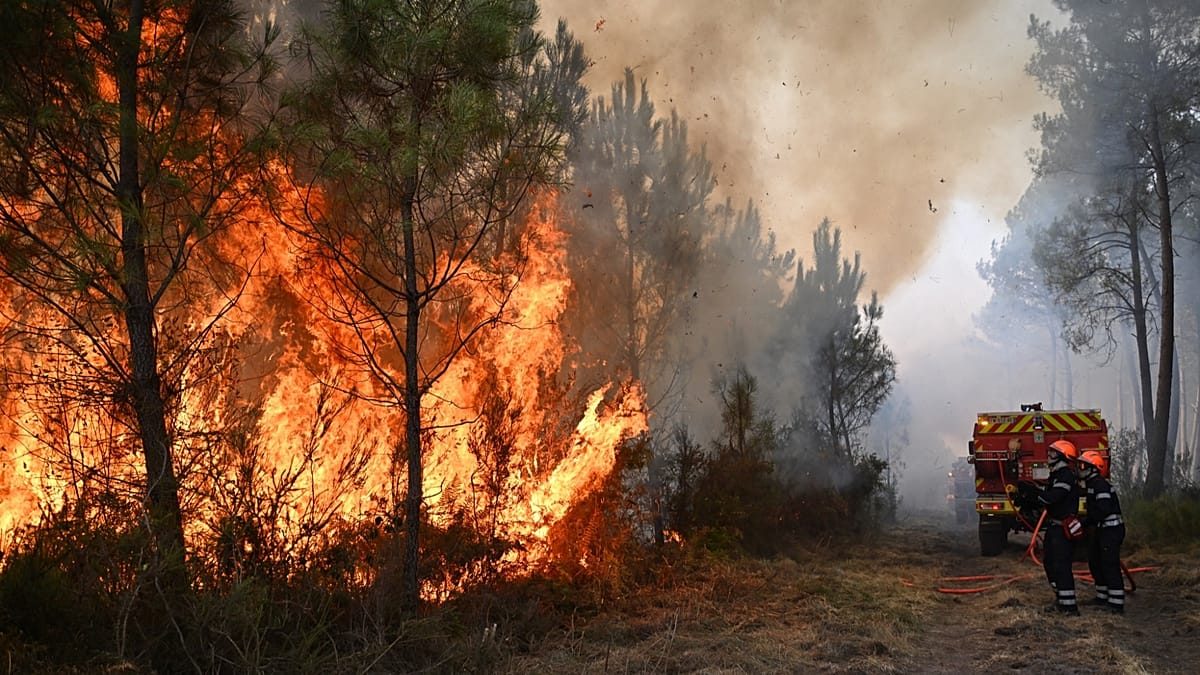
Southern Europe is bracing for its worst wildfire season on record as a major new study confirms a sharp rise in fire-promoting weather across the region. Uncontained blazes have already scorched more than 120,000 hectares in Spain and France, forcing over 300,000 people to evacuate in the largest displacement effort since the Second World War.
Research published in Scientific Reports analyzed climate and wildfire data from Portugal, Spain, France, Italy, and Greece between 1981 and 2025. It found that the intensity of hot, dry, and windy conditions increased by up to 50 percent from 2016 to 2025 compared to the 1981-2010 baseline.
The number of days featuring highly fire-promoting conditions has also more than doubled. Parts of each studied country now experience around 25 such days per summer, up from fewer than 10 in previous decades.
This escalating environmental volatility presents a mounting liability for regional economies, insurers, and agricultural sectors. While emergency response systems have prevented even greater devastation, the sheer power of modern blazes is overwhelming existing firefighting capacity, with some fires now generating their own thunderstorms.
The human and operational toll remains severe. A blaze four times the size of Paris recently threatened to surge again in southwest France, and three firefighters were killed on the Greek island of Crete.
The European Union’s Copernicus Climate Change Service notes that Europe is the fastest-warming continent, heating at more than twice the global average. World Weather Attribution adds that recent 40℃ heatwaves would have been virtually impossible just fifty years ago, driven by a 1.3 to 1.5℃ rise in global surface temperatures.
Despite these alarming trends, the annual number of wildfires over the past decade is approximately 40 percent lower than in the 1981-2010 period across the five nations. This indicates that enhanced fire brigade training and public awareness campaigns are successfully mitigating ignition rates.
Adapting land and water management
However, experts warn that long-term resilience requires fundamental shifts in land and water management. The World Wildlife Foundation emphasizes the need to regulate land-use change and update zoning guidance to prevent development from exacerbating fire risks.
Interim measures such as prescribed burns are gaining traction as a viable mitigation tool. A 2025 Stanford University study demonstrated that these controlled fires can reduce the severity of subsequent wildfires by an average of 16 percent and lower net smoke pollution by 14 percent.
Restoring natural water systems and landscapes is equally critical for long-term stability. Wetlands and rivers act as natural fire breaks by storing and slowly releasing water, though their effectiveness is currently compromised by degradation. Environmental groups also highlight the reintroduction of species like beavers, whose dam-building activities keep vegetation green and halt the spread of blazes during droughts.