Big Tech AI spending tops $1tn as investors demand proof of returns
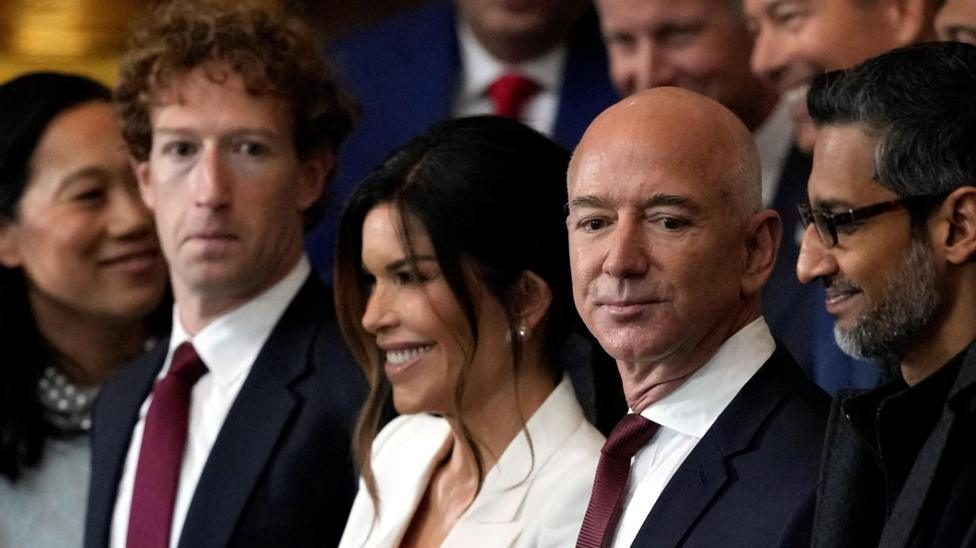
Quarterly earnings from the five largest US technology groups revealed that AI investment has surpassed $1tn without clear revenue, prompting investors to reward companies showing returns and punish those that cannot.
The latest round of earnings from Microsoft, Meta, Alphabet, Apple and Amazon laid bare a growing tension in the technology sector: AI spending continues to accelerate, but investors are no longer willing to wait indefinitely for the money to come back. The combined external investment in chips, data centres and technical staff has now passed $1tn, and markets responded with sharp swings in tech shares.
The clearest signal of investor impatience came from Meta and Alphabet. Both reported some of their lowest free cash flow figures on record, a measure of what remains after operations and capital spending are covered.
Alphabet posted negative free cash flow on $118bn in quarterly revenue, the first time in its history as a public company that it spent more than it earned. Meta generated just $784m in free cash on $61bn of revenue, while its Reality Labs division lost nearly $9bn in the first half of the year.
Neither company's AI chatbot, Gemini for Google, Meta AI for Meta, is generating meaningful revenue in its own right. Meta nonetheless raised the lower bound of its planned AI spending, which is now expected to exceed $140bn this year alone. Chief executive Mark Zuckerberg offered no timeline for when the investment would become profitable.
The market draws a line
Wall Street's response was stark. Meta shares fell as investors rejected promises of future payoff without a credible path to monetisation. The message was that growth narratives alone no longer justify capital deployment at this scale.
Microsoft told a different story. The company plans to roughly match the $190bn it spent on AI over the past 12 months, but it paired that commitment with strong revenue growth and rising adoption of its core AI products. Shares climbed to a six-month high.
Tracy Woo, an analyst at Forrester, said Microsoft was a tech company showing that its massive AI investments were "beginning to deliver returns." Amazon followed a similar pattern: despite negative cash flow and $220bn in planned AI spending this year, the strength of its broader business pushed its stock to a two-month peak.
Demand is real, monetisation is not
Underneath the financial turbulence, usage data suggests genuine consumer appetite. Google reported that 950 million people now use Gemini at least once a month, triple the figure from a year earlier.
Apple said its Mac, iPhone and iPad lines are selling better than internal forecasts anticipated. The company warned investors that sales would slow only because it cannot source enough microchips to meet demand.
Apple is preparing a major overhaul of Siri, built partly on Google's Gemini technology, and outgoing chief executive Tim Cook signalled that heavier usage tiers will carry a fee. "We're off-the-charts excited about Siri AI," Cook said. "We do believe there will be people who want to use it, a lot."
For European investors and policymakers, the earnings week underscored a structural question: whether the largest concentration of corporate capital in a generation will produce returns broad enough to justify the outlay, or whether the gap between spending and revenue will widen before it narrows. The answer, increasingly, will be delivered quarter by quarter.