Indian youth protests over unemployment and exam crises force minister out
Mass youth demonstrations in India over unemployment and exam scandals have forced the education minister to resign, highlighting deep economic fractures that threaten market stability and foreign investment in a crucial global economy.
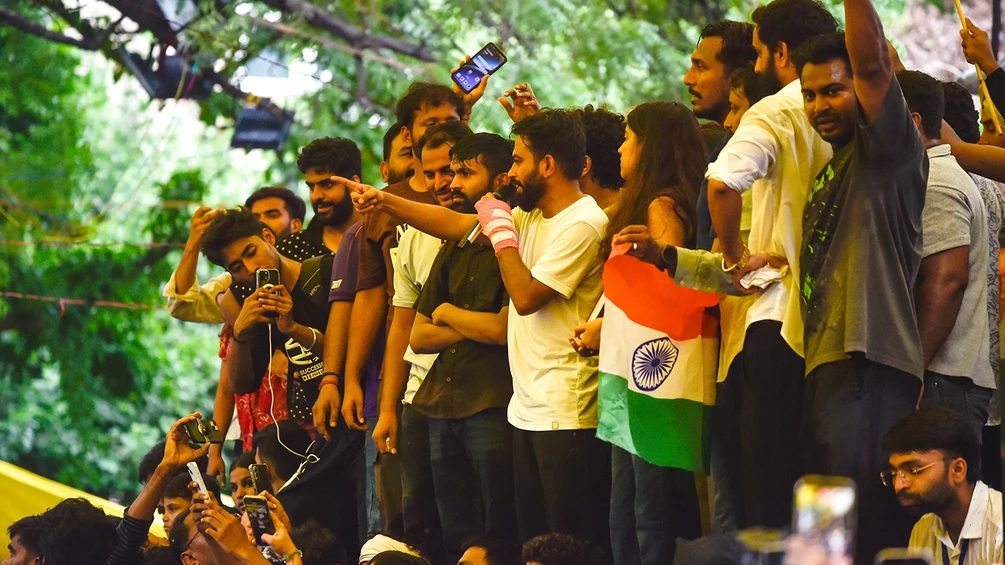
Mass youth demonstrations across India over unemployment and botched medical entrance exams have forced education minister Dharmendra Pradhan to resign. The protests, led by the Generation Z Cockroach Janta Party movement, represent one of the largest mobilisations the country has seen in decades.
Clashes erupted violently last Monday when riot police deployed tear gas and pellet guns against students marching toward parliament. The crackdown resulted in 70 arrests and left 300 people hospitalised with injuries ranging from bone fractures to head trauma.
For European investors and businesses, the scale of the unrest exposes deep structural vulnerabilities within the Indian economy. High youth unemployment and a rising cost of living threaten the domestic consumption that multinational companies rely on, while political instability could disrupt supply chains in a critical alternative manufacturing hub.
The movement has reappropriated the cockroach insult through creative protests, including DJ sets and viral hip-hop tracks. Electronic artists like Jyoty, Hanumankind, and UK-based Steve Savale have voiced their support, using their platforms to amplify demands for systemic change rather than just a change in leadership.
Savale noted the sheer scale of the achievement against a massive state apparatus. He told DJ Mag that removing a minister from a government controlling almost 1.5 billion people proves the movement is not a flash in the pan and has successfully forced systemic issues onto the national agenda.
Despite the resignation and the end of activist Sonam Wangchuk’s 26-day hunger strike, the unrest is far from over. The movement has threatened to restart nationwide demonstrations after authorities allegedly reneged on promises to drop charges against arrested activists across multiple states.
Delhi Sultanate artist Taru Dalmia argued that the protests reveal a broader loss of fear among the public. He described the current administration as an authoritarian state, noting that the extreme violence faced by students is a lighter version of the oppression marginalised communities have endured for decades.
Mumbai and Barcelona-based artist Kiss Nuka emphasized that the mobilisation is driven by quantifiable economic realities rather than abstract ideology. She pointed to unemployment rates, environmental destruction, and the cost of living as the lived experiences catalysing this generational shift.
Bridging the information divide between older generations relying on state media and youth using independent social media remains a key challenge. As the movement hints at expanding its focus beyond education, European markets will be watching closely to see if these democratic pressures translate into lasting economic reforms or prolonged instability.