Beijing tempers AI push as driverless taxis and layoffs fuel worker unrest
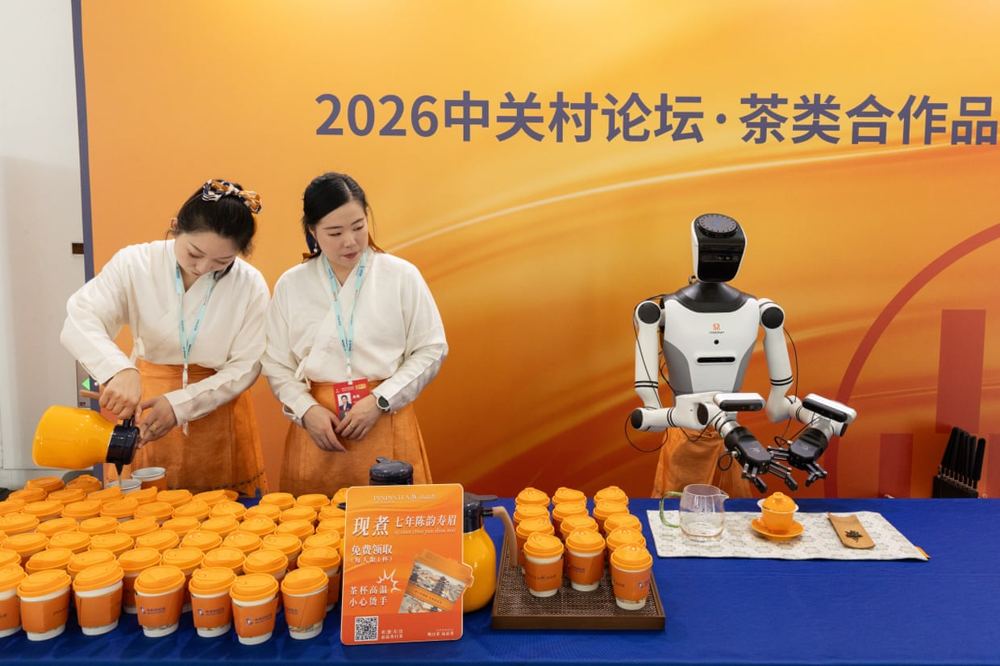
China's rapid, state-backed rollout of artificial intelligence is colliding with a fragile labour market, forcing policymakers to recalibrate between technological ambition and the livelihoods of hundreds of millions of workers.
China's government has begun pulling back from its unqualified embrace of artificial intelligence after the technology's mass deployment triggered labour disruptions, public protests and a rare wave of criticism from within the country's tightly controlled media landscape. The shift, flagged in state editorials and new regulatory guidelines this year, signals that Beijing recognises AI-driven job displacement as a political risk it can no longer ignore.
The tensions were laid bare in Wuhan this March, when several Apollo Go robotaxis operated by Baidu suffered a system malfunction and stopped dead in traffic, stranding passengers for hours. The fleet was pulled from the city's roads for months. For Yao Xinnong, a 45-year-old taxi driver whose earnings had dropped roughly 40 per cent since Apollo Go's 2022 launch, the outage brought an immediate, if temporary, reprieve. "I don't really like them, to be honest," Yao said. "Their impact has been huge."
The Wuhan incident is only the sharpest symptom of a wider problem. Tens of millions of Chinese workers have drifted out of formal employment into the gig economy as heavyweight sectors like real estate and education have contracted. One thinktank estimates flexible employment will reach 320 million people this year, up from 160 million in 2019, roughly 44 per cent of the entire workforce. Ride-hailing has become a default safety net, and robotaxis now threaten even that.
In 2024, Wuhan taxi drivers staged protests against Apollo Go, though news of the demonstrations was swiftly censored. A local taxi company took the unusual step of publishing an open letter accusing autonomous vehicles of allowing "technology to monopolise resources and take away the livelihoods of people at the bottom of society." When visited by journalists this July, the company's staff refused to speak, citing a police agreement and the risk of detention.
Yet Beijing is now echoing concerns those drivers first raised. An editorial in the state-run Workers' Daily warned of a "collision between traditional employment rules and the iteration of AI technology," while the government has pledged to "comprehensively address" AI's impact on employment. Addressing Shanghai's World AI Conference in July, President Xi Jinping framed AI as "an important driver for shared prosperity and common security."
Selina Xu, a China technology analyst, described a "major vibe shift" in the capital. After the success of the DeepSeek model last year, official policy was strongly pro-development. "This year, if you look at certain new guidelines that have been published … there has been a lot more emphasis placed on AI for boosting employment and people-first approaches," she said.
The displacement is no longer confined to blue-collar work. Recent court rulings have awarded compensation to white-collar employees laid off specifically to be replaced by AI. Tian Zemin, a Beijing cinematographer with nearly two decades in the film industry, is now out of work. His freelance rate has fallen to 40 per cent of its 2019 level. "I spent six gruelling years working my way up to become a cinematographer, only to be replaced by a piece of software," he wrote on social media. "We could be replaced at any moment."
Analysts note that China's authoritarian leverage over the private sector may allow it to manage the transition more directly than Western governments, for instance by imposing hiring quotas. Cheng Wanhui, an official in Beijing's Zhongguancun tech district, said authorities are "paying close attention to the social issues AI brings, as well as potential ethical concerns."
For Europe, where policymakers are still calibrating the AI Act's implementation and weighing automation's effect on services and transport, China's experiment offers an early, unfiltered look at the speed at which labour markets can fracture. The question is whether regulatory frameworks can keep pace once deployment outruns preparation. Tian, for one, doubts they can. "The only thing we can do is adapt as quickly as possible, and try to find the corner that AI still cannot replace," he said. "But that corner is getting smaller and smaller."