Novelist Jacqueline Crooks says Toni Morrison made her find her own voice
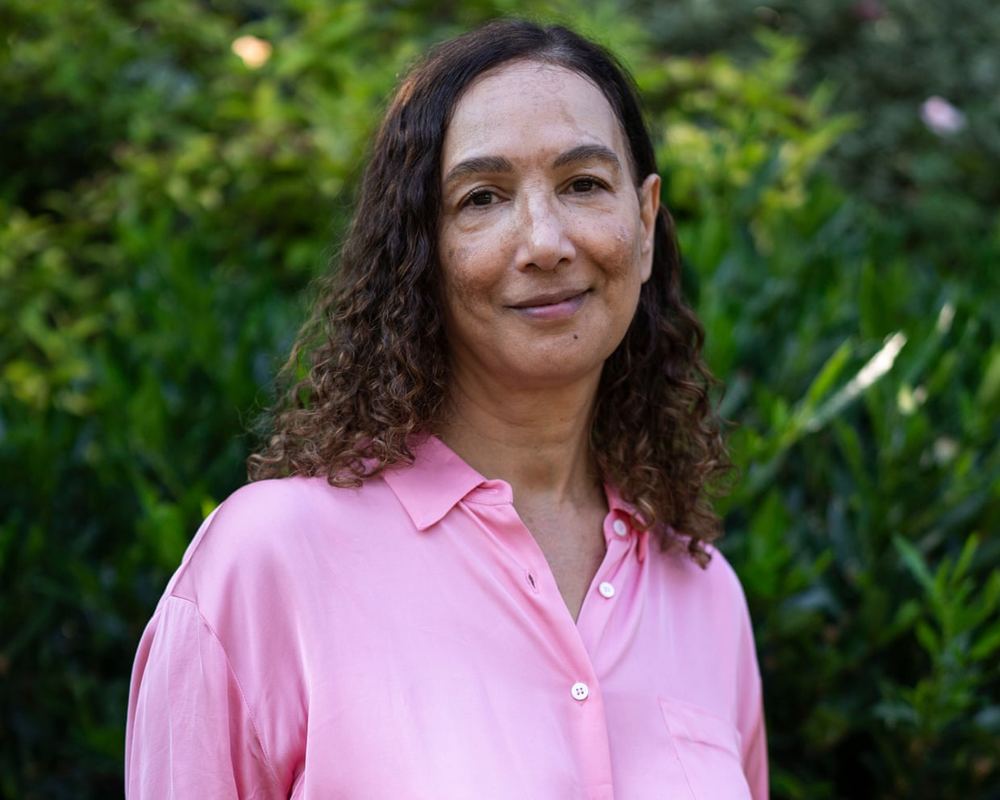
The British-Jamaican writer, preparing her new novel Sky City, traces a literary lineage from Morrison to Alice Coltrane that centres marginalised lives and challenges the European canon.
Jacqueline Crooks has identified Toni Morrison as the author who made her want to become a writer, saying she cannot pinpoint a single novel but credits Morrison's body of work with showing her that "Black lives and characters from marginalised worlds are worthy of being centred within literature." The remark comes as Crooks works on her new novel, Sky City, which she says is influenced by the music of Alice Coltrane.
"Her voice made me want to find my own," Crooks said of Morrison, whose novels including The Bluest Eye, Tar Baby and Jazz struck her with their dreamlike yet grounded worlds.
The disclosure places Crooks within a growing conversation in British and European letters about whose stories reach the page and who gets to decide. Her own trajectory, from a childhood shaped by displacement to a career built on giving voice to overlooked communities, mirrors the themes she now champions.
A canon rebuilt from the margins
Crooks described arriving at Morrison in adulthood, after a writing education steeped in Dickens, the Brontës and Austen. She recalled reading Wuthering Heights at twelve or thirteen and learning from Emily Brontë that "landscape is character," a principle that still guides her fiction. Yet she said she has never been able to reread Pride and Prejudice, finding its world of "courtship and dinner parties" confining and questioning what she called "respectability politics."
The shift accelerated in her forties, when a writing tutor suggested she read The Tempest while drafting her story collection The Ice Migration. Shakespeare's themes of displacement and longing for return, Crooks said, made her realise the Bard "could speak to my life."
She returned around the same period to the Guyanese-born writer Wilson Harris, whose demanding prose she had first encountered earlier. Revisiting him, she found in his landscapes a model for carrying "history, memory, imagination," and learned to bring Jamaica's own terrain into her work.
Music as structure
For Sky City, the guiding influence is musical rather than literary. Crooks is currently reading Andy Beta's Cosmic Music: The Life, Art and Transcendence of Alice Coltrane. She described Coltrane's music as "spiritual, hopeful" and said books about music help her "listen for rhythm and pace" in her prose.
She also pointed to Xiaolu Guo's Radical, discovered in 2023, as a model of formal freedom. Guo blends memoir, philosophy, visual art and Chinese script in a single volume. "Guo isn't writing to be liked; she is writing to push boundaries," Crooks said.
Among contemporary peers, she singled out Irenosen Okojie's 2019 collection Nudibranch, which she rereads regularly, calling it "a masterclass in inventiveness, playfulness and creative courage."
For comfort, Crooks returns to Walter Mosley's Always Outnumbered, Always Outgunned and its recurring character Socrates Fortlow, whose "resourcefulness, humour and care for others" she likened to people she has known all her life.
The through-line in Crooks's account is permission: permission to centre characters the traditional canon overlooked, to treat landscape as psychological force, and to let rhythm govern narrative. For European publishers and readers, it is a reminder that the continent's literary conversation is being reshaped not from its old centres but from its edges.