MoMA's new show reframes a century of animation beyond the cartoon
A sweeping exhibition at New York's Museum of Modern Art argues that animation has been a serious artistic medium since 1946, and asks visitors to watch it in silence to prove the point.
The Museum of Modern Art in New York this month opened It's Alive! A Century of Animation from the Collection, a survey spanning 100 years of the medium from its earliest character-driven shorts to the arrival of digital tools. Curated by Ron Magliozzi, who has spent nearly five decades at the institution, the show draws on MoMA's holdings across 13 distinct animation techniques, including stop-motion, cel, rotoscope, pinscreen and pixilation.
The exhibition's central argument is that animation ceased to be merely children's entertainment in 1946, when director John Hubley published a short manifesto titled Animation Warrants a New Language. Buoyed by wartime creative work and an animated film promoting Franklin Roosevelt's 1944 re-election, Hubley called for the medium to move "beyond pigs and bunnies" toward independent, socially engaged art. Magliozzi describes the text as the hinge on which the entire show turns.
The gallery is split accordingly. A black-and-white room houses prewar curiosities such as Gertie the Dinosaur, Felix the Cat and Raggedy Ann & Andy. The colour gallery that follows is where the exhibition stakes its claim, presenting work that most visitors will never have encountered.
Screening without sound
Among the show's most deliberate curatorial choices is the decision to screen 20 films inside the gallery with no audio. Magliozzi argues that sound pulls attention away from the image. Visitors can listen via a smartphone app if they wish, but the curator expects most to experience the films silently. "The sound is distracting, and so without sound people really focus differently," he said.
The selection includes Jerome Hill's The Sand Castle, an Oscar-winning short that shifts from live-action to stop-motion in a Jungian dream sequence reportedly inspired by the psychologist's own instruction to Hill: "Don't put me in the film; let my ideas be shown in a film."
Also featured is the work of Jane Aaron, a principal animator on Sesame Street whose alphabet segments and visual interpretations of Van Gogh and Picasso remain familiar to millions who never learned her name. "Audiences might know of her work but not necessarily know who she was," Magliozzi said. "So it's a special thing to be able to showcase her here."
From MTV to 35mm
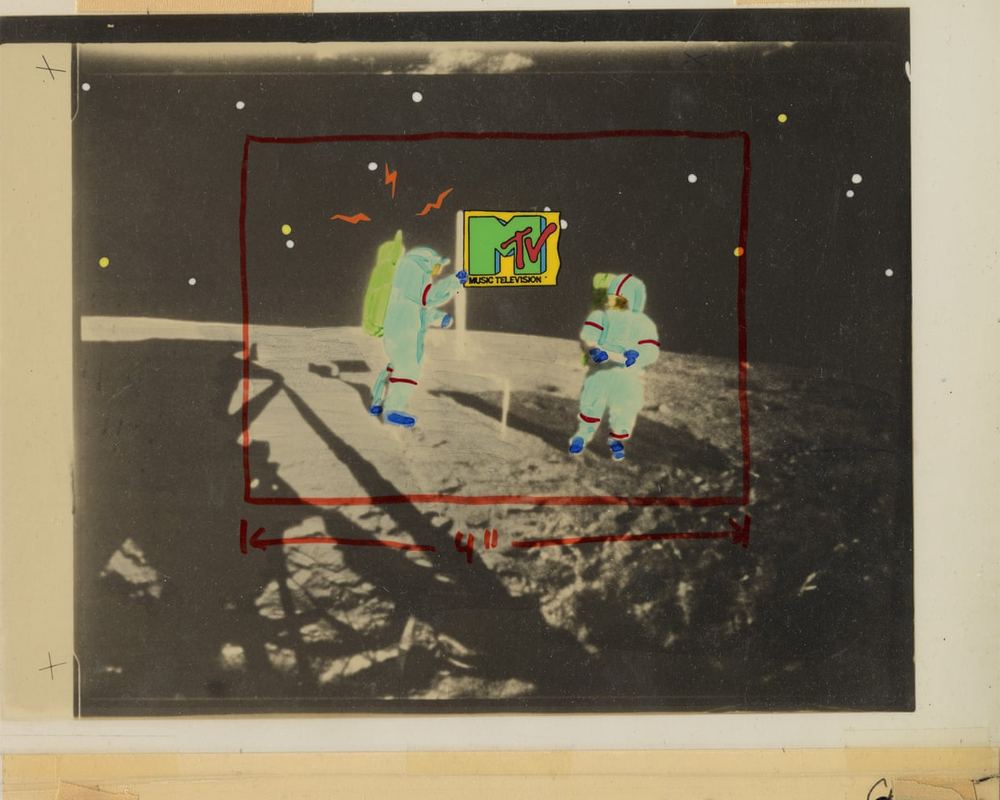
The exhibition's most widely recognisable entry is MTV's early-1980s "I Want My MTV!" campaign, featuring animated likenesses of Cyndi Lauper, Billy Idol, Paul McCartney and Pat Benatar. An accompanying film loops outtakes of those stars repeating the slogan, a deliberate echo Magliozzi wants ringing through the gallery.
The show closes with the onset of digital production, a transition Magliozzi likens to the shift from vinyl to streaming. Where possible, he has chosen to screen 35mm prints rather than digital files. "A film print is a mechanical object, when it goes into a projector it's alive, viewers can feel it," he said.
For European cultural institutions watching how major museums handle popular and commercial forms, the exhibition offers a model: treat animation as a collecting discipline with its own conservation questions, and trust audiences to engage with unfamiliar work. Magliozzi noted that even the gallery's security staff have lingered to watch. "When the guards stop by to see what you're doing, you know you're on the right track."
It's Alive! A Century of Animation from the Collection is on display at MoMA from 1 August.