Mass Ceuta border breach triggers Schengen threats and EU diplomatic rift
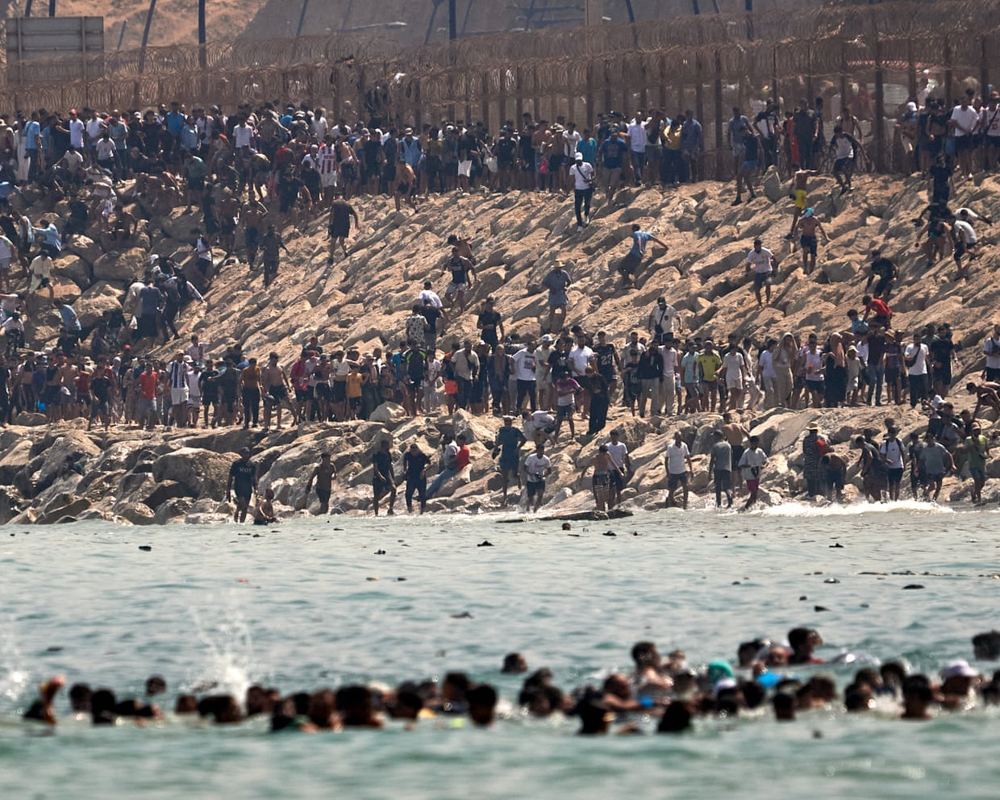
The sudden arrival of tens of thousands of migrants into the Spanish enclave of Ceuta has exposed the fragility of Europe’s external borders and sparked immediate political retaliation from EU neighbors threatening the bloc's free-movement zone.
Border controls between Morocco and the Spanish territory of Ceuta collapsed last week, allowing tens of thousands of people to cross into the European Union in chaotic scenes that left dozens dead. Spanish officials reported that an estimated 69,500 people who crossed late last week had returned to Morocco by Monday, leaving about 2,500 still in the city.
The sudden influx was staggering for Ceuta, representing more than two-thirds of the territory's ordinary population. The Spanish government deployed armed forces and additional police to restore order, with Prime Minister Pedro Sánchez condemning the breach as a violation of Spain’s territorial integrity.
Spanish intelligence sources indicated the crisis was accelerated by a social media hoax regarding a supreme court ruling on deportations, but the underlying cause appears deeply geopolitical. Matteo Villa, a migration researcher at the Italian Institute for International Political Studies, noted that Morocco likely loosened surveillance to demonstrate leverage following Sánchez’s recent diplomatic visit to Algeria.
“50,000 people do not come overnight when usually it’s hundreds per month,” Villa said, pointing out that Sánchez’s July trip to Algiers angered Rabat. By allowing the crossing, Moroccan authorities sought to show they held the upper hand, knowing the resulting chaos would provoke an overreaction and expose divisions among European nations.
That strategy appears to be working, as the crisis has already fractured European unity and threatened the continent's internal travel arrangements. France has tightened its borders with Spain in response to the influx, while Italy’s government went further by calling for Madrid to be suspended from the Schengen free-movement zone.
Beyond the immediate border security crisis, the incident highlights Spain’s deep economic reliance on foreign labor to sustain key industries. Approximately 10 million of the country’s 50 million residents were born elsewhere, providing essential workforce support for the agriculture, tourism, and services sectors.
Yet the political weaponization of these migration routes continues to exact a heavy human toll across the Mediterranean basin. The International Organization for Migration has recorded 35,153 deaths and disappearances in the region since 2014, with 1,493 lives lost in the first seven months of 2026 alone.