Spain lets non-working foreigners buy into public healthcare for €60 a month
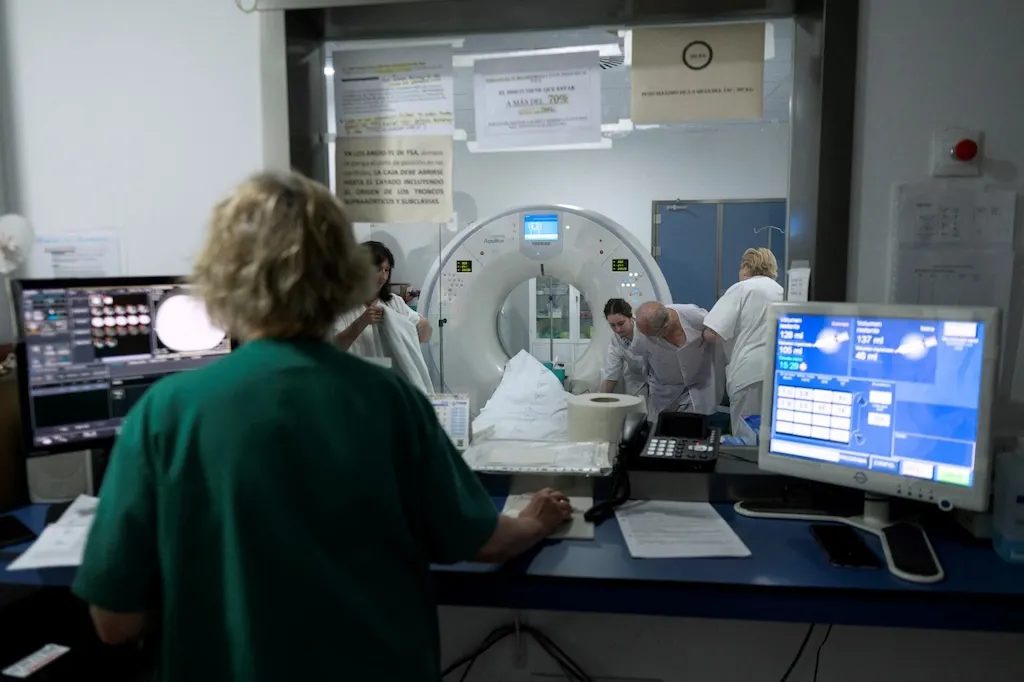
Spain's convenio especial scheme gives economically inactive residents, including non-lucrative visa holders, access to the public health system for a modest monthly fee, easing a longstanding insurance burden for Europeans who relocate without a job.
Foreigners living in Spain who do not work, run a business or draw a Spanish pension can now pay into the country's public health service and receive care on broadly the same terms as Spanish nationals. The scheme, known as the convenio especial, is administered by the Spanish Ministry of Health, which describes it as "aimed at economically non-active foreigners who need to take out health insurance in order to reside in Spain."
The monthly cost is €60 for applicants under 65 and €157 for those over 65. That is well below typical private insurance premiums, which non-lucrative visa holders are currently required to carry during their first year in the country.
Eligibility is not immediate. Applicants must have completed one full year of legal residency in Spain and be registered on the padrón, the municipal census, at the time they file. Temporary residents and short-term visa holders are excluded, meaning the scheme cannot substitute for travel insurance.
One provision will matter to readers who have moved within Europe. The Ministry of Health states that time spent as a resident in another EU member state, the EEA, Switzerland or the United Kingdom can count toward the one-year requirement. That recognition eases the transition for retirees and non-workers who have already established themselves elsewhere on the continent before settling in Spain.
Gaps in coverage
The convenio especial does not replicate every benefit of the standard system. Prescriptions, prosthetics, non-emergency medical transport and dietary products fall outside its scope. Applicants should factor those exclusions into their planning, particularly older residents who may rely on regular medications.
Administration is decentralised. Each of Spain's regional health authorities handles applications its own way, so the process differs depending on whether the applicant lives in Catalonia, Murcia or any other community. Applications can be submitted in person at a local health clinic or online through the relevant regional portal.
Required paperwork
Applicants must present a NIE, TIE, passport or residence card, along with the padrón certificate or equivalent proof of continuous residence spanning at least one year. They also need a declaration, sometimes called a "certificado de no exportación," confirming they are not already covered by their country of origin's health system or by any bilateral agreement. For UK pensioners, this interacts with the S1 form route, which provides separate access to Spanish healthcare. Bank details are required for the monthly direct debit.
Each family member must file a separate application; coverage is not extended automatically to spouses or dependants.
For the growing cohort of Europeans choosing to live in Spain without employment, the convenio especial removes the obligation to maintain private policies indefinitely and ties them into one of the continent's most comprehensive public health networks at a fixed, predictable cost.