Ceuta border collapses as 49,000 migrants cross in 24 hours
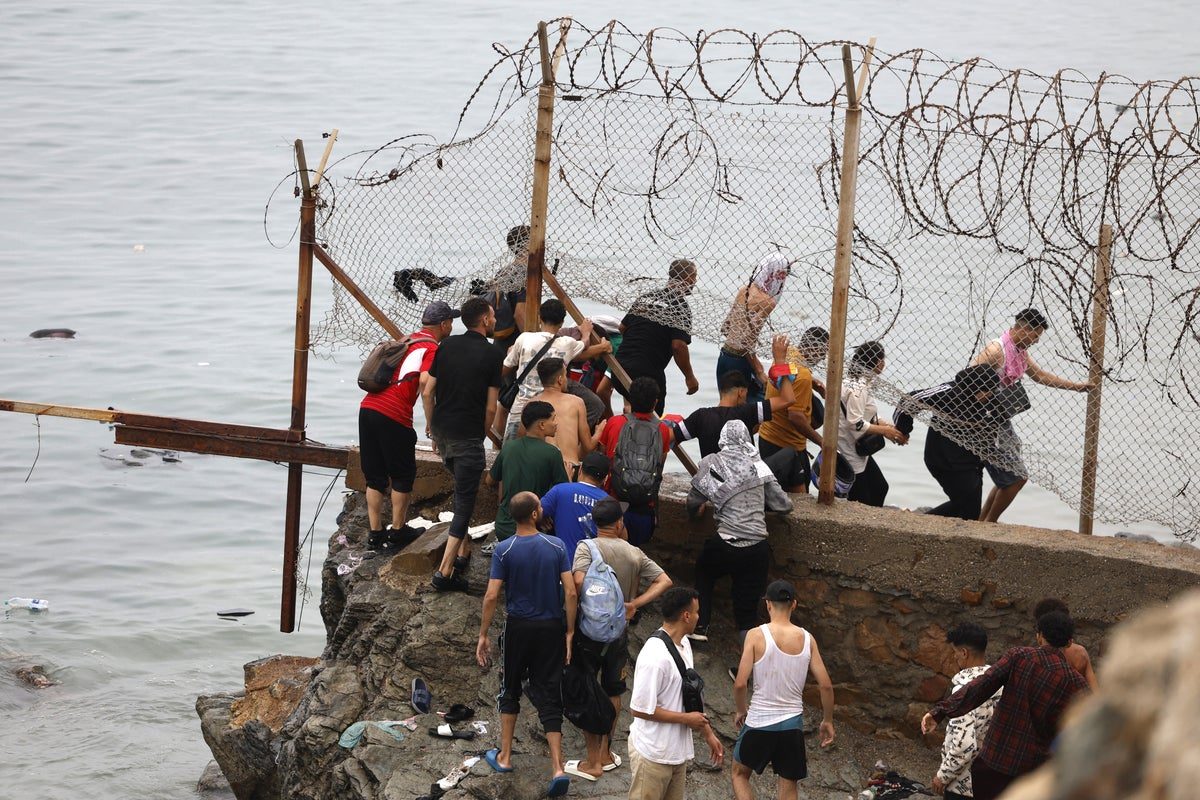
A sudden, unprecedented influx of 49,000 migrants into Spain's North African enclave has overwhelmed EU border infrastructure and triggered a political crisis over migration controls.
An estimated 49,000 migrants crossed into the Spanish territory of Ceuta from Morocco in just 24 hours, overwhelming border infrastructure and forcing Madrid to deploy additional police and military units. At least 19 people have died in the water during the mass movement by land and sea. Rachid Sbihi, head of the association representing Guardia Civil officers in Ceuta, described the border as having "totally collapsed" in "absolute chaos."
The sheer volume of arrivals is unprecedented for an enclave with a population of roughly 85,000. To put the sudden surge in context, Spanish Interior Ministry figures show irregular entries for all of 2024 totaled just 2,531, and 3,523 for 2025 by land prior to this week. Migrants primarily swam around coastal barriers from the nearby Moroccan town of Fnideq, covering roughly 5 kilometers, while others forced their way through land crossings. Clashes at the gates resulted in a charred bus and seven burned cars after Moroccan authorities deployed water cannon trucks to push crowds back.
The immediate catalyst for the sudden breach remains disputed. Territorial policy minister Angel Victor Torres suggested the surge was heavily influenced by a Spanish Supreme Court ruling earlier this month. The court determined that migrants intercepted at sea attempting to reach Ceuta or Melilla cannot be summarily returned under special rules. This legal shift has effectively stripped Spanish authorities of a key rapid-rejection tool, making it more difficult to manage maritime arrivals. Moroccan officials have alternatively blamed criminal networks for organizing the mass crossings.
Ceuta and Melilla represent the European Union's only land borders with Africa, making this breach a fundamental test of the bloc's external frontier security. While Spain's broader economy relies heavily on immigrant labor, roughly 10 million of its 50 million residents