Italy and allies demand Spain's Schengen suspension after Ceuta migrant surge
Three EU governments have demanded Spain's expulsion from the border-free Schengen area following a massive migrant influx into Ceuta, exposing the legal limits of European migration policy and the logistical risks of internal border closures.
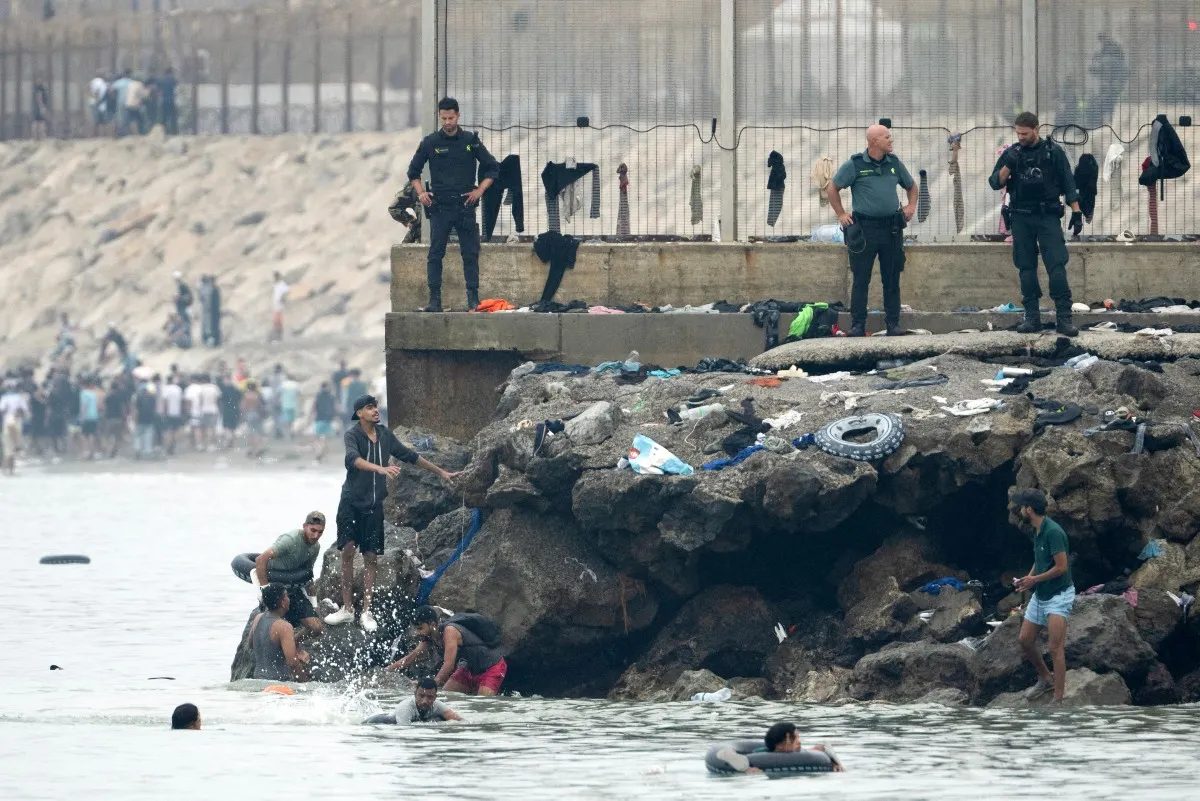
Three European governments have called for Spain to be suspended from the Schengen travel zone after 60,000 migrants entered the Spanish enclave of Ceuta in Morocco this week. The push, led by Italy, Denmark, and Finland, follows chaotic scenes at the North African border.
For European businesses and logistics operators, the stability of the Schengen area is critical. The border-free zone, which now encompasses 29 countries, allows goods and citizens to move seamlessly across the continent without customs or passport delays.
Italian Prime Minister Giorgia Meloni described the arrival of the migrants as "shocking" and demanded Madrid's suspension. Madrid condemned the remarks as "demagoguery" and summoned Italy's ambassador to lodge a formal protest.
Finnish Interior Minister Mari Rantanen stated that "countries that do not fulfil their obligation to protect the external border cannot be members of Schengen." Danish Prime Minister Mette Frederiksen added that the bloc must "consider all options, including a suspension of Schengen cooperation."
Despite the political pressure, expelling a member state from the travel area is legally impossible. Marie-Laure Basilien-Gainche, a law professor at Lyon 3 University, noted that there is no legal mechanism for one nation to unilaterally eject another from the agreement.
Instead of expulsion, the Schengen code allows countries to temporarily reinstate internal border checks during unexpected surges of unauthorised migration. France has already tightened controls on its frontier with Spain in response to the crisis.
While such temporary measures are legally permitted, they introduce friction into European supply chains. Prolonged internal border checks can severely disrupt road freight and cross-border commuter flows, undermining the economic integration the zone was built to foster.
European Commission President Ursula von der Leyen called the events in Ceuta "unacceptable," but Brussels has formally rejected the push for suspension. An EU official emphasized that the priority remains securing external borders rather than fracturing the internal travel area.
Officials also pointed out that Ceuta is geographically located in Africa, requiring additional checks before anyone can reach mainland Europe. As one official noted, "It's not like they're landing in Spain and moving onto France."
The Schengen area was gradually established from 1985, with border checks first abolished in 1995 between seven founding nations. Today it includes most EU member states alongside Iceland, Liechtenstein, Norway, and Switzerland.