Ceuta influx of 60,000 migrants strains Schengen as Spain deploys troops
A false rumour that Spain's North African border was open drew tens of thousands toward Ceuta, killing at least 34 people and triggering calls from Rome to suspend Madrid from the passport-free zone.
Roughly 60,000 people crossed into the Spanish enclave of Ceuta after a rumour spread that the border had been thrown open, the territory's regional president confirmed. The tiny strip of 18.5 square kilometres, home to 80,000 residents, absorbed an inflow of people unseen since May 2021, with arrivals swimming around frontier fences and clambering over barbed wire while Moroccan riot police fired tear gas and water cannons.
At least 34 people died attempting the crossing, many in the treacherous currents of the Strait of Gibraltar. Some had travelled from cities as distant as Marrakesh and Kenitra, believing they could simply walk onto European soil.
The political shockwaves reached well beyond the enclave. Madrid dispatched troops to reinforce security, while France announced tighter checks along its own border with Spain. Italy went further, calling for Spain to be suspended from the Schengen zone. For a European project built on open internal borders, the episode exposed how quickly a single flashpoint in North Africa can fracture solidarity among member states.
Spanish Prime Minister Pedro Sánchez flew to Ceuta on Friday and placed responsibility squarely on criminal networks. "What has emerged from our talks with Moroccan authorities is that trafficking mafias took a self-serving interpretation of a Supreme Court ruling," he said, adding that the misreading "spread like wildfire in recent hours."
The ruling in question, handed down earlier this month by Spain's Supreme Court, held that the practice of immediately returning migrants who cross the border illegally does not apply to those arriving by sea. Trafficking networks, Sánchez argued, recast that narrow legal distinction as a blanket invitation.
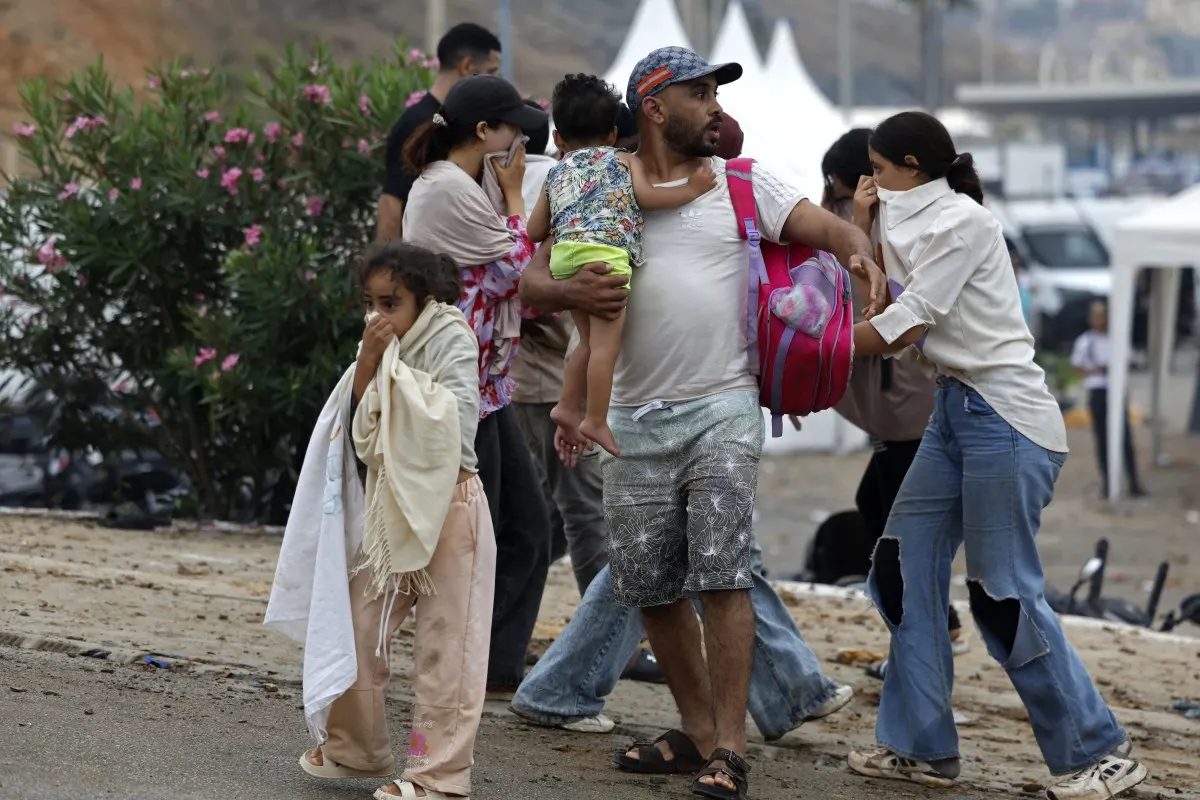
On the ground, the consequences were stark. The square near the Moroccan town of Fnideq lay in ruins after clashes, with more than a dozen cars burned out and rocks scattered across the road. Moroccan officers pushed back crowds at dawn, escorting elderly women from the scene while some in the crowd hurled stones and used slingshots.
Those who made it through described jubilation and exhaustion in equal measure. Some arrivals, a portion of them minors, walked Ceuta's streets in swimsuits and flip-flops, shouting "Bye bye Morocco, hello Spain." Others were turned back. Abdelhakim, who walked 14 kilometres through mountain terrain to reach the frontier, said he watched two men drown before retreating. "That's when I backed away and remembered that I have two children of my own," he said.
What it means for Europe
Ceuta and its sister enclave Melilla constitute the European Union's only land borders with Africa, making them perennial pressure points in migration policy. The episode underscores how dependent the EU's external frontier remains on cooperation with Rabat, and how fragile that cooperation can be when information, accurate or not, travels faster than border guards.
For Brussels, the immediate question is whether the Schengen framework can absorb such a shock without member states resorting to unilateral border controls. France's decision to tighten checks and Italy's suspension call suggest the answer, for now, is uncertain.