Paks nuclear plant shut down for first time as Danube hits record low
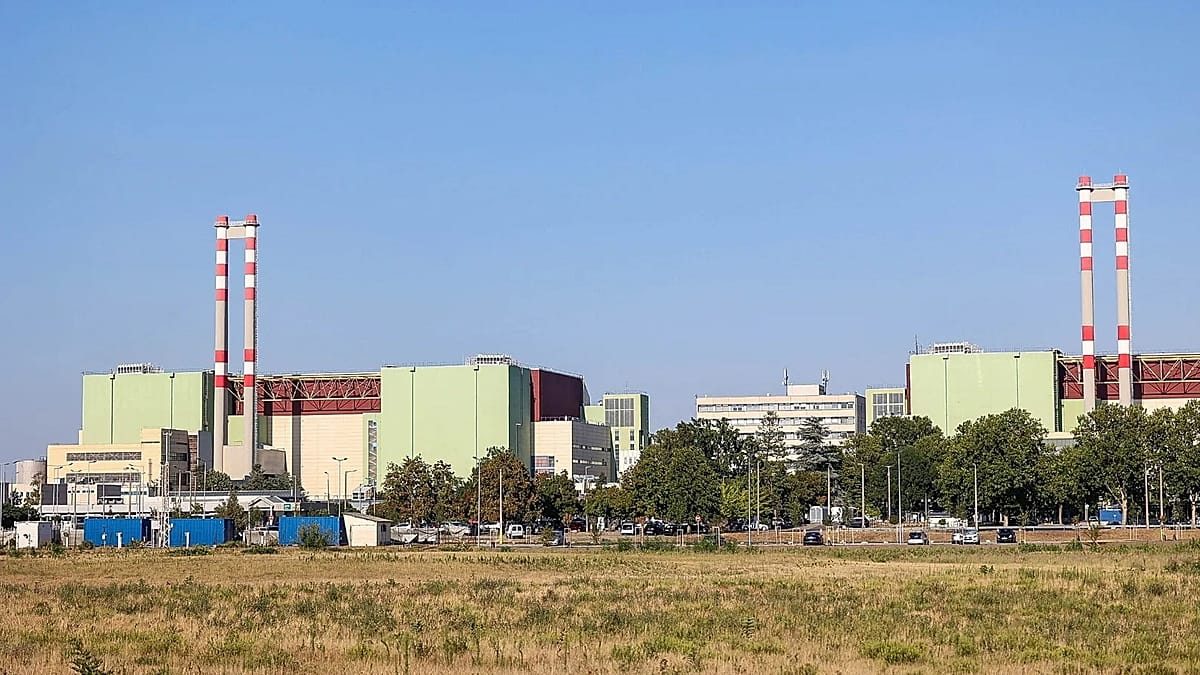
Hungary's largest power station is offline because the river used to cool its reactors has dropped to unprecedented levels, prompting the European Commission to prepare emergency coordination talks and raising fresh questions about climate-driven energy risk in central Europe.
Hungary's Paks nuclear plant, which supplies almost half the country's electricity, has been taken completely offline for the first time in its 42-year operating history after record-low water levels in the Danube made reactor cooling impossible. Prime Minister Péter Magyar warned on Thursday evening that the country could face an energy crisis within days.
The shutdown removes roughly 2,000 megawatts from the Hungarian grid from Monday at the latest, at a moment when residential and public demand is climbing because of sustained heat. András Perger, an analyst at the Budapest-based NGO Energiaklub, estimates the country will lose 25 to 30 percent of its total electricity output once the plant stays dark and consumption rises.
The European Commission has said it is prepared to convene an emergency session of its Electricity Coordination Group to manage the fallout. Spokesperson Anna-Kaisa Itkonen acknowledged that, while the operator has safety measures in place, "an event of this kind could further strain the regional electricity balance." She stressed that Brussels sees no immediate threat to energy security but is monitoring supply in both Hungary and neighbouring Romania, where one reactor has also been affected.
Domestic emergency measures
Magyar's government has asked households and businesses to curb consumption during the 5 pm to 10 pm peak, singling out air conditioning and washing machines. An emergency plan is in place to impose rotational limits on industrial users, and output at Hungary's remaining power stations is being pushed higher.
"Given the severity of this unprecedented situation, we are asking everyone, large consumers and the public alike, to act responsibly," Magyar said. He framed the appeal in regional terms, urging Hungarians to help avoid "the kind of unexpected system collapse seen in Western Europe and the Balkans."
A regional problem, but contained
Perger cautioned that the coming week will be "a serious test for Hungarian and regional supply alike," yet he does not anticipate a wider crisis. Some of Hungary's shortfall can be covered through imports from neighbouring countries, though hydroelectric availability across the region is itself constrained by the same dry conditions. In Romania, the loss of one reactor is less consequential because nuclear power represents a smaller share of the energy mix.
Climate pressure on infrastructure
Friends of the Earth Hungary argued that the Paks shutdown should not be treated as a one-off accident. Executive President Ákos Éger called it "a climate adaptation challenge" and urged the country to accelerate its shift toward "a more resilient, decentralised energy system that relies less on climate-vulnerable infrastructure and more on energy savings, flexibility and renewable energy."
For European policymakers, the episode is an early stress test of the bloc's electricity-coordination machinery in a scenario driven not by geopolitics or fuel shortages but by hydrology. As summer heat events grow more frequent, the question of whether river-cooled generation can be counted on as baseload supply is no longer theoretical. Officials on both the Hungarian and Commission sides describe the coming days as a critical test of the country's energy resilience.