Bornholm uses EU-backed project to build a year-round craft economy
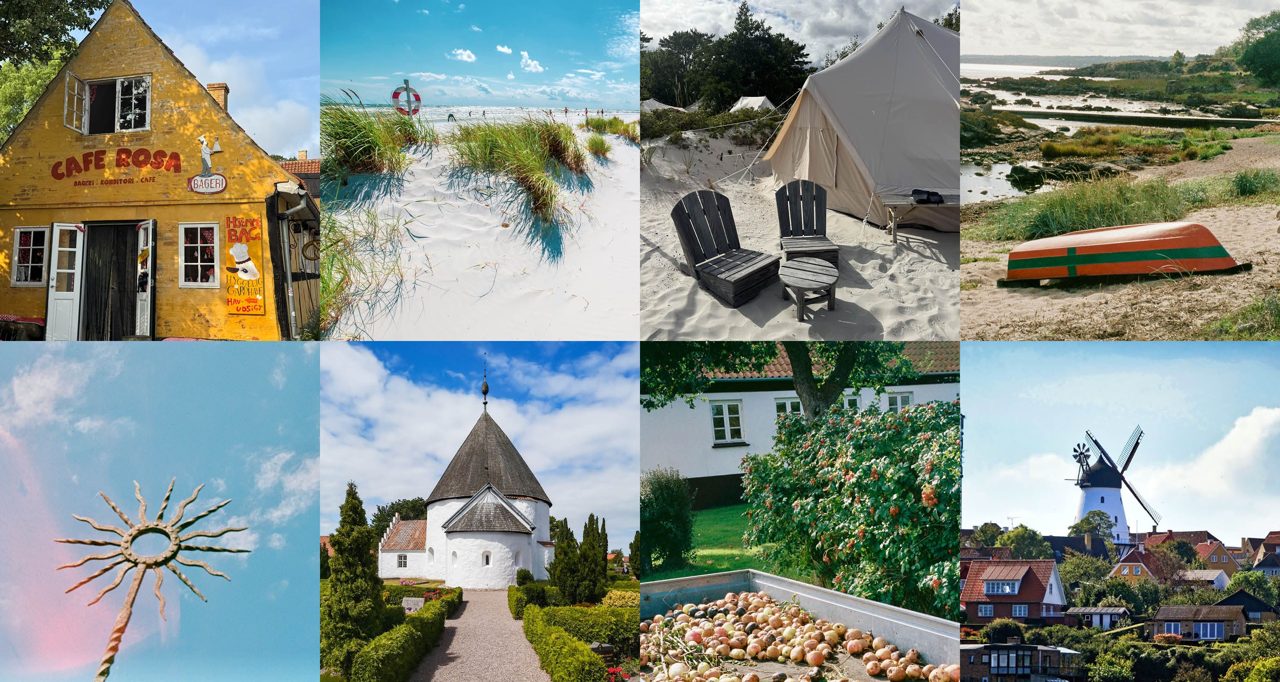
The Danish Baltic island, designated Europe's first World Craft Region in 2017, is deploying EU funding to help its makers escape the seasonal income trap.
An EU-funded initiative called Hephaestus is establishing a living laboratory on Bornholm, the Danish island in the Baltic, where traditional craftsmanship is being paired with circular production methods, technology, and sustainable materials. The project targets what local officials describe as the island's central economic weakness: most of its craftspeople still depend on modest, seasonal incomes tied to the summer tourist flow.
The goal, according to Dorthea Funder Kaas, coordinator at the Bornholm Centre for Crafts, is to create business models that allow makers to sustain year-round practices rather than compressing a livelihood into a few warm months.
Bornholm's creative economy has deep roots. Nineteenth-century deposits of clay and kaolin spawned a ceramics industry, while painters including Olaf Rude and members of the Bornholm School were drawn to the island's granite cliffs and crystalline light. After the Second World War, regular ferry links turned the island into a Scandinavian holiday destination, and the Royal Danish Academy later established its ceramics and glass school in the town of Nexø.
That infrastructure was formally recognised in 2017 when the World Crafts Council, a UNESCO-affiliated body, named Bornholm Europe's first World Craft Region. "It was an important international accolade," Kaas said, "but it also confirmed something that had been built over a very long period."
Since then, the island's visitor profile has shifted. Alongside traditional holidaymakers, Bornholm now attracts global design enthusiasts and what locals call the Københavner-segmentet, Copenhagen's urban creative class. A key catalyst was the 2007 opening of Kadeau, a New Nordic restaurant on the southern coast founded by childhood friends Nicolai Nørregaard and Rasmus Kofoed, whose success drew mainland and European attention to the island's food and craft scene. Local makers such as Oh Oak and Baltic Sea Glass now supply minimalist tableware to Bornholm's top eateries.
The ecosystem continues to expand. This summer saw the opening of The Dunes, a beachside culinary venue by the Kadeau team, and Hodda Bornholm, a new community and culture space. The island hosts galleries, open workshops, including glass-blower Pernille Bülow's studio in Svaneke, and makers-run collectives such as Postgade 21.
Yet the underlying economic fragility remains. Kaas points to a "strong sense that strengthening the environment as a whole benefits everyone," but acknowledges that collaboration alone cannot replace stable revenue. The Hephaestus project is designed to bridge that gap by giving craftspeople access to new production techniques and materials that extend their commercial viability beyond the tourist season.
For the Royal Danish Academy students who train on the island, the draw is less financial than formative. Ceramics student Emilie Fruergaard describes being "surrounded by talented, skilled makers, often frontrunners exploring new techniques." Whether that creative density can be converted into durable livelihoods is the question Bornholm's next chapter must answer.