Bolsonaro's AI avatar exposes the loophole in disclosure-based election rules
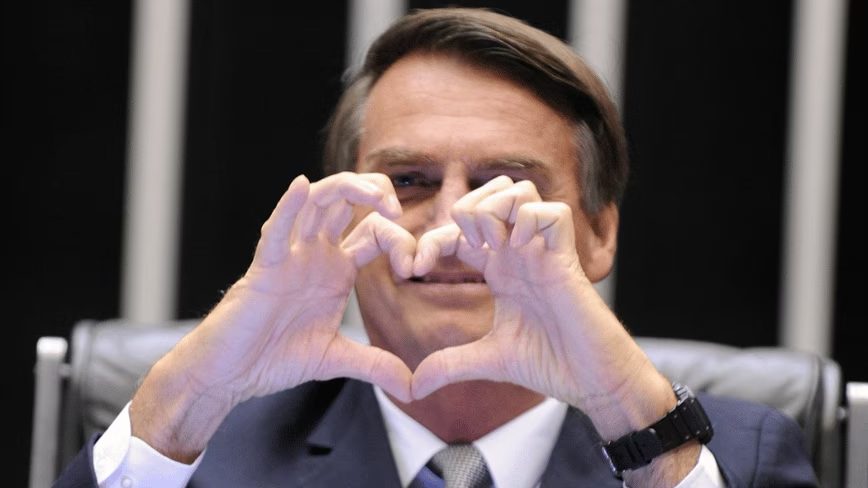
A 46-second synthetic video of the jailed former Brazilian president campaigned for his son at a São Paulo rally, revealing that labelling rules alone cannot stop a court-silenced politician from speaking through a machine.
A computer-generated likeness of Jair Bolsonaro addressed a campaign rally in São Paulo on Saturday, despite the former president being barred from all public communication as a condition of his house arrest. The 46-second clip, shown at the launch of his son Flávio's presidential bid, openly declared itself artificial. "What you see here is not me," the avatar stated. "This is a simulation of my image and my voice using artificial intelligence."
It then urged the crowd to support Flávio, described as "blood of my blood," and accused the courts of silencing Bolsonaro through "an unjust and arbitrary decision." Bolsonaro is serving a 27-year sentence for plotting a coup after losing the 2022 election to President Luiz Inácio Lula da Silva.
A deepfake that tells the truth
The clip's novelty is not deception but disclosure. Election-integrity debates have centred on synthetic media designed to mislead voters. This video announced its own artificiality in its first seconds, then used that transparency as legal armour.
The question now before Brazil's Superior Electoral Court is whether a labelled simulation allows a man forbidden from speaking to campaign regardless. A coalition led by Lula's camp petitioned the court on Sunday, arguing Brazilian rules prohibit synthetic reproductions of real persons aimed at swaying voters. Flávio's team countered that the video disclosed its AI use, caused no harm and mixed no fabricated footage with real images, meaning it is not a deepfake at all.
Through his lawyer Paulo Cunha Bueno, Bolsonaro denied authorising the video, stating he "did not authorise the use of his image and voice" and "could not have done so" because he is barred from receiving visitors. The lawyer added that Bolsonaro had never objected to his children using his likeness.
Judges split, stakes high
The TSE's president, Justice Kássio Nunes Marques, a Bolsonaro appointee, said AI-assisted campaigning is permissible provided it does not harm others. Supreme Court Justice Alexandre de Moraes took the opposite view, warning that authorising the video could constitute a "serious violation" of house-arrest terms and amount to electoral disinformation.
The court could disqualify Flávio's candidacy entirely. Bolsonaro himself is unlikely to face additional punishment, according to Insper law professor Ivar Hartmann, because he can argue he neither recorded nor approved the clip. One Lula campaign coordinator predicted the most heavily litigated election since Brazil's return to democracy. Brazilians vote on 4 October.
Europe's rules face the same test
The case lands squarely in territory European regulators are trying to govern. The EU's AI Act will require labels on synthetic media, and France plans to triple penalties for AI-driven election disinformation. Both approaches rest on the premise that disclosure protects voters.
The Bolsonaro clip met the disclosure threshold and walked straight through it. A label confirms a video is synthetic; it does not resolve whether a legally silenced individual may campaign through a digital proxy. Malaysia's prime minister has already deployed an AI stand-in, and India has opened a case over altered videos of its own leader. Brazil's court now has fewer than seven weeks to decide whether transparency is enough, and its answer will be studied well beyond São Paulo.