US Senate Russia bill risks 100% tariffs on EU goods
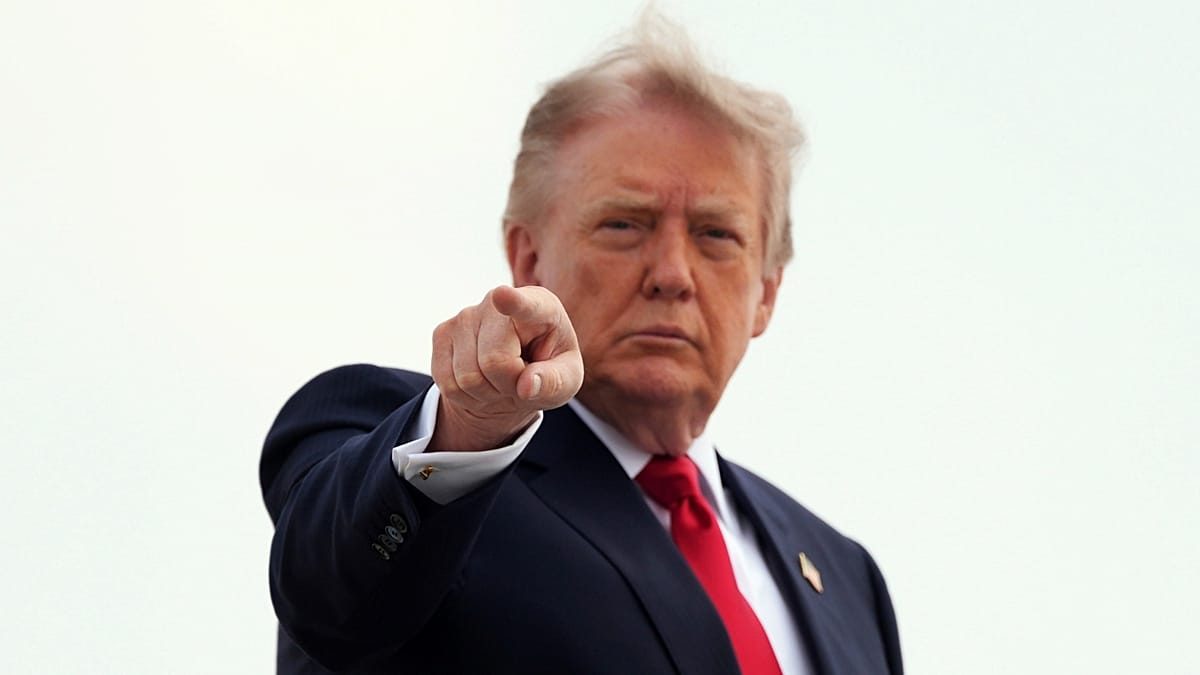
A US Senate bill designed to sanction Moscow could instead arm President Trump with a legally binding weapon to impose punitive tariffs on European imports.
A bipartisan sanctions bill advancing through the US Senate contains a provision that could grant President Donald Trump the authority to impose tariffs of up to 100% on European goods. The legislation, originally championed by the late Senator Lindsey Graham, is intended to cripple Russia’s war economy by targeting secondary buyers of its oil and gas. Yet its vague wording gives the White House unilateral power to decide which trading partners fall under its scope.
Section 113 of the draft text allows the US president to penalise the five largest importers of Russian fossil fuels, countries making new purchases, or nations "facilitating" the circumvention of sanctions. While promoters insist the measure targets China and India, Europe’s continued consumption of Russian energy leaves it highly exposed. The EU imported nearly 10 million metric tons of Russian liquefied natural gas in the first half of this year, ahead of a scheduled 2027 ban.
The legislation arrives at a particularly fragile moment for transatlantic trade. The European Commission’s recent €890 million fine on Google has drawn fierce threats from Trump, who warned the bloc would pay a "very high price" and face a "substantial TARIFF". The dispute has already cast doubt on the Turnberry agreement, which caps US tariffs on the EU at a maximum of 15%.
For the White House, the bill offers a timely replacement for the tariff powers Trump lost earlier this year when the Supreme Court struck down his use of the International Emergency Economic Powers Act. "This bill is clearly meant to provide a new discretionary, Congressionally approved tariff weapon, up to a rate of 100%," said Nevada Joan Lee, a policy fellow at the European Council on Foreign Relations. "That should worry Europeans."
The draft includes an exemption for countries taking "significant steps" to reduce Russian gas purchases, ostensibly shielding European allies. However, this determination rests entirely with the executive branch. "The exemptions that are meant to shield allies are written such that this President himself ultimately gets to judge who qualifies," Lee added.
Experts note the bill's architecture reflects political calculation rather than sanctions strategy. "The bill was deliberately structured around tariffs rather than sanctions to appeal to President Trump and improve its political prospects, with traditional sanctions authorities playing a secondary role," said Maria Shagina, a senior fellow at the International Institute for Strategic Studies. She warned that tariffs are more likely to serve Trump's broader domestic agenda than to exert sustained pressure on Moscow.
The EU’s internal energy market further complicates its legal standing. Greece, Cyprus and Malta legally handle Russian oil shipments under the G7 price cap, while Hungary and Slovakia continue receiving crude through the Druzhba pipeline.
Alan Sykes, a professor of international law at Stanford University, noted that while a "rule of construction" limits the bill's scope compared to previous US trade tools, significant ambiguity remains. "There are also many ambiguities in text and in how the law would be administered. So the current situation is one of considerable uncertainty," Sykes said.
The bill still faces an uncertain path in the House of Representatives, which has adjourned for its summer recess. A Commission spokesperson stated that Brussels continues to engage with Washington to align sanctions and maximise pressure on Russia. If enacted, however, the legislation could turn a tool meant to weaken the Kremlin into a lever against Europe.